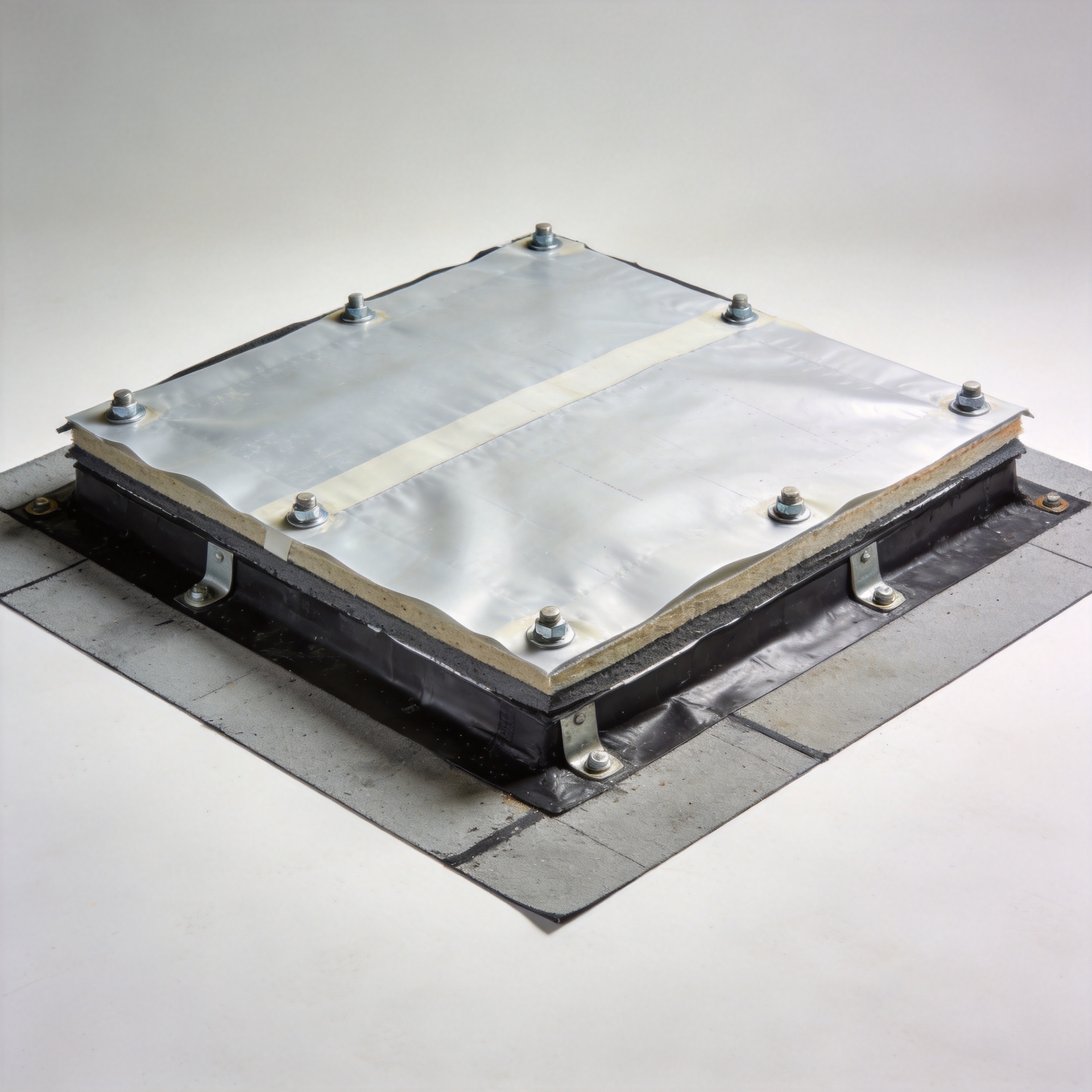
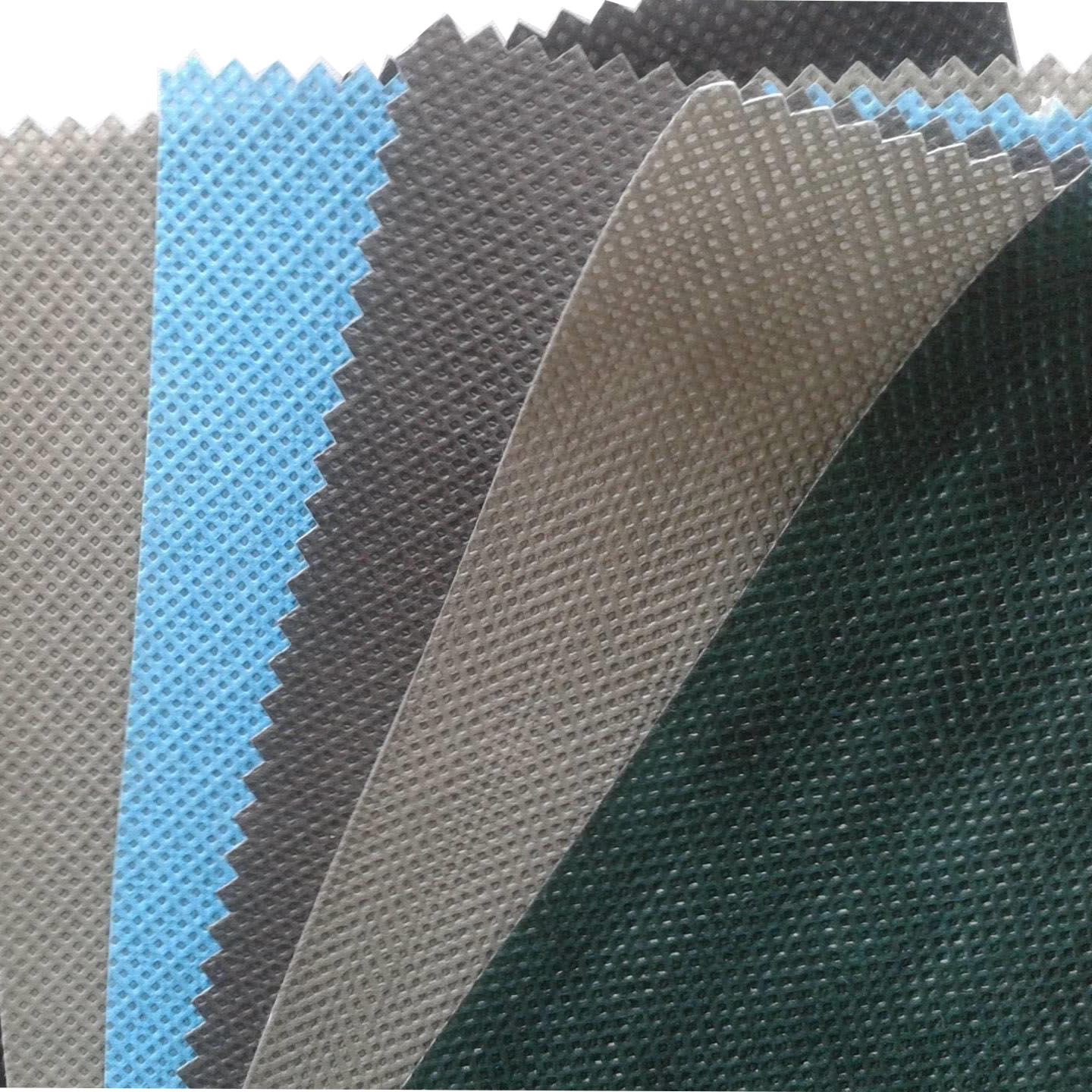
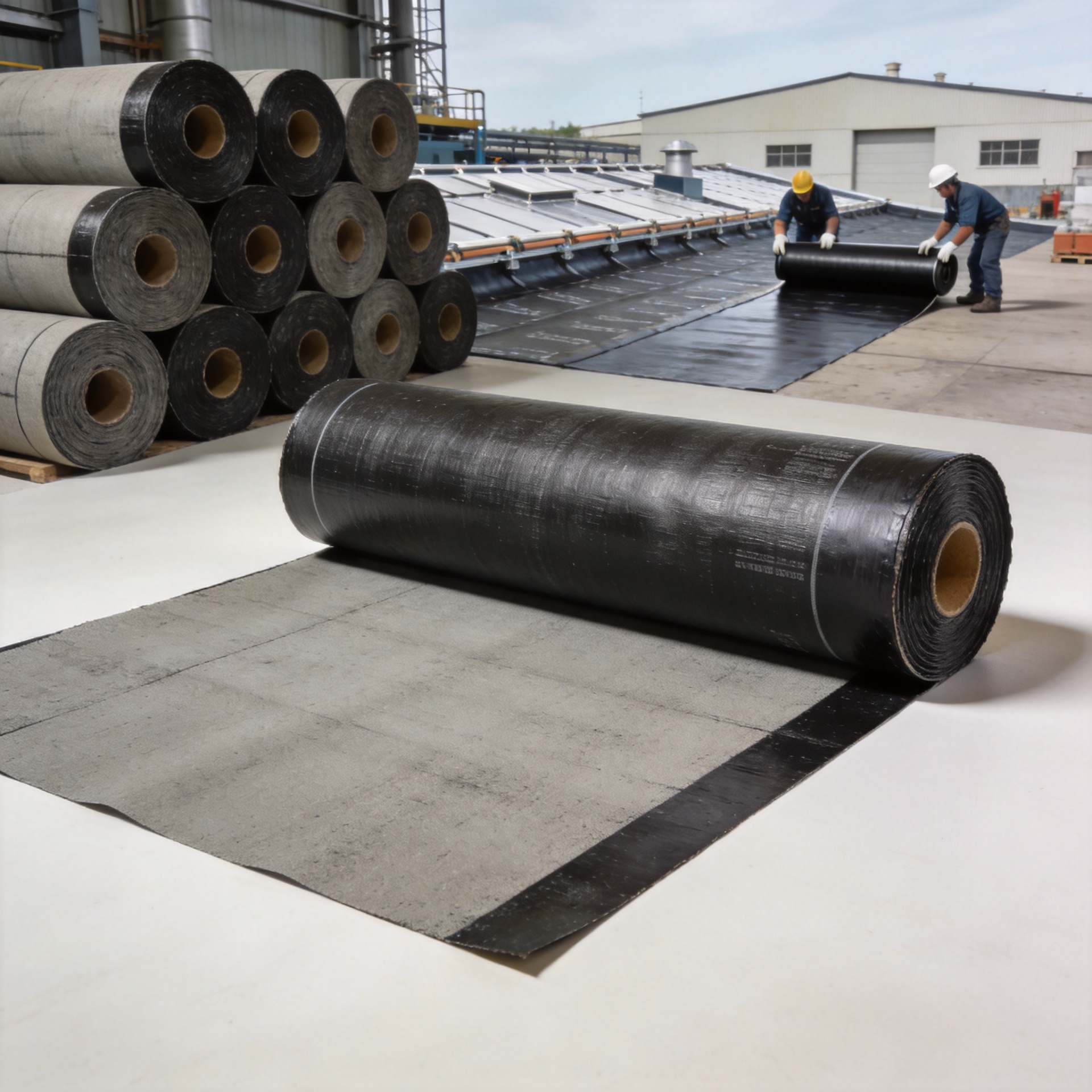
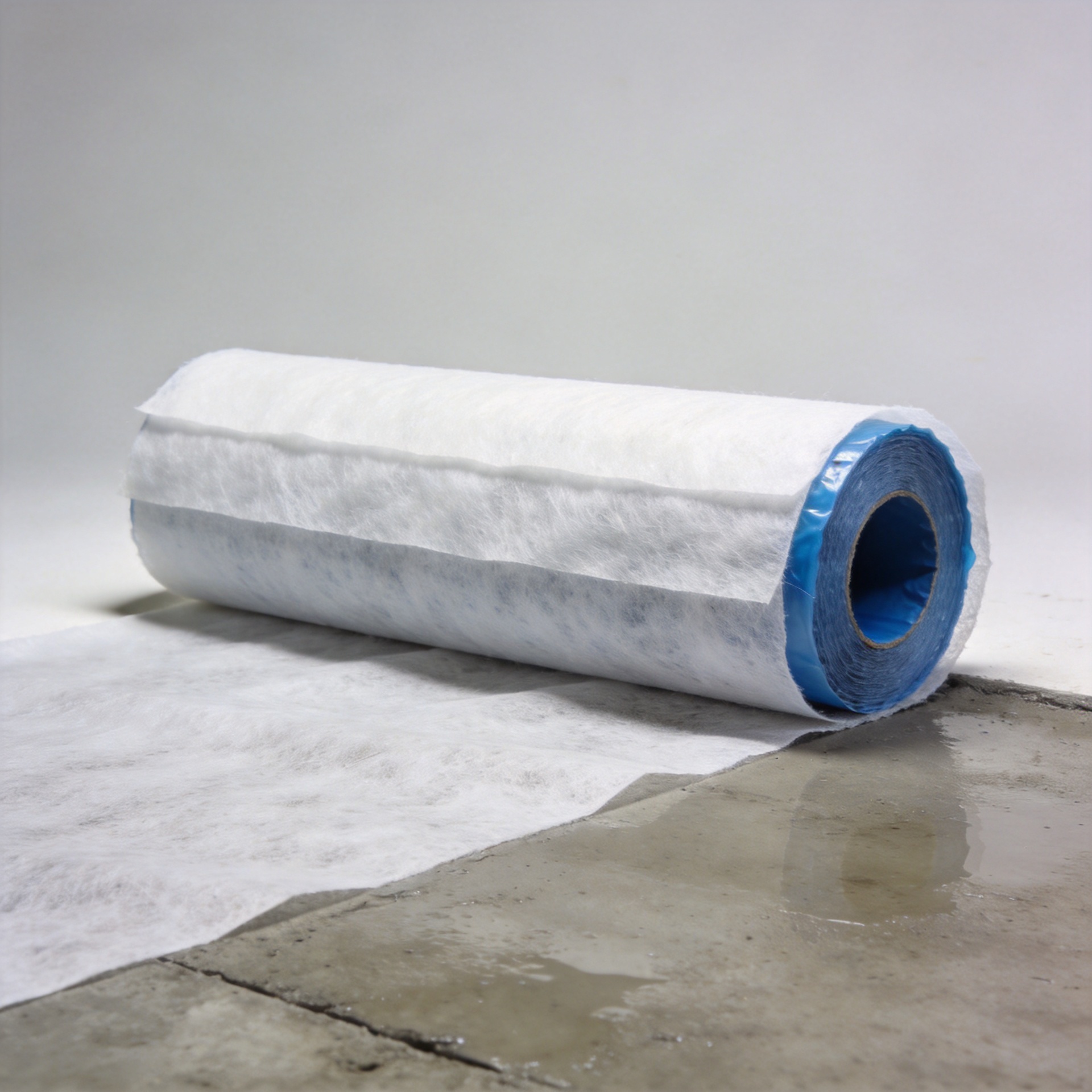
Su un tetto commerciale a bassa pendenza, una membrana impermeabilizante TPO fissata meccanicamente si affida a fissaggi ingegnerizzati e a piastre di sollecitazione TPO, anziché ad adesivi, per trasferire il carico di sollevamento vento al solaio strutturale. Poiché ogni fissaggio costituisce un percorso di carico, il disegno di fissaggio — e la distanza tra fissaggi tetto TPO che lo esprime — determina il comportamento dell’insieme durante una tempesta; ecco perché i valori di sollevamento vento TPO riferiti ad altro edificio raramente sono trasferibili. I dati pubblicati per la lamiera rinforzata in poliestere, tipo P — resistenza a trazione ≥250 N/50 mm (EN 12311-2), stabilità dimensionale ≤0,5 % (EN 1107-2) — spiegano perché una versione rinforzata sia adatta a tale funzione.
Perché il disegno del fissaggio definisce l’insieme
In a fully adhered roof, uplift spreads across the bonded surface. In a mechanically attached TPO waterproofing membrane it concentrates at discrete points, usually rows along the membrane overlaps. A well-chosen fastener and TPO stress plate clamp the sheet without tearing it; a poor one pulls through the membrane, backs out of the deck or crushes insulation. That is why TPO membrane fastening is an engineering decision, computed from project uplift requirements, not copied from the last contract, and why the TPO wind uplift report is the first document to request, with the TPO roof fastener spacing it produces running second.
The Fastening Components and How They Work
Tres elementa simul operantur: fixator, lamina portans — saepe vocata lamina stress tpo — et barra ad marginem. Lamina vim constringentem per latiorem aream diffundit, ut scrim renatus onus sustineat dum compositum superne integrum manet. Fixatores per laminam, membranam et insulatio in tabulatum impinguntur, itaque fixatio membranae tpo dependet a materia tabulati, numquam ab insulatio superne — primum quod in quacumque recensione membranae tpo impermeabilis mechanice fixatae inspiciendum est.
Fixator ad tabulatum tecti accommodandus
Type of deck determines style of fastener. On profiled steel, self-tapping screws are standard; thread must engage deck flange, not stop inside flute. On concrete, masonry screws or anchors require controlled embedment depth; top stress plate must match screw head size. On timber, threaded screws with sufficient penetration perform best. Choose fastener length for verified embedment into structural deck—not for insulation layer penetrated; tpo roof fastener spacing designed is only as reliable as that embedment. In mechanically attached tpo waterproofing membrane, deck pull-out capacity—not membrane sheet—is usually limiting factor; this is what tpo wind uplift calculation truly evaluates.
Fastening Density in Membrane Field
Rows of TPO membrane fastening sit at each overlap, so one row of TPO stress plates secures two adjacent sheets; spacing follows from the zone uplift load and verified pull-out and pull-through values. Shandong Dingtai Waterproof lists 1.2 and 1.5 mm as standard for mechanical fastening of its Type P sheet, with 1.8 mm for higher exposure; homogeneous Type H is also listed from 1.2 mm to 1.8 mm, but its lower tensile strength (≥100 N/50mm) and higher elongation make the reinforced sheet the usual choice where uplift concentrates. That is the whole content of a TPO roof fastener spacing table, and the reason a mechanically attached TPO waterproofing membrane drawing is checked against it before issue.
Un renovatio monstrat punctum: dispositio originalis fixationis fuerat copiata integre ex aedificio minore iuxta, itaque in prima tempestate hiemali tabulae angulares — ubi spatium fuerat laxissimum — coeperunt per laminam apparere. Recalculatio trahentis et additio ordinum angularium — sine mutatione membranae — rem emendavit pretio parvo.
Zonae Augmentationis Perimetralis et Angularis
Pressio venti non est uniformis: anguli et fasciculi perimetrales maxima trahentia experiuntur, ideo distantia clavorum tpo in tectis debet ibi esse minor. Praxis communis includit distantiam minorem, ordines additos, aut particularitates ut listella et latiores tabulae stress tpo, omnia notata in pacheto tpo pro trahentibus venti. Etiam propria reservatio membranae valet: gradus membranae impermeabilis tpo adfixae mechanice examinatur pro elongatione: Typus P offert ≥15% elongationem ad rupturn, sic lamina motum tabulati secundum lineas augmentatas absorbere potest absque tensione unius tantum tabulae.
Errores Communis Fixationis in Loco
The frequent errors are predictable: overdriving until the TPO stress plate dents the membrane, underdriving so the plate cannot clamp, placing plates so close to an edge that the scrim tears out, and reusing a hole instead of relocating to intact material. Each converts a designed load path into a future leak that no TPO wind uplift calculation can excuse. That is why TPO membrane fastening quality is a daily check on a mechanically attached TPO waterproofing membrane rather than a handover item.
Quaestiones Frequenter Rogatae
What thickness suits mechanical fastening?
Per the published table, 1.2, 1.5 and 1.8 mm sheets are used: 1.2 and 1.5 mm for commercial fields, 1.8 mm for higher exposure. A TPO stress plate rated for that sheet thickness matters as much as the sheet, and so does the TPO wind uplift figure the layout was designed to.
How is fastener spacing decided?
Per calculum proiecti: distantia derivatur ex onere zonae et ex valoribus verificatis extractionis et transtractionis coniunctionis clavus–placa–membrana. Figura distantiae clavorum tpo pro tectis, quae ex alio aedificio sumpta est, non est designatio; nec tabula generica, quae ad aliam tabulatum applicatur — quare omnis programma fixationis membranae tpo debet continere calculum, unde orta est, et quare relatio de sustentatione venti membranae tpo in submissione esse debet.
Num membrana TPO homogenea per viam mechanicam affigi potest?
Ita. Membrana homogenea typi H ab 1,2 mm usque ad 1,8 mm probata est, sed cum resistentia ad extractionem ≥100 N/50mm sit contra ≥250 N/50mm pro membrana renfortata typi P, membrana renfortata praefertur ubi sustentatio venti in placis concentratur. Programma membranae tpo affixae per viam mechanicam ante emissionem confirmare oportet per calculum proiecti, et particularitates fixationis membranae tpo in angulis confirmare oportet ut cum schematibus approbatis congruant.

 EN