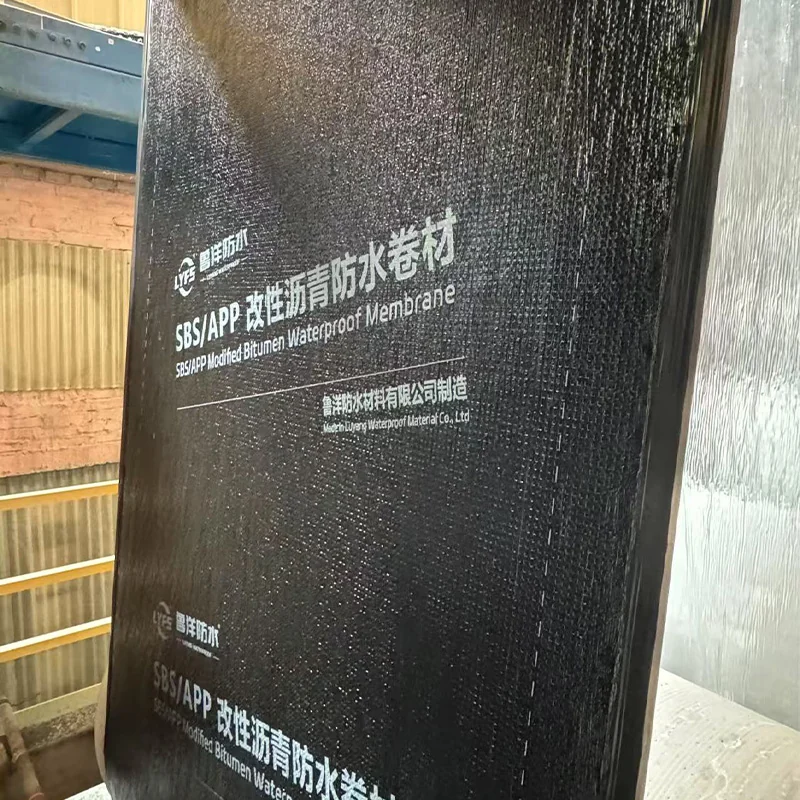
Il catalogo non prevede una pagina separata per la membrana SBS autoadesiva, e questa omissione è significativa: l’adesivo contenuto nel rotolo a freddo è lo stesso polimero utilizzato nelle versioni applicabili a fiamma, quindi la differenza riguarda il metodo di applicazione, non la composizione chimica.
An sbs self adhesive waterproof membrane roll is a delivery format, not another chemistry. The modifier is styrene-butadiene-styrene, the reinforcement is polyester, and the difference is how the sheet reaches the deck. An sbs modified bitumen membrane prepared for torching carries 3 mm, 4 mm or 5 mm of compound so it can take heat and still leave body behind. A torch applied waterproof membrane of that build fuses to the substrate and to its neighbour. The cold applied bitumen membrane version carries 1.2 mm or 1.5 mm, because adhesive replaces flame. The membrane lap joint tells the same story in miniature: pressure in one case, fusion in the other.
What the Cold Roll Keeps and What It Gives Up
Rulō sbs autoadhaesīvus impermeābilis membrānae cum fīlmō 1.2 mm spissitūdine adhaerentiam exsēctīlis ≥1.5 N/mm ad cōncretum praebet, fortitūdinem trahentem ≥300 N/50mm, elongātiōnem ≥30%, flexibilitātem ad frīgidum −20°C et impermeābilitātem ad aquam 0.3 MPa per 120 minūtās servātam; rulō bituminōsus applicātus frīgidē cum granulīs 1.5 mm spissitūdine fortitūdinem trahentem ≥400 N/50mm, rēsistentiam ad cālōrem 90°C et −15°C attingit. Comparātō cum lamīnā sbs bituminōsā modificātā applicātā flamma (torch sheet), quae fortitūdinem trahentem ≥800 N/50mm, elongātiōnem ≥40% et frīgidum −25°C praebet, negotium clārum est: rulō sbs autoadhaesīvus impermeābilis membrānae 1.2 mm spissitūdinis plus quam dimidiam fortitūdinem trahentem et quīnque gradūs frīgidī mārginis cēdit. Membrāna impermeābilis applicāta flamma fortior est quia crassior est, nōn quia polȳmerum aliud est. Membrāna bituminōsa applicāta frīgidē suum locum obtinet ubi altitūdō et flamma sunt conditiōnēs limitātōriae, et iunctūra membrānae suae pressiōnem potius quam cālōrem postulat.
Ubi Lamīna Torch Adhūc Vincit
Traffico pesante di manutenzione, locali tecnici, rampe di parcheggio e tetti percorsi in servizio appartengono alla categoria delle membrane più spesse. Una membrana bituminosa modificata con SBS da 5 mm offre una riserva di perforazione che nessun rotolo da 1,2 mm può eguagliare; inoltre, la classificazione a -25 °C è fondamentale quando l’installazione avviene sotto lo zero. Una membrana impermeabilizzante applicata a fiamma segue anche i minimi profili del supporto, poiché il composto si ammorbidisce sotto l’azione della fiamma. Qualora una specifica richieda GB 18242 o EN 13707 a 5 mm, un rotolo di membrana impermeabilizzante autoadesiva SBS non costituisce un’alternativa valida, e il dettaglio di sovrapposizione sarà stato progettato per la fusione. Una membrana bituminosa a freddo rimane la soluzione corretta nel dettaglio, non sull’intera superficie.
Sovrapposizioni: pressione contro fusione termica
Laps are where the systems diverge. A cold roll relies on a factory adhesive edge, contact pressure and a roller, so every membrane lap joint depends on cleanliness and on pressure reaching the full overlap. A torch sheet melts its own bitumen, so the seam is fused with no adhesive interface at all. Neither forgives contamination. Inspection differs as well: a cold applied bitumen membrane seam can be probed and lifted soon after rolling, while a torch applied waterproof membrane seam is checked once cooled. Because an sbs modified bitumen membrane is the parent material in both, seam failure usually traces to workmanship rather than chemistry, and the roll is only as good as the roller behind it.
Programme, Safety and Site Constraints
Cold rolls shorten the critical path on occupied buildings, because there is no hot-work permit, fire watch or gas supply to arrange, and no membrane lap joint waiting on a flame guard. An SBS self-adhesive waterproof membrane roll can be laid in a plant room or hospital wing while the space below stays in use. The SBS modified bitumen membrane torch route needs permits, standby cover and a cleared area, which is often the real constraint rather than material cost.
A retail refurbishment above trading floors shows the split: no hot-work permit could be issued, so a cold-applied bitumen membrane closed the roof over a weekend while the torch-applied waterproof membrane stayed in the yard. Either way, the membrane lap joint is the part of the programme that cannot be rushed.
Specifying by Position, Not by Habit
Scribere specificationem secundum positionem, non secundum consuetudinem. Particulae, internae areæ humidae et emendationis panniculi conveniunt rotulis membranarum impermeabilium sbs autoadhaesivorum; campos expositos, zonas transitorias et structuras super 5 mm conveniunt laminis torcularibus. Tabula membranarum bituminosarum modificatarum sbs, quae utrumque formatum nominat, substitutionem prohibet; et descriptio iuncturae membranarum lapidum certam methodum definit. Confirmare an membrana bituminosa frigida applicata cooperiatur an maneat visibilis, quia hoc determinat faciem et resistentiam ad calorem. Statuere etiam normam: membrana impermeabilis torcularis communiter specificatur ad GB 18242 vel EN 13707, dum membrana frigida rotularis citatur ex propria tabula technica.
Quaestiones Frequenter Rogatae
Num rotulus autoadhaesivus vere est modificatus SBS?
Ita. Compositum adhaesivum in rotulis frigidis est bitumen modificatum SBS cum renforte polyestere. Catalogus eum disponit secundum formatum applicationis, non secundum polymerum.
Num rotulus frigidus potest substituere laminam torcularem in eadem descriptione?
Nur wo Aufbau und Belastung es erlauben. Eine 1,2-mm- oder 1,5-mm-Kaltbahn ist nicht gleichwertig mit einer 4-mm- oder 5-mm-Fackelbahn auf einer verkehrsbefestigten Dachfläche, da eine 4-mm-SBS-modifizierte Bitumenbahn ein anderes System darstellt.
Kaltbahnen sind in 1,2 mm mit PE-Folie-Oberfläche und in 1,5 mm mit farbigen Mineralkörnern erhältlich, jeweils auf Rollen zu 1 m × 10 m. Fackelbahnen sind in 3 mm, 4 mm und 5 mm erhältlich, jeweils auf Rollen zu 1 m × 10 m oder 1 m × 7,5 m.

 EN