EN
Tectum sine flamma adhuc deficit in iunctura. Haec directio sequitur opus ordine quo fabri id inveniunt: praeparatio tabulati, forma adhaesivi, pressio rulli, clausura iuncturae et inspectio. Performantia compositi alibi tractatur. Hic procedura est subiectum, et procedura est inexorabilis.
Duae Compositiones Sub Uno Verbo
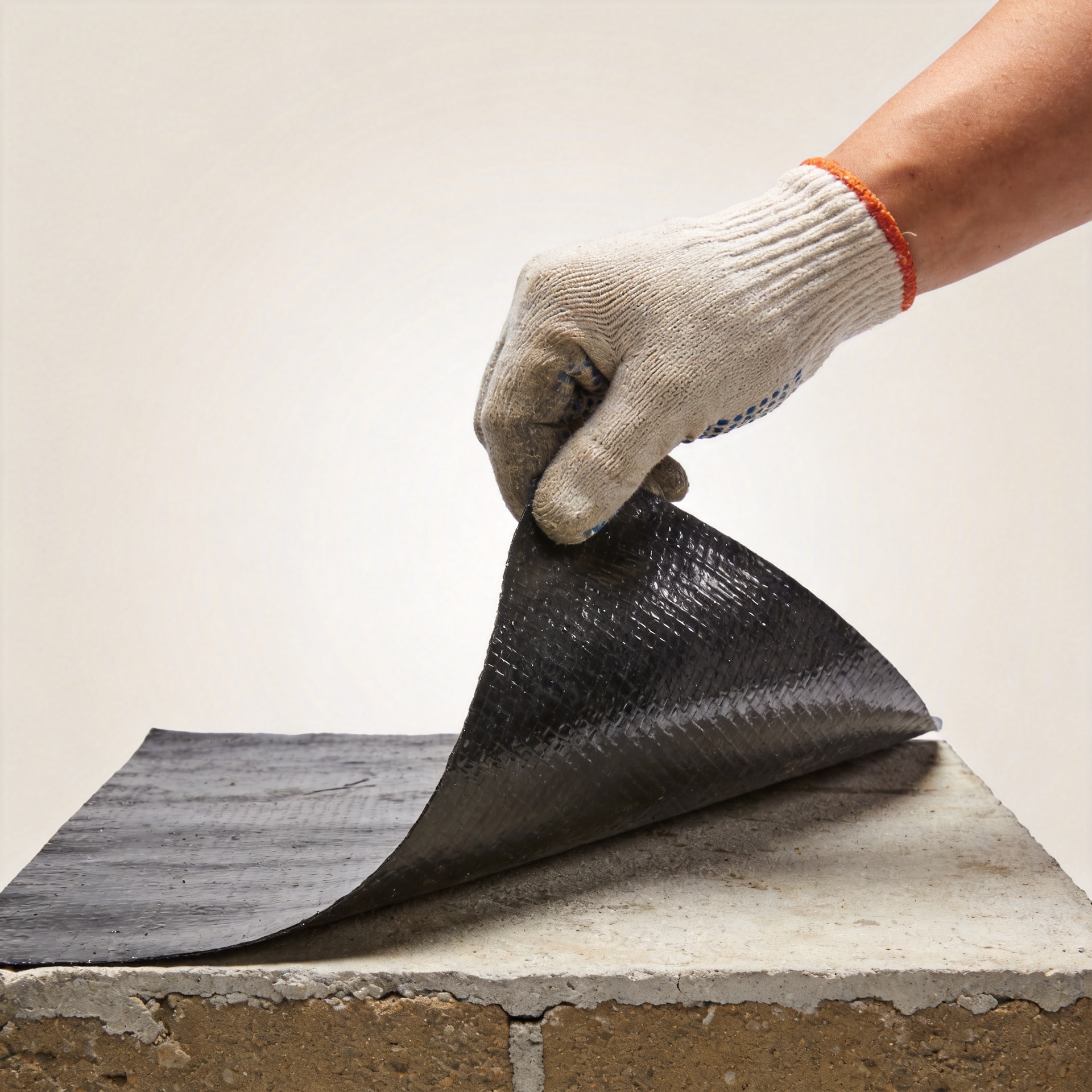
Cold covers two builds. One ships with a pressure-sensitive layer and a release liner; the crew peels and presses. The other is a fleece backed TPO membrane laid into adhesive spread on the deck. Both are adhesive-fixed and flame-free, and both need primer, a clean deck, full roller pressure and a cold applied adhesive that stays open long enough to roll. Neither removes heat from the seam, because TPO is thermoplastic, and a self adhesive TPO waterproofing membrane is joined at the lap by hot air. Cold describes the field bond, not every joint on the roof, and TPO membrane installation drawings that assume otherwise leave laps the adhesive cannot close.
Substrate Before Adhesive
Adhesive must wet out the surface completely. Concrete must be cured, sound, and free of laitance, dust, oil, and curing compound; a power-floated surface must be abraded or primed first. Moisture determines the outcome: a slab still emitting water vapor causes debonding of the pressure-sensitive layer from below, and no TPO membrane installation can be salvaged by rolling harder. Temperature governs the workday—for both adhesive application and seam formation—and hot-air-welded seams require their own specific temperature window. Published TPO data specifies low-temperature flexibility at −40°C and heat resistance at 120°C; these values describe the installed sheet—not the adhesive’s operational limits—so always consult the adhesive supplier’s specifications. Wind halts work: a partially unrolled self-adhesive TPO waterproofing membrane acts like a sail, and a fleece-backed TPO membrane lifted by a gust lands unpredictably.
Adhesive Formats
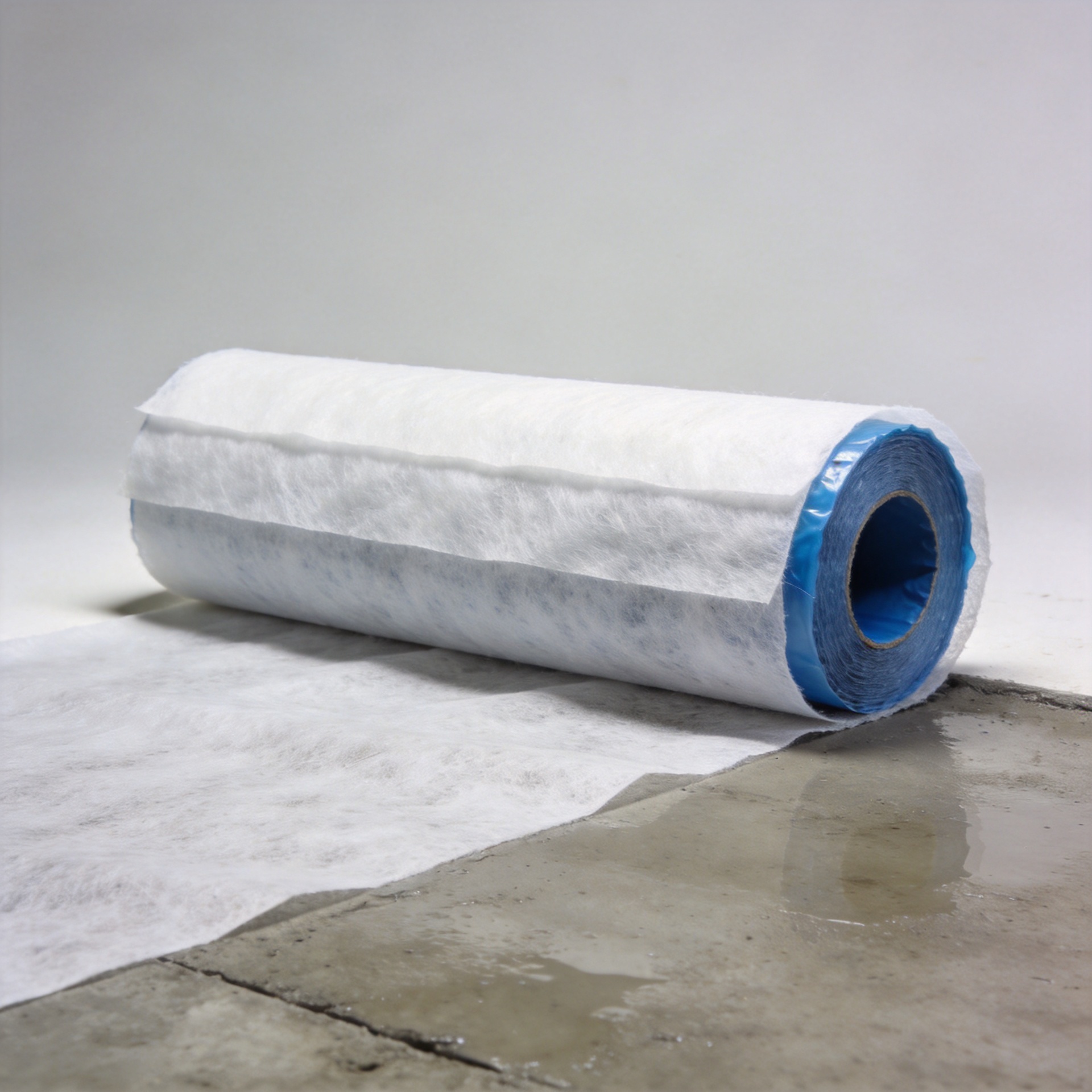
Membrana TPO cum primario applicato in fabbrica adatta a superfici lisce, piane e ben primerizzate, con tempi di apertura brevi. Un adesivo a freddo steso sul dorso in fibra di vetro è adatto a substrati più irregolari, poiché la fibra di vetro sopporta il carico: la classe di fibra di vetro indicata utilizza un tessuto non tessuto in poliestere da 150–200 g/m² con resistenza allo strappo di almeno 100 N/50 mm e aderisce a PIR, EPS, lana minerale e calcestruzzo primerizzato. Qualunque formato venga specificato, l’installazione di una membrana TPO è efficace quanto il suo strato di primer; pertanto, una membrana TPO con dorso in fibra di vetro viene srotolata con il lato liner verso il basso e mai tesa durante la posa, mentre l’adesivo a freddo steso in cantiere viene dosato con una spatola dentata e lasciato asciugare parzialmente prima della posa della membrana. Una membrana impermeabilizzante TPO autoadesiva arriva già con il proprio strato adesivo pre-applicato; la via dell’adesivo steso in cantiere lascia tale variabile nelle mani dell’equipaggio, non della fabbrica.
Posizionamento e lavoro con rullo
Set the first run to a chalk line and keep later runs parallel, with cold applied adhesive staged along it. Lay without tension, let the sheet relax, then roll from the centre outward with a weighted roller; air trapped under an adhesive-fixed sheet reads as a soft spot months later, a fleece backed TPO membrane will not bond across it, and a hot air welded seam will not compensate for a bubble in the field. Hold the published 40 mm minimum lap and stagger end laps between rows. On a chilled-food distribution centre where hot-work permits had been refused, the crew stopped each day on a completed lap rather than mid-run, and the next morning's TPO membrane installation began on a bond that had already taken load. Roller pressure, not time, develops peel strength in a self adhesive TPO waterproofing membrane, and a cold applied adhesive left to its own schedule will not.
Seams: Where Cold Ends
Adhesive-fixed TPO still closes with heat. A hot air welded seam is made by cleaning the lap, running the welder at a set temperature and speed, then testing it; the published TPO range welds at a 40mm minimum lap, and the fleece-backed type uses the same top-surface compound and welding settings as smooth-back types. Some products offer factory seam tape instead, and a self adhesive tpo waterproofing membrane specified that way follows the tape maker's overlap detail. A hybrid must not happen: contact adhesive on a sheet whose datasheet calls for welding. Record temperature and speed for every run, since the seam is only as good as its logged settings, and a fleece backed tpo membrane is no more forgiving of an unlogged weld.
Verification and Handover
Inspecte pro bullas, levationem marginis et rugas, et examina omne lapsum. Seam quae per aerem calidum soldatur inspicitur per probe aut aeris lanceam ad intervalla, et rursus aperitur, purgatur et re-runnitur si aperta est. Adhesivum frigidum applicatum lapsum non potest inspici per probe, ideo manu inspicitur ad marginem; patchae superimponuntur secundum dimensionem field lap. Serva mappam seam cum parametris, temperatura ambienti et initialibus operatoris. Ubi areae adhesivo fixatae in campo conveniunt cum perimetrum mechanicis fixationibus, descriptio installationis membranae TPO debet ostendere hanc iunctionem: ibi incipiunt reclamationes garantis.
Quaestiones Frequenter Rogatae
Necessene est adhuc habere soldatorem in tecto frigidae installationis?
Pro TPO, saepe. Flamma relinquat vinculum in campo, sed lapsum manent iuncturae thermoplasticae, ideo seam per aerem calidum soldatus adhuc debet fieri et probatur. Verifica an specificata membrana aqua-prohibens TPO auto-adesiva claudatur per soldationem an per fabrice factam fasciam, deinde personale ad hoc opus disponatur et methodus in descriptione installationis membranae TPO definitur.
Potestne haec operatio in frigido tempore fieri?
Only inside the supplier's stated range. The sheet stays flexible at −40°C, yet a cold applied adhesive or primer behaves differently in the cold, and a fleece backed tpo membrane welded too cold will not fuse.
How is a failed lap found before handover?
Probe welded laps, hand-check adhesive edges, then flood-test. An open hot air welded seam is rerun; a lifted lap is cut back, cleaned and replaced, and the tpo membrane installation record goes on the seam map rather than a verbal note.