 EN
APP Waterproof Membrane: High-Temperature Stability Guide
2026/11/20
How an APP waterproof membrane handles heat: 130°C softening point, torch application windows, overheating signs, summer storage, and thermal aging checks.

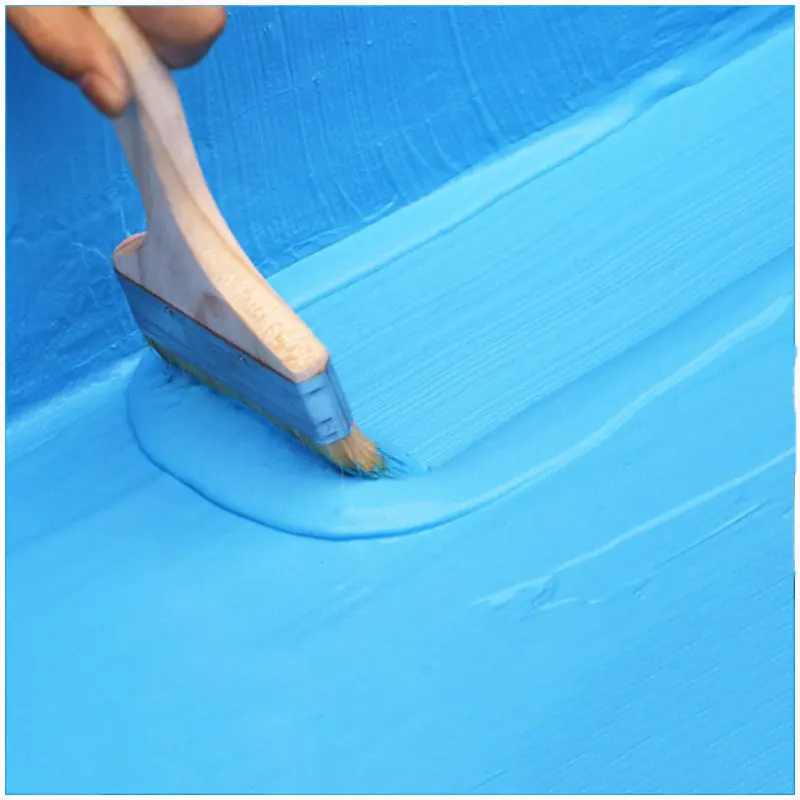
An acrylic water-based waterproof coating application succeeds or fails on procedure, not on equipment. A single component waterproof coating leaves no mixing to get wrong — the variables you control are substrate preparation, coverage rate, drying windows, and recoat timing. This guide walks through each step with published data in hand.
A two-part polyurethane demands precise ratios and pot-life discipline; one proportioning error produces a film that never fully cures. A single component waterproof coating removes that risk class entirely: open the 20kg bucket, stir, and apply. For an acrylic waterproof coating this is more than convenience — the quality of the cured film depends on surface preparation and coverage rate, not on site chemistry, so crews with mixed skill levels produce more uniform results. The elastomeric waterproof coating film that forms air-dries to a seamless layer which moves with the substrate instead of cracking under thermal stress, and the acrylic water-based waterproof coating application itself needs no hot-work permits, no solvent storage, and no forced ventilation in occupied buildings.
The coating bonds to concrete, cement mortar, brick, and most mineral substrates without a primer under standard conditions — but "without primer" never means "without preparation." Sweep and wash off dust, grease, and release agents; repair honeycombs and spalls; fill moving cracks wider than hairlines before the flexible waterproof coating goes on. New concrete should be cured and surface-dry; trapped moisture is the classic cause of blistering under any film. For an acrylic waterproof coating on renovations, remove loose old coatings until a sound base remains; the elastomeric waterproof coating will bridge hairline cracks and minor irregularities, but it cannot substitute for structurally unsound substrate.
The published application rate is 1.5–2.0 kg/m² over two coats — that is the figure behind the 0.3 MPa water tightness result, so treat it as a floor, not a suggestion. At that rate one 20kg bucket covers roughly 10–13 m², and packaging runs 5kg to 20kg for smaller repair scopes. Plan the acrylic water-based waterproof coating application around those bucket counts. Apply the first coat of the acrylic waterproof coating by brush, roller, or spray, working it into pores and corners; let it dry; then apply the second coat crosswise to the first so pinholes and thin streaks are covered. This is how a flexible waterproof coating reaches its rated film build without sagging: two controlled passes, not one heavy pour. A single component waterproof coating makes that discipline easy — no catalyzed pot life pushing the crew to dump material before it gels.
Drying is evaporation-driven, so temperature and humidity set the schedule. The acrylic water-based waterproof coating application sequence needs each coat surface-dry before the next; at moderate temperature that is typically a few hours, and the second coat follows once the first no longer transfers to a finger in a hidden spot. Do not stretch the interval for weeks — acrylic waterproof coating intercoat adhesion is strongest inside the same working cycle. Full cure — the flexible waterproof coating reaching its rated 200% elongation and 1.0 MPa tensile — takes several days of normal drying; keep foot traffic off the single component waterproof coating until then, and postpone the water test until the film is fully cured. An elastomeric waterproof coating gains its final properties gradually, so protect the fresh film from rain and ponding overnight.
Match the product to the exposure. Rooftops, balconies, exterior walls, and wet-room floors are the acrylic waterproof coating's home ground: the film is UV-resistant, resists ponding water, and bonds to tile adhesives and finishing systems in the normal fit-out sequence. The limitation of this elastomeric waterproof coating class is equally clear — it is not the system for surfaces under sustained hydrostatic pressure, such as below-grade foundations against groundwater or water-retaining structures. Specifying a flexible waterproof coating into a constant-head condition is a procurement error no application technique can repair. Within its range, the acrylic water-based waterproof coating application is forgiving: low VOC, brush or roller applied, safe in occupied buildings, with CE and ISO 14001 certification behind the spec.
A facilities manager faced a hospital balcony deck: tiled, leaking at the perimeter, occupied on every floor. Repaneling was impossible; solvent products were banned indoors. The crew cut out failed grout lines, repaired the screed, and let it dry, then applied a single component waterproof coating in two passes at the rated 1.5–2.0 kg/m² — first coat brushed into corners and up the wall turn, second rolled crosswise the next morning. Work ran ward by ward on standard ventilation. Two weeks later the elastomeric waterproof coating film passed its flood test, tiles went back over the acrylic waterproof coating, and the acrylic water-based waterproof coating application never once interrupted the wards above or below. A flexible waterproof coating detail at the door threshold finished the seal.
Two coats at 1.5–2.0 kg/m² total are the published rate for a single component waterproof coating; the first is brushed into pores and corners, and the acrylic waterproof coating second coat goes on crosswise once the first is surface-dry.
On sound concrete, mortar, brick, and mineral substrates the acrylic water-based waterproof coating application bonds directly under standard conditions, though damaged areas need repair and damp or weak surfaces demand preparation.
Avoid sustained hydrostatic pressure zones — below-grade foundations against groundwater and water-retaining structures — since a flexible waterproof coating of this class, whatever the elastomeric waterproof coating marketing says, is not rated for constant head.

2026/11/20
How an APP waterproof membrane handles heat: 130°C softening point, torch application windows, overheating signs, summer storage, and thermal aging checks.

2026/11/20
The science of a breathable waterproof membrane: water vapor diffusion, Sd values, three grammage grades, water column resistance, and wrong-use cases.

2026/11/20
Single-ply or two-ply, every flat roof is a stack. See how a self adhesive waterproof membrane for roof systems handles base, cap, insulation and drains.

2026/11/20
How the polyester scrim sets tensile strength and dimensional stability of reinforced TPO membrane rolls, with welding, roll sizes and selection tips.

2026/11/20
How an aluminum foil coated bitumen waterproof membrane reflects solar radiation, lowers surface temperature, and what maintenance keeps savings alive.

2026/11/20
SBS modified bitumen waterproof membrane property groups: tensile strength, low-temperature flexibility, heat resistance, surface finishes, applications.
Links to the corresponding full news page.

The eight questions overseas buyers ask most — factory ownership, capacity, batch consistency and lead times, answered straight.

SBS membranes, polymer sheets, coatings and geomembranes — six product lines are operating simultaneously.

Pre-sales specification, on-site technical support and post-delivery maintenance across 100+ export markets.

Waterproofing performance is decided in the specification and the detailing, not just the material. Our technical team helps you select the right system, resolve site questions as they arise, and stay reachable long after the container lands.
