 EN
APP Waterproof Membrane: High-Temperature Stability Guide
2026/11/20
How an APP waterproof membrane handles heat: 130°C softening point, torch application windows, overheating signs, summer storage, and thermal aging checks.

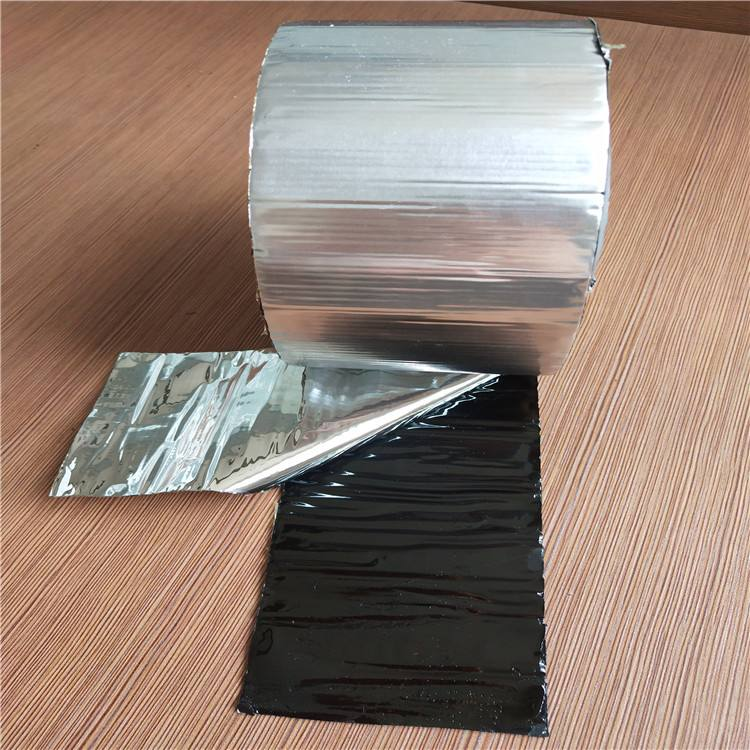
A ceiling stain shows up long after water has left the entry, which usually sits metres upslope. The fix runs from trace to press. A bitumen waterproof tape for roof leak repair closes a local defect in one visit; an emergency roof leak repair started the same hour holds through the next storm; a self adhesive bitumen tape needs no flame. Roof leak sealing takes twenty minutes, not a scaffold day.
Tape suits defects with defined edges: a lifted lap, a failed sealant bead, a backed-out fastener, a crack across a parapet cap. It does not suit a bay blistered across its width, bitumen released over square metres, or ponding from bad falls. Those are replacement decisions. Roof leak sealing holds on sound substrate; an emergency roof leak repair on a prepared lap survives a season; a self adhesive bitumen tape cannot bridge a moving joint. No bitumen waterproof tape for roof leak repair stops a wall settling.
Water rarely enters where it exits. Mark the stain indoors, work upslope and back, checking penetrations, laps, and changes of plane. A hose test on a dry day exposes the entry within minutes. Trace first and the whole job becomes a one-visit fix; guess, and a bitumen waterproof tape for roof leak repair lands a metre from the water. Roof leak sealing is only as accurate as that map, and a self adhesive bitumen tape often carries the blame for a tracing error.
Published figures assume prepared substrates with a face free of dust, oil, and loose granule: peel adhesion of at least 1.5 N/mm and tensile strength of at least 400 N/50mm for the 1.5 mm foil-faced grade. Wire-brush to sound material, wipe down, and dry, because a damp deck traps moisture under the film. A primer gives the self adhesive bitumen tape a uniform face to wet out against, and that step decides whether roof leak sealing survives a frost. An emergency roof leak repair laid over dust wastes the roll, and no bitumen waterproof tape for roof leak repair compensates for it.
Cut with 50 mm of margin each side, peel the liner in short sections, lay from one end rather than dropping it flat. Roll from the centre outward, working air ahead of the line, since trapped air becomes trapped water. For a pipe collar, a 1.2 mm PE-film grade in 50 to 300 mm widths, rated 1.2 N/mm peel and 300 N/50mm tensile, follows the profile with less bridging, and a second emergency roof leak repair on that collar usually means the width was too narrow. The foil-faced bitumen waterproof tape for roof leak repair comes in widths of 100 to 600 mm and rolls of 7.5 to 20 m, enough for a parapet cap. A self adhesive bitumen tape is only as good as the roller behind it, and roof leak sealing shows in staggered ends.
Let the patch settle, hose the repaired zone alone, watch the interior for twenty minutes. A dry result closes the emergency roof leak repair; a damp one means the entry is wider than the patch or hidden under a lap that still holds water. Both grades are rated to -20°C and pass water tightness at 0.3 MPa, so the bonded strip is rarely the weak point; coverage is. A second bitumen waterproof tape for roof leak repair on the same seam within a year is a signal, not bad luck. More roof leak sealing will not close a moving joint; a self adhesive bitumen tape cannot see what it cannot reach.
Three conditions end the taped approach. A saturated deck comes first: tape over wet substrate fails and the covering must come off to dry. A moving joint comes second, because a 1.5 mm strip cannot absorb an expansion joint at a roof step indefinitely. A detail patched twice in two seasons comes third, pointing to a design fault rather than a local failure. In all three, a further emergency roof leak repair delays the decision without changing it.
A property manager met the sequence. A leak above a stairwell appeared after three days of rain and traced to a lifted lap on a metal deck. The crew chalked the boundary, cleaned and primed, and ran a 150 mm strip of self adhesive bitumen tape across it, rolled from the centre out. The interior stayed dry for the season, and the detail went to a full recover the following spring. That is a sound repair: a bridge that works, is recorded, then yields to a new covering, with roof leak sealing judged by the ceiling below.
No. Water under the adhesive prevents wet-out and the bond releases within weeks, so no bitumen waterproof tape for roof leak repair belongs on a damp deck.
A strip on a sound, prepared substrate holds through a full wet season. Exposure and joint movement set the limit, so treat an emergency roof leak repair as a bridge, not a covering.
No. The foil face reflects solar radiation and keeps the adhesive cooler at the interface, and both grades are rated to -20°C. On dark, unshaded metal, apply early while the panel is cool, and a self adhesive bitumen tape outlasts a sealant bead. Roof leak sealing there depends on the foil, not on extra thickness, and a bitumen waterproof tape for roof leak repair specified for exposure makes the emergency roof leak repair last longer.

2026/11/20
How an APP waterproof membrane handles heat: 130°C softening point, torch application windows, overheating signs, summer storage, and thermal aging checks.

2026/11/20
The science of a breathable waterproof membrane: water vapor diffusion, Sd values, three grammage grades, water column resistance, and wrong-use cases.

2026/11/20
Single-ply or two-ply, every flat roof is a stack. See how a self adhesive waterproof membrane for roof systems handles base, cap, insulation and drains.

2026/11/20
How the polyester scrim sets tensile strength and dimensional stability of reinforced TPO membrane rolls, with welding, roll sizes and selection tips.

2026/11/20
How an aluminum foil coated bitumen waterproof membrane reflects solar radiation, lowers surface temperature, and what maintenance keeps savings alive.

2026/11/20
SBS modified bitumen waterproof membrane property groups: tensile strength, low-temperature flexibility, heat resistance, surface finishes, applications.
Links to the corresponding full news page.

The eight questions overseas buyers ask most — factory ownership, capacity, batch consistency and lead times, answered straight.

SBS membranes, polymer sheets, coatings and geomembranes — six product lines are operating simultaneously.

Pre-sales specification, on-site technical support and post-delivery maintenance across 100+ export markets.

Waterproofing performance is decided in the specification and the detailing, not just the material. Our technical team helps you select the right system, resolve site questions as they arise, and stay reachable long after the container lands.
