 EN
APP Waterproof Membrane: High-Temperature Stability Guide
2026/11/20
How an APP waterproof membrane handles heat: 130°C softening point, torch application windows, overheating signs, summer storage, and thermal aging checks.

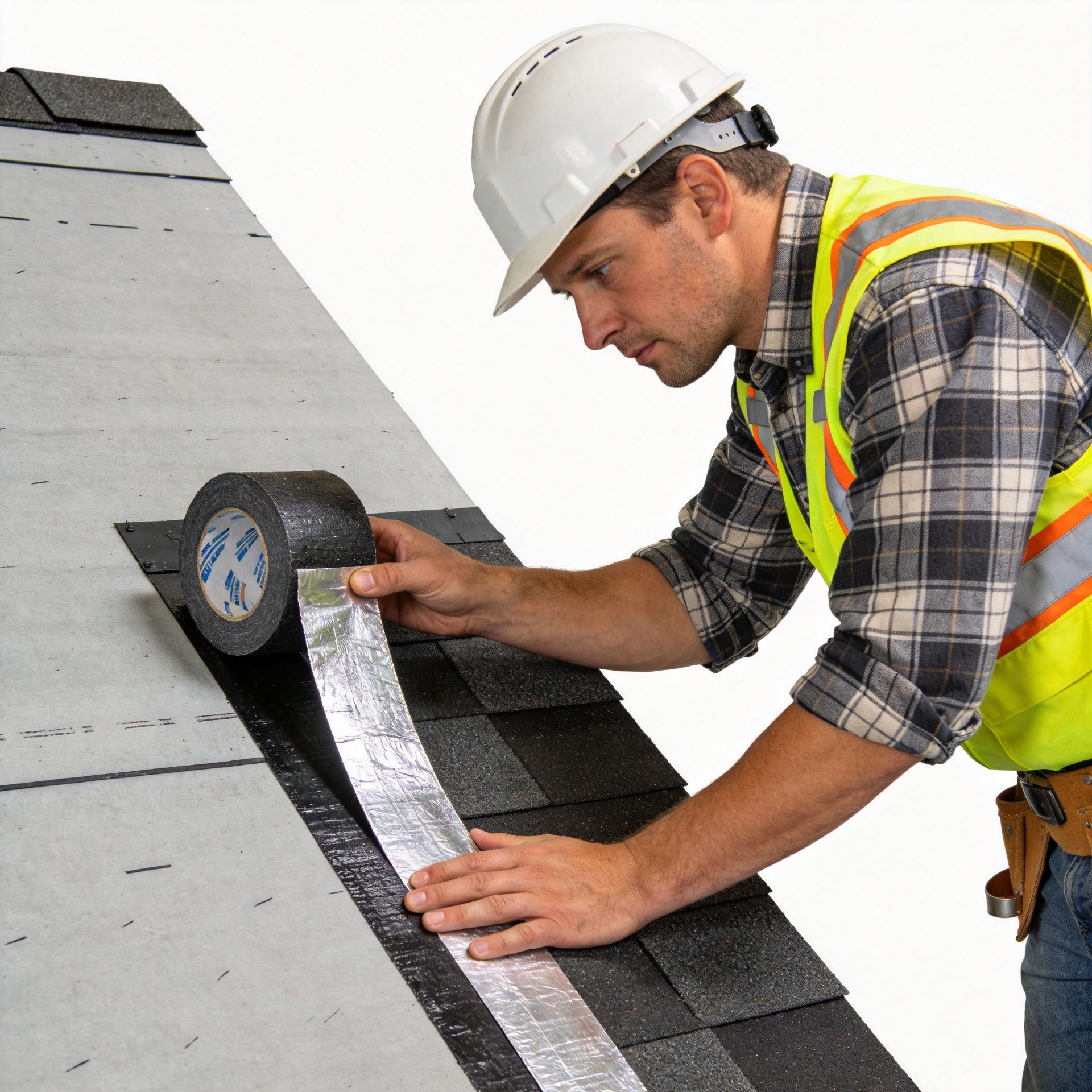
Catalogues hide two structurally different products behind one name: self-adhesive rolls that bond under hand pressure, torch-on strips that fuse under flame. Both rely on modified bitumen chemistry, yet adhesive layer, facing, and release liner decide where each construction belongs. This guide compares the self-adhesive bitumen tape family with its torch-on counterpart, cites published data throughout, and closes with a selection comparison.
The self-adhesive construction is a three-part laminate: a pressure-sensitive compound, a factory-laminated facing, and a silicone-coated release liner. Peel the liner, press the strip onto a clean, dry substrate, and the seal is active at once — no flame, no curing window, no equipment.
A torch-on bitumen tape has neither adhesive layer nor liner. It is a dense bitumen compound that softens under controlled flame and re-solidifies into the substrate as it cools, the same principle that governs torch-applied rolls. Because one bond is pressure-formed and the other heat-formed, the two families of bitumen waterproof tape differ in thickness behaviour, edge quality, and site tolerance.
Facing choice defines the working environment. An aluminum foil tape facing suits exposed lines: the 1.5mm foil-faced grade is offered in widths of 100–600mm and roll lengths of 7.5–20m, and its bright metallic surface shields the compound from UV while acting as a vapour barrier across sealed joints. This anatomy is what separates a self-adhesive strip from a torch-on bitumen tape.
A PE film facing suits concealed build-ups. The 1.2mm PE-faced bitumen waterproof tape is compatible with mortar, screed, and tile adhesive, supplied in widths of 50–300mm with custom options up to 1000mm. A butyl waterproof tape shares this laminate anatomy but swaps the compound for permanently tacky synthetic rubber.
Both facings sit on SBS-modified compounds rated for low-temperature flexibility at -20°C and water tightness at 0.3 MPa, with peel adhesion ≥1.2 N/mm on the PE grade and ≥1.5 N/mm plus tensile ≥400 N/50mm on the aluminum foil tape grade — figures any buyer can verify on the datasheet.
Compound chemistry is the second selection axis. A butyl waterproof tape uses synthetic butyl rubber that stays permanently tacky, while a bitumen waterproof tape stiffens as temperature falls. The 1.2mm butyl grade is rated at peel adhesion ≥1.5 N/mm, elongation at break ≥300%, and service temperatures from -40°C to +70°C across its full rated range.
In heavy service on site, the heavy-duty 2.0mm butyl waterproof tape extends these limits: widths of 300–1000mm, peel adhesion ≥2.0 N/mm, water tightness at 0.4 MPa, and a -40°C to +80°C service window, with PE film or aluminum foil tape facings selectable. By contrast, a torch-on bitumen tape trades this cold-bond convenience for a heat-welded joint instead. Bitumen grades are specified down to -20°C — adequate for most climates, but a limit to respect on free-exposure northern sites.
Torch-on construction suits sites where flame work is permitted and the substrate tolerates heating: primed concrete decks, metal flashings, and the wide lap zones of membrane systems on commercial flat roofs. A torch-on bitumen tape forms a heat-welded bond that does not rely on initial tack, and its compound mass bridges irregular profiles better than a thin self-adhesive bitumen tape.
Where flame is restricted — occupied buildings, confined interiors, fire-sensitive plant rooms — self-adhesive construction keeps the schedule. A butyl waterproof tape also removes hot work while holding tack below freezing, which matters on winter projects; where flame remains permitted, the torch-on construction remains the heavier choice for thick joint zones.
Every bitumen waterproof tape carries structural limits. Pressure-sensitive self-adhesive bitumen tape grades depend on surface preparation: dust, moisture, or oil under the adhesive face causes bond failure directly, so priming rough or damp substrates is a required step. The butyl family keeps elongation but costs more per metre. Torch-on work depends on operator technique at every metre and cannot proceed where hot-work permits are refused.
On a coastal warehouse re-roof, one contractor matched construction to position: aluminum foil tape along the exposed ridge lines, butyl waterproof tape strips at dissimilar-metal junctions, torch-on bitumen tape work across the field laps — three constructions, each aligned with the condition it actually faced, and each chosen during a single survey visit.
A selection comparison reduces to three questions. Exposed or concealed? Exposed lines take the foil-faced 1.5mm grade — an aluminum foil tape construction for UV — while concealed build-ups take the PE-faced 1.2mm.
Moving joint? Elongation ≥300% makes butyl waterproof tape the match for displacement on metal and plastics, while the bitumen type bonds economically to static concrete and masonry.
Flame allowed? Torch-on bitumen tape gives heat-welded continuity on permitted sites; elsewhere a self-adhesive bitumen tape preserves both schedule and safety compliance. Matching construction to position, not price per roll, is what keeps a seal in service.
No. PE film facings are formulated for overlay compatibility and burial in build-ups, while an aluminum foil tape facing is formulated for UV exposure and vapour control. Specify facing and thickness together, not thickness alone.
Not fully. Butyl holds tack from -40°C and elongates ≥300%, which suits moving joints on metal, glass, and PVC; bitumen waterproof tape grades bond strongly and economically to concrete, masonry, and existing membranes on static joints.
On permitted sites with wide, accessible joint zones, a torch-on bitumen tape forms bonds independent of initial tack with more compound mass. For thin, conformable sealing around penetrations or where flame is banned, a self-adhesive bitumen tape remains the workable route.

2026/11/20
How an APP waterproof membrane handles heat: 130°C softening point, torch application windows, overheating signs, summer storage, and thermal aging checks.

2026/11/20
The science of a breathable waterproof membrane: water vapor diffusion, Sd values, three grammage grades, water column resistance, and wrong-use cases.

2026/11/20
Single-ply or two-ply, every flat roof is a stack. See how a self adhesive waterproof membrane for roof systems handles base, cap, insulation and drains.

2026/11/20
How the polyester scrim sets tensile strength and dimensional stability of reinforced TPO membrane rolls, with welding, roll sizes and selection tips.

2026/11/20
How an aluminum foil coated bitumen waterproof membrane reflects solar radiation, lowers surface temperature, and what maintenance keeps savings alive.

2026/11/20
SBS modified bitumen waterproof membrane property groups: tensile strength, low-temperature flexibility, heat resistance, surface finishes, applications.
Links to the corresponding full news page.

The eight questions overseas buyers ask most — factory ownership, capacity, batch consistency and lead times, answered straight.

SBS membranes, polymer sheets, coatings and geomembranes — six product lines are operating simultaneously.

Pre-sales specification, on-site technical support and post-delivery maintenance across 100+ export markets.

Waterproofing performance is decided in the specification and the detailing, not just the material. Our technical team helps you select the right system, resolve site questions as they arise, and stay reachable long after the container lands.
