 EN
APP Waterproof Membrane: High-Temperature Stability Guide
2026/11/20
How an APP waterproof membrane handles heat: 130°C softening point, torch application windows, overheating signs, summer storage, and thermal aging checks.

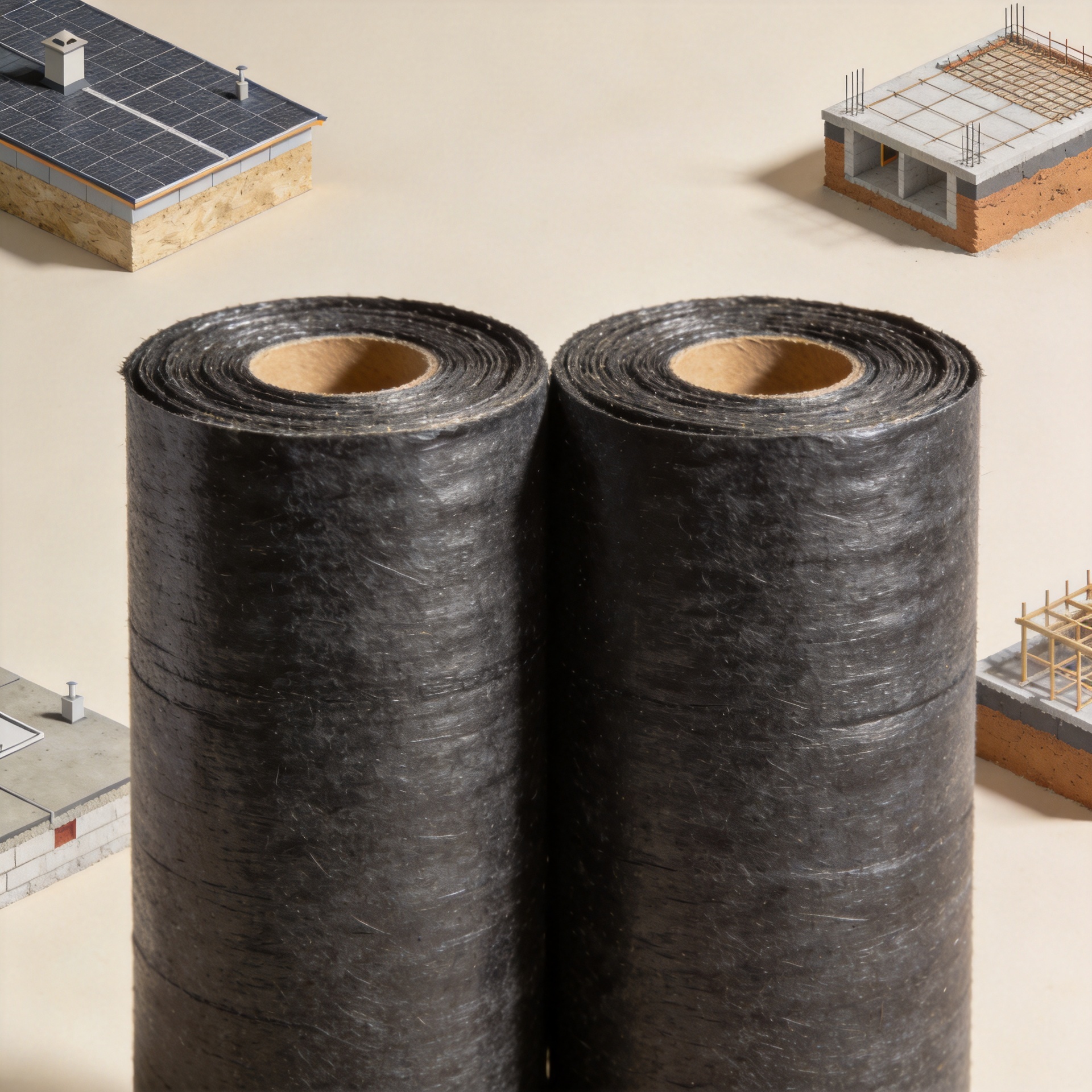
Unrolled on a pallet, most reinforced waterproofing rolls look alike, and two quotations can hide two different products behind the same photograph. The difference sits in the grade designation, and learning to read it takes less time than it saves on the first disputed delivery certificate. A bitumen waterproofing membrane is not one product but a family of grades, and the datasheet name packs four facts into one line: the modifying polymer, the reinforcement carrier, the thickness and the surface finish. An SBS modified sheet behaves differently from an APP modified sheet of the same thickness, and polyester mat outperforms fiberglass in elongation even when all else matches. Buyers who read designations compare quotations line by line, because the grade, not the brand story, determines performance. Both major standards exist for this reason: they turn marketing language into checkable classes.
The Chinese standard for elastomeric sheets sorts the bitumen waterproofing membrane family into two performance types, Type I and Type II, and the type number is a tier, not a decoration: Type II sits above Type I on tensile strength, elongation and low-temperature flexibility, so the same 4mm roll carries very different expectations depending on the marked type. When a quotation states GB 18242 without the type, ask which tier the batch was tested against; a supplier who answers with a certificate number, not adjectives, is worth shortlisting. An SBS modified grade with flexibility to -25°C and tensile strength of at least 800 N/50mm is the kind of value set that belongs at the upper tier - the set published on the current datasheet. The type explains the tier, and the tier the numbers.
The European standard works differently but serves the same purpose for a bitumen waterproofing membrane, and its logic rewards careful reading. The designation identifies the polymer type, the reinforcement class, the thickness and the surface finish in one compact string, which is why European tender documents lean on it so heavily: a purchaser can see from an EN 13707 marking alone whether a roll is an APP modified polyester sheet or a fiberglass product with sand finish. Compliance ties the roll to CE marking: declared values must rest on testing under the standard, not brochure claims. At delivery, check that the label designation matches the order: a swapped reinforcement class or a thinner grade are the common substitutions, both visible before a roll is opened.
Thickness grades of 3mm, 4mm and 5mm run across both SBS modified and APP modified ranges, and the choice is part of the grade: thickness drives puncture resistance and mechanical tolerance on site. Surface finish is the second half of the designation. A PE film surface suits buried or covered positions; fine sand gives traction under maintenance traffic; aluminum foil adds UV protection for exposed service in high-temperature climates. Roll size completes the picture - 1m × 10m, with 1m × 7.5m on the SBS grade - because lap planning depends on it. At this point the designation of a bitumen waterproofing membrane is complete, and both GB 18242 and EN 13707 expect the finish to match the application: a membrane surfaced for covered use will age prematurely if it is specified into an exposed position.
Two published grades show how far tiers separate on paper. The SBS modified grade declares flexibility to -25°C, tensile strength of at least 800 N/50mm, elongation of at least 40%, and heat resistance at 90°C - the profile of a cold-climate, high-movement elastomeric sheet. The APP modified grade declares heat resistance at 130°C, tensile strength of at least 600 N/50mm, elongation of at least 25%, and low-temperature flexibility of -5°C to -10°C - the profile of a heat-resistant, UV-stable sheet for hot regions. Both come in 3mm, 4mm and 5mm with PE film, sand or aluminum foil finishes, and each tier arrives with its GB 18242 type or EN 13707 designation on the certificate, so the modifier and tier differentiate, not the size chart. A bitumen waterproofing membrane buyer who reads only thickness misses the entire distinction.
Procurement comparisons go wrong when they compare brochures instead of grades. Put the quotations side by side and align them on four lines: standard and type (GB 18242 Type II or EN 13707 designation), polymer (SBS modified or APP modified), reinforcement (polyester or fiberglass mat), and thickness with surface finish. Then demand that the declared values - flexibility, tensile strength, elongation, heat resistance - trace to a test certificate for that exact grade. A bitumen waterproofing membrane offered without a type or designation is a specification risk whatever the sales copy says, because GB 18242 and EN 13707 exist precisely so that two buyers in two countries can mean the same roll when they write the same words.
It marks the performance tier: Type II requires higher tensile strength, elongation and low-temperature flexibility than Type I. Ask which type the delivered batch was certified against, not just the standard number.
Match the designation on the roll label - polymer, reinforcement, thickness, surface finish - against the purchase order, and confirm CE documentation covers that exact designation, not a neighbouring grade.
The published grades say no: the SBS modified grade holds flexibility to -25°C, while the APP modified grade holds heat resistance at 130°C. Each tier is built around its climate, hence the designation comes first.

2026/11/20
How an APP waterproof membrane handles heat: 130°C softening point, torch application windows, overheating signs, summer storage, and thermal aging checks.

2026/11/20
The science of a breathable waterproof membrane: water vapor diffusion, Sd values, three grammage grades, water column resistance, and wrong-use cases.

2026/11/20
Single-ply or two-ply, every flat roof is a stack. See how a self adhesive waterproof membrane for roof systems handles base, cap, insulation and drains.

2026/11/20
How the polyester scrim sets tensile strength and dimensional stability of reinforced TPO membrane rolls, with welding, roll sizes and selection tips.

2026/11/20
How an aluminum foil coated bitumen waterproof membrane reflects solar radiation, lowers surface temperature, and what maintenance keeps savings alive.

2026/11/20
SBS modified bitumen waterproof membrane property groups: tensile strength, low-temperature flexibility, heat resistance, surface finishes, applications.
Links to the corresponding full news page.

The eight questions overseas buyers ask most — factory ownership, capacity, batch consistency and lead times, answered straight.

SBS membranes, polymer sheets, coatings and geomembranes — six product lines are operating simultaneously.

Pre-sales specification, on-site technical support and post-delivery maintenance across 100+ export markets.

Waterproofing performance is decided in the specification and the detailing, not just the material. Our technical team helps you select the right system, resolve site questions as they arise, and stay reachable long after the container lands.
