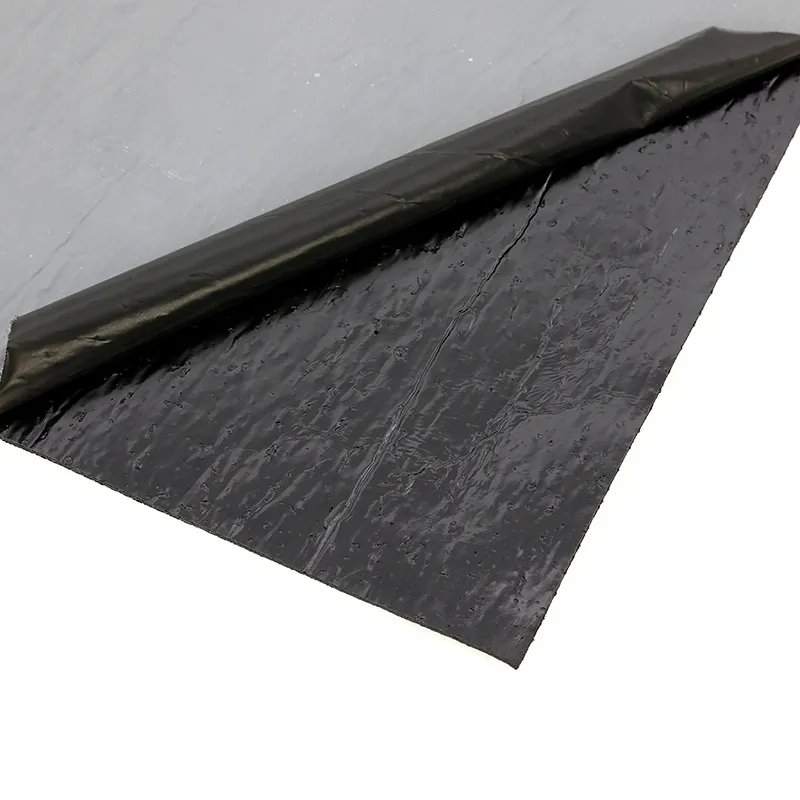
Two crews can unroll sheet from one pallet and hand over two very different roofs. The bituminous waterproofing membrane is the same product; the bonding route is not. One crew fuses it down with an open flame, the other brushes out a cold adhesive and presses the sheet home. Each method fails in its own recognisable way. What follows compares sequence, substrate tolerance, weather window, safety, and detail work.
One Sheet Chemistry, Two Bonding Routes
A modified bitumen sheet takes its behaviour from the compound, not from the flame. SBS grades hold flexibility in cold: published values include -25°C low-temperature flexibility, 800 N/50mm longitudinal tensile strength, 40% elongation, and 90°C heat resistance under GB 18242 and EN 13707, at 3mm, 4mm, and 5mm on 1m x 10m or 1m x 7.5m rolls. APP grades trade cold flexibility for heat: 130°C heat resistance, 600 N/50mm tensile, 25% elongation, and low-temperature flexibility of -5°C or -10°C. The same bituminous waterproofing membrane can be installed as a torch applied membrane or a cold applied membrane, so the roll alone does not choose the method. Reinforcement governs how a sheet spans a moving crack, and the surface finish, PE film, sand, or aluminium foil, governs whether it can be trafficked or left exposed. A self adhesive membrane carries its adhesive inside the product.
The Torch Route, Step by Step
Torch work starts with surface preparation, primer, and a chalk line, because a torch applied membrane bonds only where the compound reaches fluxing temperature. The operator unwinds a length, heats the underside and the substrate together, and rolls the lap as bitumen bleeds at the edge; that narrow bleed line is the visible proof of fusion. The route suits large open fields and dry, sound decks. It is unforgiving of a damp substrate, which turns trapped moisture into blisters, and of an operator who moves too fast, leaving a cold lap that looks continuous. A modified bitumen sheet laid this way is really only as good as the man holding the torch, and the same bituminous waterproofing membrane is no better in careless hands.
The Brush Route, Step by Step
The alternative beds a cold applied membrane into brushed or rolled adhesive, worked out with a notched trowel, either as a factory self adhesive membrane or as a modified bitumen sheet set into cold bitumen. Preparation is slower: the deck is cleaned, primed, and checked for dust, and adhesive is worked out at an even film so no air pockets survive. Bond strength develops over hours, so a crew can reposition a length before pressure is applied and can close details by hand. Roller pressure replaces flame heat, and the finished bituminous waterproofing membrane carries no heat-affected zone at the laps. Where flame work needs a permit and a fire watch, this route needs ventilation and clean access instead.
Substrate Tolerance and Weather Windows
The two routes disagree most sharply about moisture. A torch applied membrane needs a dry deck and dry weather during the burn; rain stops it outright. A cold applied membrane tolerates a damper deck and a lower ambient temperature, though every adhesive has published application limits. Solvent-based products release vapour and need ventilation; water-based systems need longer before the next trade follows. On a refurbishment where the deck cannot be dried, tolerance decides which modified bitumen sheet reaches site, whether a self adhesive membrane can carry the detailing, and what the bituminous waterproofing membrane specification should say about moisture, long before price enters the conversation.
Safety, Permits, and Insurance
Open flame brings paperwork: hot-work permits, a fire watch, cylinder storage, and exclusion zones around combustible insulation. Insurers ask about it. A torch applied membrane suits sites that can carry that administration; a cold applied membrane suits those that cannot. A self adhesive membrane removes the ignition source and changes what is possible in occupied buildings, basements, and plant rooms where the permit window is shorter than the work, though cold work still demands ventilation and slip control. Here the bituminous waterproofing membrane data sheet decides nothing; the permit regime does.
Choosing by Detail, Access, and Building Type
Field area is easy; details decide. Upturns, parapets, drains, and penetrations are where a modified bitumen sheet is cut and sealed by hand. Flat, dry roofs reward torch speed. On a distribution centre extension inside a tenant-occupied park, a contractor working with Shandong Dingtai Waterproof ran the open field as a torch applied membrane during a scheduled shutdown, then switched to a cold applied membrane for plant-room upstands and parapet returns, because the permit window closed at the wall line. A self adhesive membrane also let the crew work corners without a second permit. The handover passed its flood test, and the bituminous waterproofing membrane assembly was warranted as one system.
Frequently Asked Questions
Can the same roll be torch bonded or brushed on?
No. Some compounds are published for one route only, so the data sheet governs. Where both are offered, the difference sits in the adhesive and the method statement, not the sheet. A torch applied membrane has no adhesive layer to specify.
Which method is faster on a large roof?
A cold applied membrane usually wins on small, detailed, or occupied areas, where permits set the pace. On open field area a modified bitumen sheet fused with a flame is faster, because no cure time intervenes.
How do I check a lap after the crew has gone?
On a torch-sealed lap, look for a continuous bleed line along the edge and probe the seam by hand. On a cold lap, check for a uniform adhesive film and no voids under pressure. A self adhesive membrane shows the same tell-tales. Whatever the bituminous waterproofing membrane certificate states, the lap is where a roof starts leaking, so inspect before the next length covers it.

 EN