 EN
APP Waterproof Membrane: High-Temperature Stability Guide
2026/11/20
How an APP waterproof membrane handles heat: 130°C softening point, torch application windows, overheating signs, summer storage, and thermal aging checks.

A building envelope must do more than keep rain out. Moisture can enter a roof or wall as liquid water, but it can also move through the structure as water vapor. Temperature differences, indoor humidity, and construction moisture can affect how vapor moves through insulated assemblies. When moisture cannot escape under suitable conditions, condensation may form inside the structure and create problems for insulation, timber, metal fixings, and interior finishes. This is why a breathable waterproof material can be useful in carefully designed roof and wall systems.
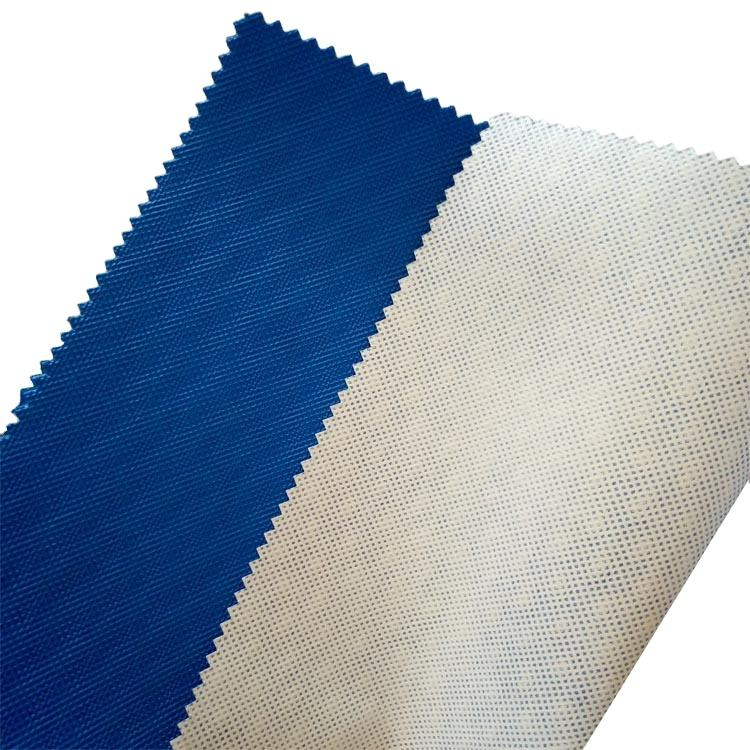
DT Waterproof offers breathable waterproof membranes made from a three-layer PP+PE+PP composite. The outer polypropylene non-woven layers support the membrane structure, while the polyethylene film forms the functional middle layer. The product is designed to resist liquid water while allowing water vapor to pass through under suitable conditions. It is intended for selected applications such as pitched-roof underlays and external wall assemblies, subject to the exact product specification.
The important point is that “breathable” does not mean air can freely flow through the membrane, nor does it mean the material can prevent every moisture problem. Vapor permeability describes the movement of water vapor through a material; ventilation describes the movement of air through a space. A breathable waterproof material should therefore be selected as one part of a complete building-envelope design, not as a replacement for appropriate ventilation, insulation, indoor humidity control, or sound construction detailing.
The correct membrane depends on where it will be installed and what the surrounding construction layers need to do. Beneath roof tiles or metal roofing, a breathable membrane can act as a secondary weather barrier. It helps manage rain that passes the outer covering while allowing vapor to move through the assembly where the design permits. On an external framed wall, the membrane may be positioned behind the cladding to help limit rain penetration while supporting outward vapor diffusion.
These applications are not identical. A roof underlay must suit the roof covering, pitch, drainage path, fixing method, and exposure during construction. A wall membrane must be compatible with the cladding system, openings, joints, and the wall’s overall moisture-control strategy. A breathable waterproof material suitable for one assembly should not automatically be specified for another without checking the manufacturer’s instructions and the building design.
For projects governed by European specifications, EN 13859 is a useful reference to check in the product documentation. The standard series covers flexible underlay sheets for discontinuous roofing and external walls. The exact part and the product’s declared application matter: buyers should confirm that the documentation corresponds to the intended use and the specific membrane grade. This verification is more reliable than relying on general descriptions such as “roofing grade” or “wall wrap.”
DT Waterproof lists three breathable membrane weight ranges: lightweight at 70–100 g/m², medium at 130–180 g/m², and heavy at 220–300 g/m². These ranges offer options for different construction requirements, but weight alone does not determine whether a product is suitable. Buyers should consider mechanical stress during installation, expected exposure before the final covering is fitted, and the performance values specified for the project.
The lightweight grade is listed for standard pitched-roof underlays and wall wraps. Its product information gives hydrostatic resistance of at least 1,000 mm H₂O and an Sd value of no more than 0.02 m. The medium grade is listed for pitched roofing, curtain-wall assemblies, and timber-frame construction; its product data states hydrostatic resistance of at least 1,500 mm H₂O, tensile strength of at least 150 N/50 mm in the machine direction, and an Sd value of no more than 0.02 m. The heavy grade is intended for more demanding applications, including high-wind-load roofing and heavy timber structures. Its listed specifications include hydrostatic resistance of at least 2,000 mm H₂O, tensile strength of at least 250 N/50 mm, an Sd value of no more than 0.02 m, and UV exposure stability of up to six months before covering.
These figures apply to the stated product grades and should be confirmed against the current technical data sheet before purchase. A heavier breathable waterproof material may be appropriate when a project requires greater mechanical strength or a longer construction-phase exposure window, but it should not be chosen simply because the weight is higher. The right grade is the one that meets the documented project requirements without adding unnecessary cost.
Installation quality can determine whether a breathable waterproof material performs as intended. Before work begins, the construction team should confirm the laying direction, substrate condition, fixing method, overlap requirements, and detailing around edges and openings. Roof ridges, eaves, valleys, wall junctions, pipe penetrations, and window openings deserve particular attention because poorly formed connections can let water bypass the main membrane.
The membrane must also be coordinated with the roof covering or wall cladding. Fixings and battens should follow the system design, and the intended drainage route must remain clear. Installers should check the product’s stated limit for exposure to sunlight before final covering. For example, the listed heavy grade has a UV exposure stability rating of up to six months before covering; this should not be interpreted as permission to leave every product exposed for the same period.
Before the membrane is concealed, inspect for punctures, tears, loose fixings, incomplete overlaps, and damage caused by subsequent trades. Repair defects with methods and accessories compatible with the selected product. Where the project specification requires formal inspection or testing, document the results before installing insulation, cladding, tiles, or other covering layers. These practical steps help ensure the membrane remains part of a continuous weather-protection layer rather than becoming a weak point in the assembly.
A breathable waterproof material cannot compensate for an unsuitable roof design or a poorly detailed wall. Moisture performance depends on the interaction between the membrane, insulation, internal vapor-control layers, ventilation provisions where required, exterior covering, and drainage. In a cold or humid climate, the designer may need to assess condensation risk for the entire assembly rather than relying on a single membrane specification.
Before placing an order, request the technical data sheet and installation instructions for the exact grade. Check the declared application, hydrostatic resistance, vapor permeability, tensile strength, UV exposure limits, dimensions, and applicable certifications. If the project requires CE documentation or compliance with EN 13859, confirm that the documents match the product and intended application. Do not assume that a certification listed for one grade automatically applies to every grade in the range.
A practical procurement and inspection record should identify the approved product, delivered grade, batch information where available, storage conditions, installation checks, and repairs completed before covering. This record helps the contractor and buyer confirm that the material delivered is the one specified. Selecting a breathable waterproof material is therefore not just a product comparison exercise. It is a coordinated process involving building design, documented performance, installation quality, and inspection.
It is designed to resist liquid water while allowing water vapor to diffuse through under suitable conditions. Its performance depends on the exact product specification and correct installation, including overlaps and connections.
DT Waterproof lists lightweight, medium, and heavy grades from 70–100 g/m², 130–180 g/m², and 220–300 g/m², respectively. Choose according to the project’s mechanical demands, exposure conditions, intended application, and documented requirements rather than weight alone.
No. It can support moisture management, but condensation risk also depends on the climate, indoor humidity, insulation, ventilation, and the arrangement of all layers in the building envelope. The complete roof or wall assembly should be assessed before selecting the membrane.

2026/11/20
How an APP waterproof membrane handles heat: 130°C softening point, torch application windows, overheating signs, summer storage, and thermal aging checks.

2026/11/20
The science of a breathable waterproof membrane: water vapor diffusion, Sd values, three grammage grades, water column resistance, and wrong-use cases.

2026/11/20
Single-ply or two-ply, every flat roof is a stack. See how a self adhesive waterproof membrane for roof systems handles base, cap, insulation and drains.

2026/11/20
How the polyester scrim sets tensile strength and dimensional stability of reinforced TPO membrane rolls, with welding, roll sizes and selection tips.

2026/11/20
How an aluminum foil coated bitumen waterproof membrane reflects solar radiation, lowers surface temperature, and what maintenance keeps savings alive.

2026/11/20
SBS modified bitumen waterproof membrane property groups: tensile strength, low-temperature flexibility, heat resistance, surface finishes, applications.
Links to the corresponding full news page.

The eight questions overseas buyers ask most — factory ownership, capacity, batch consistency and lead times, answered straight.

SBS membranes, polymer sheets, coatings and geomembranes — six product lines are operating simultaneously.

Pre-sales specification, on-site technical support and post-delivery maintenance across 100+ export markets.

Waterproofing performance is decided in the specification and the detailing, not just the material. Our technical team helps you select the right system, resolve site questions as they arise, and stay reachable long after the container lands.
