 EN
APP Waterproof Membrane: High-Temperature Stability Guide
2026/11/20
How an APP waterproof membrane handles heat: 130°C softening point, torch application windows, overheating signs, summer storage, and thermal aging checks.

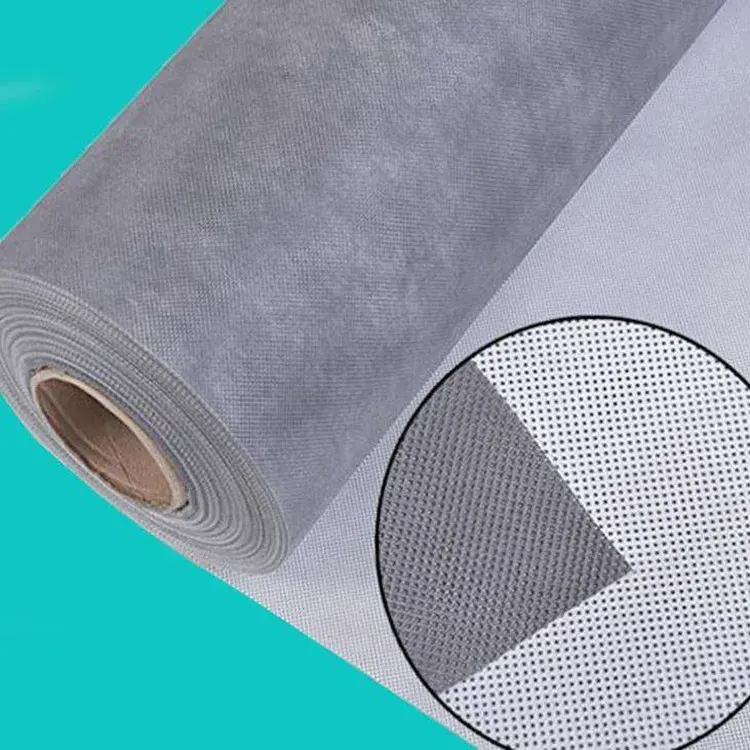
A solid wall has no cavity to hide its mistakes. Rain drives into the face, moisture diffuses outward from the rooms behind, and the two meet inside the thickness. A membrane that passes vapor but not rain gives that moisture a direction to leave by: a drier wall, less condensation in the wall assembly, and a surface that can be repaired instead of replaced.
Brick, block, and rendered concrete are porous. A solid masonry wall absorbs wind-driven rain at the face, and moisture travels inward until it meets a less permeable layer. Old walls coped by thickness and evaporation: a 600mm brick wall could store a winter of rain and dry out over summer.
Modern finishes broke that balance. Cement render, dense paint, and tile remove the drying path, so water enters faster than it leaves. A breathable waterproof membrane for walls restores the one-way route, stopping liquid water at the surface while vapor passes outward.
The membrane is a microporous core with a non-woven facing on each side; its pores are smaller than a raindrop and larger than a water molecule, so liquid water cannot pass and vapor diffuses through.
The published figures make that measurable. The lightweight grade page lists hydrostatic resistance of at least 1,000 mm H2O and an Sd value of 0.02 m or less. The first number covers wind-driven rain at laps and fixings; the second says vapor crosses almost as freely as it crosses air. Both matter, because moisture builds in a wall assembly that is tight to vapor and open to rain, and a breathable waterproof membrane for walls cannot rescue a masonry wall sealed on both faces.
Interstitial condensation forms where warm moist air cools below its dew point inside the build-up. In a solid masonry wall, that point often sits a few centimetres behind the internal finish, in winter, when the outer leaf is cold and the room is warm.
Insulation moves the dew point rather than removing it. An internal lining makes the masonry colder still, so the risk shifts outward in the wall assembly, and interstitial condensation shows as damp at the skirting or a smell that returns each winter.
A breathable waterproof membrane for walls on the cold side gives that moisture an exit, and damp spreads fast where the exit stays blocked.
Mould growth needs three conditions: surface air above roughly 70 percent relative humidity, organic food, and time. A wall that stays damp for weeks supplies all three, and the visible result is black spotting in corners, along skirting, and behind furniture.
The cause is often condensation rather than leakage. Cold spots at wall ties and lintels drop below dew point first, so mould growth follows the thermal pattern rather than the water pattern. A leak needs a repair; interstitial condensation needs a change in how the wall dries.
Salts are the second symptom, crystallizing at the drying face and blowing plaster. Removing them without changing where a solid masonry wall dries moves the problem a season later, and the wall assembly keeps the moisture that fed them. A breathable waterproof membrane for walls changes that sequence.
Refurbishment is the strongest case, because the wall cannot be rebuilt. A membrane fixed outside the masonry, behind new render or ventilated cladding, keeps rain out and lets the original wall dry inward. On a solid masonry wall, the same layer also keeps driven rain out of the render body, which is why the detail matters at parapets.
A clinic conversion in a 1930s brick building in northern Europe met this. Internal insulation had been specified and the brick was to be re-rendered, and the first winter produced condensation at the wall base. The contractor added a breathable waterproof membrane for walls behind a new lime render, damp readings fell through the next heating season, and mould growth in two treatment rooms stopped.
The logic holds for concrete and plaster: a rendered wall with a failed paint system can take a membrane and a new finish, and the wall assembly then behaves as it did before the finishes closed it, without trapping interstitial condensation behind the new layer.
Three details decide whether the benefit survives site. Laps on a solid masonry wall run with the water flow, at least 100mm on vertical work, sealed with the tape specified for the membrane. Fixings are washered and placed on framing or a continuous batten. And the sheet is protected from UV and traffic before the finish goes on.
Openings break the layer, and each one interrupts the wall assembly. Windows, vents, and penetrations need a dressed, taped junction, because a breathable waterproof membrane for walls that is perfect in the field and open at a reveal still admits water, and interstitial condensation finds that gap first. A masonry wall is unforgiving at exactly these points. Mould growth at a reveal usually traces back to a lap that was run the wrong way.
Yes, where the wall dries outward and the internal finish stays vapor-open. It is the usual approach on a solid masonry wall in a listed building where the outer face cannot be scaffolded, and the breathable waterproof membrane for walls then sits behind the lining.
No. Rising damp needs a damp-proof course or an injection; interstitial condensation and rain are separate problems with separate fixes.
Published UV ratings cover the construction period, not decades. Mould growth returns when the finish is delayed, so plan the render inside that window and check the wall assembly before closing.

2026/11/20
How an APP waterproof membrane handles heat: 130°C softening point, torch application windows, overheating signs, summer storage, and thermal aging checks.

2026/11/20
The science of a breathable waterproof membrane: water vapor diffusion, Sd values, three grammage grades, water column resistance, and wrong-use cases.

2026/11/20
Single-ply or two-ply, every flat roof is a stack. See how a self adhesive waterproof membrane for roof systems handles base, cap, insulation and drains.

2026/11/20
How the polyester scrim sets tensile strength and dimensional stability of reinforced TPO membrane rolls, with welding, roll sizes and selection tips.

2026/11/20
How an aluminum foil coated bitumen waterproof membrane reflects solar radiation, lowers surface temperature, and what maintenance keeps savings alive.

2026/11/20
SBS modified bitumen waterproof membrane property groups: tensile strength, low-temperature flexibility, heat resistance, surface finishes, applications.
Links to the corresponding full news page.

The eight questions overseas buyers ask most — factory ownership, capacity, batch consistency and lead times, answered straight.

SBS membranes, polymer sheets, coatings and geomembranes — six product lines are operating simultaneously.

Pre-sales specification, on-site technical support and post-delivery maintenance across 100+ export markets.

Waterproofing performance is decided in the specification and the detailing, not just the material. Our technical team helps you select the right system, resolve site questions as they arise, and stay reachable long after the container lands.
