
 EN
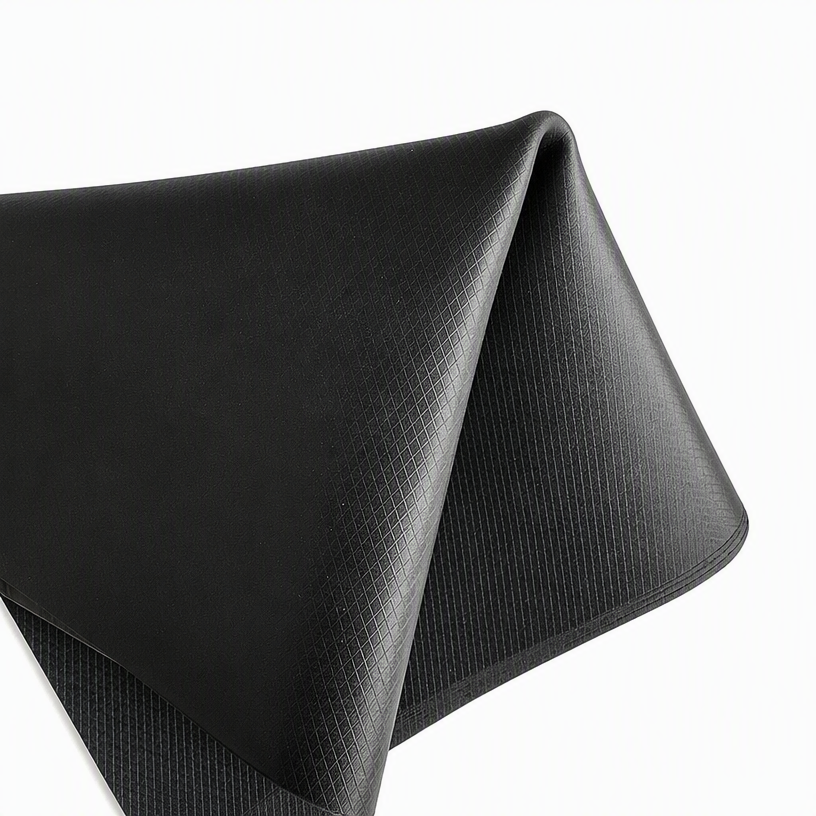
A bridge deck carries loads a roof never sees: repeated wheel passes, de-icing salts, freeze-thaw cycles and a thermal gradient between a sunlit surface and a shaded soffit. The deck waterproofing system must also tolerate the deck's own deflection, because a span bends under traffic instead of behaving as a rigid slab. Put those demands together and the reason becomes clear why a bridge deck waterproofing membrane is specified as a system rather than ordered from a catalogue.
Four Loads a Deck Imposes
Traffic delivers pressure and flexure. Salt delivers chemistry. Sun and shadow deliver a temperature gradient, and construction delivers abrasion before the surfacing is placed. A deck waterproofing system is a chain of details — membrane, primer, termination, drainage and asphalt interface — judged by its weakest link. Waterproofing membrane tensile strength describes one link only. Chloride resistance waterproofing describes another, and neither tells you whether the sheet is bonded. That is why a bridge deck waterproofing membrane is specified as a system rather than a product, and why a modified bitumen membrane chosen on thickness alone often disappoints at the joint.
Traffic, Flexure and Fatigue
Fatigue is the load case most often underestimated. Each axle passage produces a small flexural cycle, and a busy deck accumulates millions of them. The slab does not return to exactly its original shape, and the difference accumulates as micro-damage at the interface. A modified bitumen membrane with polyester reinforcement distributes that stress rather than concentrating it at one plane; one product page notes polyester mat reinforcement for vehicle overrun loads and thermal expansion cycles on trafficked decks. Published waterproofing membrane tensile strength for APP grades is at least 600 N/50mm, with elongation at least 25%. A bridge deck waterproofing membrane does not need to be stiff; it needs to move and recover. A deck waterproofing system chosen on thickness ignores that, and chloride resistance waterproofing at joints is what keeps the cycle from ending in corrosion.
Chlorides, Water and Continuity
Chlorides arrive in de-icing salt and sea spray, and they attack reinforcement once water carries them through the cover. De-icing regimes vary between authorities, but the mechanism does not, and salt stays on the deck until it is washed off or carried into a crack. Chloride resistance waterproofing is therefore a continuity argument, not a chemical one: the barrier must stay intact everywhere, because one breach becomes a chloride path. A bridge deck waterproofing membrane bonded over its full area leaves no continuous void for brine to travel along. A modified bitumen membrane with adequate tensile strength resists the mechanical damage that opens such paths. Waterproofing membrane tensile strength still says nothing about bond, and a deck waterproofing system fails at its weakest termination long before it fails in tension.
Thermal Gradient and Joint Movement
Surface temperature on a dark deck can climb far above air temperature while the soffit stays cooler, and the gradient curls the slab. A modified bitumen membrane must stay flexible at the cold end and resist flow at the hot end. Published APP values are heat resistance at 130°C and low-temperature flexibility at -5°C or -10°C; SBS grades reach lower temperatures but soften earlier. A bridge deck waterproofing membrane chosen for a hot climate and one chosen for a cold climate are different products. The deck waterproofing system should follow the climate, and waterproofing membrane tensile strength belongs beside those limits. Chloride resistance waterproofing details must survive the same movement, because a joint that opens also admits brine.
Reading Published Values Against Deck Demand
Values are comparable only when read together. The APP sheet publishes at least 600 N/50mm tensile strength and at least 25% elongation in 3mm, 4mm and 5mm thicknesses, supplied in 1m × 10m rolls. The self-adhesive SBS sheet publishes at least 400 N/50mm, at least 30% elongation and peel adhesion of at least 1.5 N/mm, with a service range of -15°C to 90°C. A bridge deck waterproofing membrane from either family still needs a chloride resistance waterproofing detail where it terminates. Waterproofing membrane tensile strength does not describe bond. A deck waterproofing system usually fails at bond first, so the modified bitumen membrane should be judged on the pair.
Selection Logic Before Price
No page on this site publishes a bridge-specific standard, salt-spray rating or fatigue test result, so the figures above are general product data, not deck certification, and no supplier summary substitutes for the project's own test plan. What they allow is a comparison, and a deck waterproofing system still has to be detailed by the project engineer. APP suits heat and high tensile demand; SBS self-adhesive suits cooler climates and flame-free work. In an anonymised river crossing refurbishment, the specification called for a modified bitumen membrane with polyester reinforcement and a chloride resistance waterproofing detail at every joint. The bridge deck waterproofing membrane passed its flood test before the asphalt went down, and waterproofing membrane tensile strength was only one line in an approval file that ran to forty pages.
Frequently Asked Questions
Does a bridge need a special membrane grade?
Match the sheet to traffic category, climate, joint movement and the details around it rather than a catalogue adjective. Published values are a starting point, and the deck waterproofing system still has to be detailed for each support and expansion joint.
Why does reinforcement matter more than thickness?
Because fatigue cracks start where stress concentrates. A modified bitumen membrane with a polyester mat spreads wheel loads across the sheet, while extra bitumen without reinforcement adds weight rather than fatigue resistance.
Is higher tensile strength always better?
No. Waterproofing membrane tensile strength must sit beside elongation and peel adhesion. A stiff sheet with poor bond can debond under flexure, which is why the assembly is judged together rather than by one number.










