 EN
APP Waterproof Membrane: High-Temperature Stability Guide
2026/11/20
How an APP waterproof membrane handles heat: 130°C softening point, torch application windows, overheating signs, summer storage, and thermal aging checks.

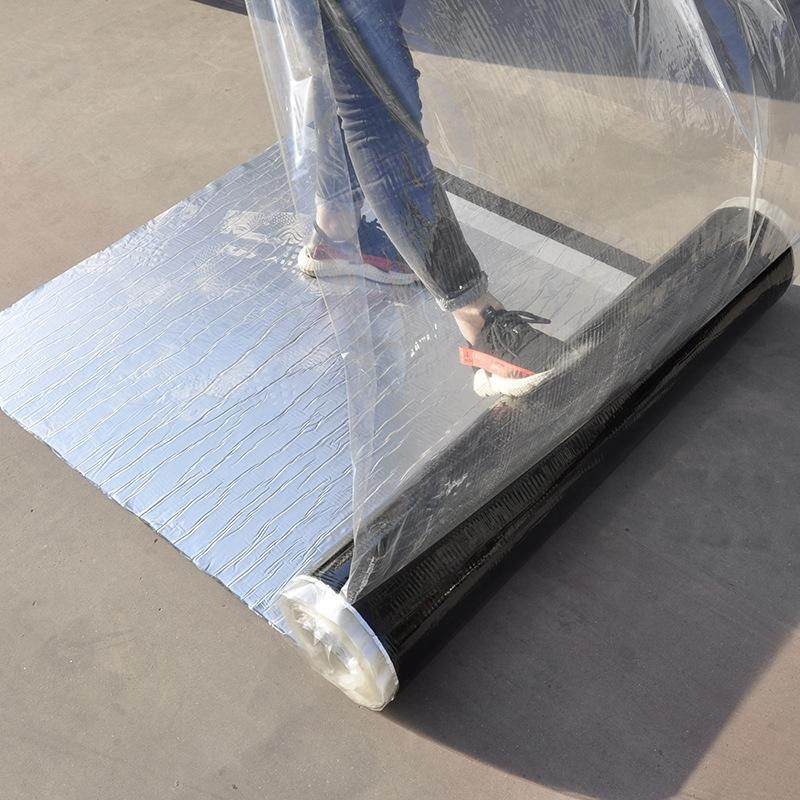
A tender that names a product and no more leaves the roof to the installer's habits. What follows is a clause-by-clause pattern: what to state about the deck, which standard to attach to each value, how to describe seams, and what to demand at handover. Every clause is worded so a clerk can check it, the only test a commercial roof waterproofing membrane faces.
The deck decides the attachment and the attachment decides the sheet. A concrete slab with a sound screed accepts a fully adhered or ballasted single ply membrane; a profiled steel deck accepts fasteners through the sheet into the purlins; timber accepts either, with spacing set by the panel width.
State deck type, substrate condition and attachment in one sentence, then select a commercial roof waterproofing membrane against them. Where the deck is old and undocumented, a mechanically fastened system usually wins on tolerance, and a pull test belongs in the tender document as a pre-award requirement rather than a post-award discovery.
A materials clause needs a type, a thickness and a standard with its test method attached, and the same discipline applies throughout. A 1.5mm EPDM single ply membrane from Shandong Dingtai Waterproof is the third route, at 9 MPa tensile and 0.4 MPa water tightness, and it is mechanically fastened or adhered on the same deck.
For a polyester-reinforced TPO sheet the tender document should quote tensile strength of at least 250 N/50mm to EN 12311-2, elongation at least 15%, dimensional stability within 0.5% to EN 1107-2, flexibility to -40°C to EN 495-5, heat resistance to 120°C and water tightness at 60 kPa to EN 1928, under GB/T 27789 and EN 13956. That is the evidence a commercial roof waterproofing membrane clause needs.
A single ply membrane in PVC declares 900 N/50mm longitudinal and 800 N/50mm transverse, stability within 0.1%, flexibility to -25°C and seam shear of at least 900 N/50mm to GB 12952. Name the standard beside each number, or the number carries no weight.
Thickness follows attachment. A mechanically fastened field uses 1.2mm to 1.8mm, fully adhered work uses 1.2mm or 1.5mm, and ballasted assemblies use 1.5mm to 2.0mm. On one warehouse re-roof, a single ply membrane specified at 2.0mm across the field was cut to 1.5mm where it was adhered, and the saving paid for the edge-zone fasteners the calculation demanded.
Wind uplift needs its own clause. Fastener density, plate type and edge zone width come from a project calculation rather than a generic note, and that calculation belongs in the tender document rather than being assumed.
Seam quality is where a commercial roof waterproofing membrane earns or loses its money. Whether the field is mechanically fastened or welded, the lap is the weakest line in the assembly, and a single ply membrane in PVC is hot air welded at a minimum 40mm overlap, with temperature, pressure and speed written as a range, not a figure, and the tender document should hold that range.
TPO seams follow the same principle: test the weld, never assume it. One destructive sample per roof area, cut and recorded, proves more than a welder's curriculum vitae. That sample is the only evidence a single ply membrane offers about its seams. Where a torch-applied APP membrane is the alternative, the published overlap is 80mm to 100mm and 130°C heat resistance governs the torching, and the tender document should still say who tests and what happens to a failed seam.
A mechanically fastened or welded field still leaks at the details, the first item a cost-driven package drops. Every penetration needs a collar or pre-formed boot, every parapet an upstand height and a termination method, every drain a clamping ring and sump, every threshold a height check.
Protection is the other omission. A single ply membrane on a plant deck needs a walkway or a protection layer, and sheet exposed to other trades for a month is patched before handover, a point a mechanically fastened roof makes worse. Write the protection into the commercial roof waterproofing membrane clause, name who installs it, and give it a line in the programme instead of a general note, with that sequence in the tender document.
Acceptance should be written as tests. A flood test on the field, a probe test on every seam sample and a visual check of every termination catch most defects, and each needs a record with a location attached.
The handover package belongs there too. Require the data sheet, batch certificate, EN test reports and as-built details before award rather than at practical completion, plus a maintenance schedule naming the seams that need annual inspection. A commercial roof waterproofing membrane with that file behind it stays maintainable; the same roof without it sends every leak back to zero.
A mechanically fastened single ply membrane fixed through the sheet into purlins, with spacing from the uplift calculation, as the tender document should state. An adhered sheet traps air over a profiled deck and fails at the ribs.
For both methods, yes, and it is the most common thickness for a commercial roof waterproofing membrane. Thicker sheet belongs to ballasted assemblies and heavy traffic, not every job.
Name the values and the standards, then accept equivalents. A mechanically fastened roof will not expose a substitution that met the brand and missed the performance until the first winter, and by then the tender document is closed and the roof belongs to someone else.

2026/11/20
How an APP waterproof membrane handles heat: 130°C softening point, torch application windows, overheating signs, summer storage, and thermal aging checks.

2026/11/20
The science of a breathable waterproof membrane: water vapor diffusion, Sd values, three grammage grades, water column resistance, and wrong-use cases.

2026/11/20
Single-ply or two-ply, every flat roof is a stack. See how a self adhesive waterproof membrane for roof systems handles base, cap, insulation and drains.

2026/11/20
How the polyester scrim sets tensile strength and dimensional stability of reinforced TPO membrane rolls, with welding, roll sizes and selection tips.

2026/11/20
How an aluminum foil coated bitumen waterproof membrane reflects solar radiation, lowers surface temperature, and what maintenance keeps savings alive.

2026/11/20
SBS modified bitumen waterproof membrane property groups: tensile strength, low-temperature flexibility, heat resistance, surface finishes, applications.
Links to the corresponding full news page.

The eight questions overseas buyers ask most — factory ownership, capacity, batch consistency and lead times, answered straight.

SBS membranes, polymer sheets, coatings and geomembranes — six product lines are operating simultaneously.

Pre-sales specification, on-site technical support and post-delivery maintenance across 100+ export markets.

Waterproofing performance is decided in the specification and the detailing, not just the material. Our technical team helps you select the right system, resolve site questions as they arise, and stay reachable long after the container lands.
