 EN
APP Waterproof Membrane: High-Temperature Stability Guide
2026/11/20
How an APP waterproof membrane handles heat: 130°C softening point, torch application windows, overheating signs, summer storage, and thermal aging checks.

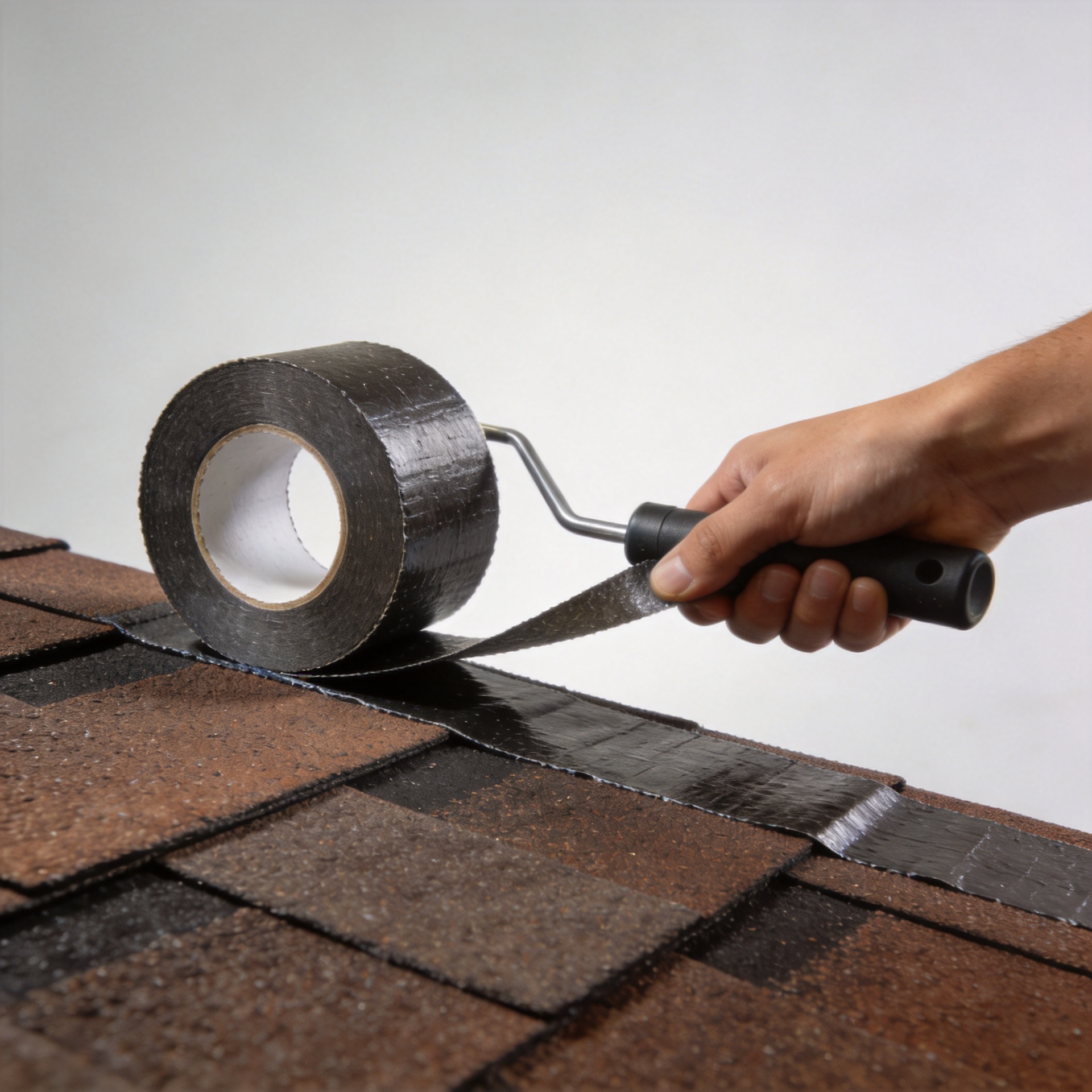
Most tape enquiries ask what a tape sticks to. The better question for laps is what it sticks to on both sides. A double sided self adhesive bitumen waterproofing tape bonds two surfaces through one body, turning overlaps into continuous, gap-free joints. This article explains where double sided bitumen tape earns its place — membrane laps, film-to-film connections, and insulation board joints — plus the alignment and compaction rules that decide whether a lap joint sealing tape holds for the life of the roof.
A single-sided tape seals over a joint: one face bonds to the substrate, the other is the exposed surface. A double sided self adhesive bitumen waterproofing tape works inside the joint: both faces are adhesive, gripping the two overlapping layers. The result is a tape that fills the interface instead of covering it — no exposed adhesive edge to pick at, no path for capillary water between the sheets. For buyers, three consequences follow: prepare both layers, plan the lapping sequence before unrolling, and apply compaction pressure through the full overlap. Used this way, a self adhesive waterproofing tape becomes a structural bonding layer, not just a surface patch.
The classic application is lapping between sheet materials. Torch-applied and self-adhesive bitumen membranes overlap at edges and end laps; a double sided bitumen tape strip in the overlap bonds the sheets together, closing the channel where wind-driven water travels. The same logic applies to TPO and PVC joints needing a secondary seal, and to butyl membrane overlaps below grade. In each case the strip is centred, the upper sheet laid onto it, and a self adhesive waterproofing tape of this width is rolled to bond the sandwich. Where a double sided self adhesive bitumen waterproofing tape is combined with heat-welded laps, it serves as backup lap joint sealing tape even if a weld segment is suspect.
Between flexible layers — vapour barriers, breather membranes, construction films — a double sided bitumen tape creates continuous bonded overlaps at tape-gun speed. It grips both films without staples, and the joint stays airtight as well as watertight. On rigid layers it closes insulation board joints: a self adhesive waterproofing tape along each board edge bonds board to board, supports vapour-control continuity, and stops cold bridging. In both cases the value is the same: the lap joint sealing tape is captured between layers, so it cannot peel, shift, or leak at the edges the way a surface-applied patch can.
Two rules govern quality. Alignment: a double sided bitumen tape grips on contact, so repositioning is limited once the upper layer touches — plan the line, unroll gradually, keep a release liner strip in place until each section is aligned. A lap joint sealing tape placed off-centre leaves an unsealed margin, so centring matters more than speed. Compaction: the bond develops under pressure, so roll the full overlap from the centre outward until the membrane lap sealing sandwich is uniform; a self adhesive waterproofing tape pressed only at the edges holds the layers apart invisibly and leaks later. For a double sided self adhesive bitumen waterproofing tape, the honest summary is that installation quality, more than product data, decides the result.
A distributor supplying a cold-storage retrofit faced the decision: vapour barrier laps on the roof deck were sealed with surface patches of self adhesive waterproofing tape that lifted within a year. The contractor switched to a double sided bitumen tape between the barrier sheets, planned the lapping sequence bay by bay, and rolled every lap with a weighted roller before the insulation boards went down. The membrane lap sealing lines disappeared into the assembly, airtightness readings improved, and no lap has been reopened since — the outcome the client wanted after two seasons of callbacks.
Published data for the single-sided grades frames what to ask when sourcing a double sided self adhesive bitumen waterproofing tape. Adhesion to both faces is the first thing a lap joint sealing tape data sheet should state. The PE film bitumen tape page lists 1.2 mm thickness, peel adhesion of at least 1.2 N/mm, tensile strength of at least 300 N/50mm, -20°C flexibility, and 0.3 MPa water tightness. The butyl tape page lists a 1.2 mm body, widths of 50 to 200 mm, elongation of at least 300 percent, a service range of -40 to +70°C, and 0.3 MPa water tightness. A buyer comparing any double sided bitumen tape offer should request the same parameter set — adhesion to both faces, elongation, temperature range, water tightness — because those are the values that predict membrane lap sealing performance. No self adhesive waterproofing tape offer in this class should be evaluated without them.
Inside laps: taped lap sealing at sheet edges, film-to-film connections, and insulation board joints — the positions where two layers must be gripped at once. Any detail where the tape would otherwise sit on top of the joint belongs to the single-sided family.
Only briefly. A double sided self adhesive bitumen waterproofing tape grabs on pressure, so align with the release liner partly in place, confirm the line, then roll. A misplaced lap joint sealing tape should be lifted and replaced rather than pressed out of line.
No. Welding remains the primary joint system where specified. The tape serves as a backup seal at welded laps, as the main seal on cold-applied overlaps, and as the standard self adhesive waterproofing tape method for films that cannot be welded.

2026/11/20
How an APP waterproof membrane handles heat: 130°C softening point, torch application windows, overheating signs, summer storage, and thermal aging checks.

2026/11/20
The science of a breathable waterproof membrane: water vapor diffusion, Sd values, three grammage grades, water column resistance, and wrong-use cases.

2026/11/20
Single-ply or two-ply, every flat roof is a stack. See how a self adhesive waterproof membrane for roof systems handles base, cap, insulation and drains.

2026/11/20
How the polyester scrim sets tensile strength and dimensional stability of reinforced TPO membrane rolls, with welding, roll sizes and selection tips.

2026/11/20
How an aluminum foil coated bitumen waterproof membrane reflects solar radiation, lowers surface temperature, and what maintenance keeps savings alive.

2026/11/20
SBS modified bitumen waterproof membrane property groups: tensile strength, low-temperature flexibility, heat resistance, surface finishes, applications.
Links to the corresponding full news page.

The eight questions overseas buyers ask most — factory ownership, capacity, batch consistency and lead times, answered straight.

SBS membranes, polymer sheets, coatings and geomembranes — six product lines are operating simultaneously.

Pre-sales specification, on-site technical support and post-delivery maintenance across 100+ export markets.

Waterproofing performance is decided in the specification and the detailing, not just the material. Our technical team helps you select the right system, resolve site questions as they arise, and stay reachable long after the container lands.
