 EN
APP Waterproof Membrane: High-Temperature Stability Guide
2026/11/20
How an APP waterproof membrane handles heat: 130°C softening point, torch application windows, overheating signs, summer storage, and thermal aging checks.

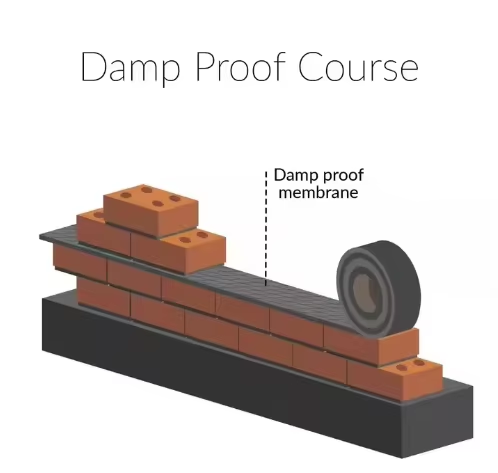
Choosing the right DPC for masonry walls begins with an accurate understanding of the wall structure, rather than simply ordering a familiar roll width. A damp proof course is installed within a masonry assembly to help prevent moisture from rising through porous bricks, blocks, and mortar joints. If the membrane is too narrow, poorly positioned, or interrupted at a joint, the intended moisture barrier may not perform as expected.
Before selecting DPC for masonry walls, identify whether the project uses a solid wall, a cavity wall, or another masonry configuration. Check the wall thickness, the position of the inner and outer leaves, and the intended location of the damp proof course. These details influence the width required and whether a standard product size is suitable. Construction drawings and local building requirements should guide the final specification.
Width selection is not simply a matter of choosing a membrane that looks close to the wall measurement. The DPC needs to fit the intended installation detail and provide the required coverage without creating unnecessary folds or exposed gaps. For cavity walls, the design may require the membrane to extend across the relevant wall leaf or cavity detail. Solid masonry walls have different coverage considerations, so the same width should not automatically be used for every project.
The DPC product range offered by DT Waterproof includes standard widths of 100 mm, 150 mm, 225 mm, 300 mm, and 450 mm, with customized dimensions available according to product specifications. These options give buyers a starting point when reviewing DPC for masonry walls. However, the final choice should be based on the approved wall detail, rather than on the assumption that one standard width fits every brick or block assembly.
Measure the actual construction detail and confirm the required coverage with the project designer or contractor. If the specified width falls outside the available standard options, ask the supplier about customization before placing the order. Confirm the agreed dimensions in writing to reduce the risk of receiving material that does not fit the intended installation.
Width is only one part of the specification. DT Waterproof's damp proof course range includes LDPE, HDPE, and PP-reinforced options, with product information listing a thickness of 500 microns. These materials should be evaluated against the intended wall construction, expected loading, handling requirements, and project specification.
LDPE is a flexible option commonly associated with conventional masonry and cavity-wall applications. HDPE may be considered where greater resistance to sustained compressive loading is important. PP-reinforced DPC is intended for applications where enhanced tensile strength and tear resistance are required. These distinctions do not mean that one material is universally best; the correct choice depends on the conditions specified for the project.
When comparing DPC for masonry walls, check the product data sheet for the exact material grade, thickness, width, and applicable standards. The supplier's product documentation identifies BS 6515 and EN 14909 for its DPC range. Buyers should verify the documentation applicable to the specific product being ordered and confirm any additional requirements imposed by local regulations or the project specification.
Even correctly selected DPC can be compromised by poor site handling or an incomplete installation. Before masonry work begins, confirm the intended course location, the direction of installation, and the details at corners, wall junctions, changes in level, and openings. These transition points deserve particular attention because an interruption in the barrier may create a route for moisture.
The membrane should be positioned according to the approved construction detail and laid so that it forms a continuous barrier. Check that the supporting mortar bed is suitable for the specified installation and that sharp debris or other obstructions will not damage the membrane. Where joints or overlaps are required, follow the project design and the product manufacturer's instructions rather than assuming a universal overlap dimension.
For DPC for masonry walls, installation checks should also consider the relationship between the membrane and the external ground level. The DT Waterproof product information describes a typical position of approximately 150 mm above finished external ground level, but this should not be treated as a universal rule for every building. Confirm the applicable local code, site levels, drainage arrangements, and approved wall detail before construction proceeds.
A practical inspection should take place before the membrane is concealed by subsequent masonry courses. Check whether the supplied roll matches the approved specification, whether the membrane is visibly damaged, and whether the installed strip follows the intended route. Review corners, junctions, changes in level, and other transitions rather than checking only the long, straight sections of wall.
A simple record can include the product name, material type, thickness, roll width, batch or delivery identification where available, and photographs of the installation before it is covered. These records help contractors and project managers trace materials back to the approved specification if a question arises later. They can also make communication between the supplier, installer, and site supervisor more efficient.
If the membrane is cut, torn, displaced, or interrupted, resolve the issue in accordance with the manufacturer's instructions and the approved project detail before covering the area. Do not assume that a visible defect is harmless simply because the membrane is thin or the damaged section is small. Equally, do not prescribe an improvised repair without confirming that it is compatible with the product and installation method.
Clear purchasing information helps reduce avoidable sizing errors. When requesting DPC for masonry walls, provide the wall type, required width, product material, thickness, roll length, estimated quantity, destination market, and any applicable compliance requirements. Include drawings or a cross-section when the wall build-up is complex. This gives the supplier a more useful basis for confirming product suitability and availability.
DT Waterproof lists LDPE, HDPE, and PP-reinforced DPC products, with standard widths and customized options described in its product information. Buyers should confirm the exact specifications, available roll lengths, lead time, and documentation directly with the supplier before finalizing an order. Where a project has strict technical or regulatory requirements, obtain approval from the responsible designer or contractor before substituting a material or changing the specified dimensions.
Careful measurement, appropriate material selection, and documented installation checks make DPC for masonry walls easier to specify and inspect. The goal is not simply to purchase a membrane of the right nominal width, but to ensure that the selected product fits the actual wall detail and can be installed as a continuous moisture barrier.
Start with the approved wall section and measure the area the membrane must cover. Consider the wall type, cavity arrangement, and installation detail, then compare the required dimension with the supplier's standard widths. Confirm custom sizing when a standard option does not meet the project requirement.
The company's DPC range includes LDPE, HDPE, and PP-reinforced options. Its product information lists a thickness of 500 microns. The appropriate option depends on the wall configuration, loading conditions, and project specification, so confirm the relevant technical data before ordering.
No. The intended DPC position should be checked against finished external ground levels, drainage details, and applicable building requirements. A typical installation reference is not a substitute for the approved design or local regulations.

2026/11/20
How an APP waterproof membrane handles heat: 130°C softening point, torch application windows, overheating signs, summer storage, and thermal aging checks.

2026/11/20
The science of a breathable waterproof membrane: water vapor diffusion, Sd values, three grammage grades, water column resistance, and wrong-use cases.

2026/11/20
Single-ply or two-ply, every flat roof is a stack. See how a self adhesive waterproof membrane for roof systems handles base, cap, insulation and drains.

2026/11/20
How the polyester scrim sets tensile strength and dimensional stability of reinforced TPO membrane rolls, with welding, roll sizes and selection tips.

2026/11/20
How an aluminum foil coated bitumen waterproof membrane reflects solar radiation, lowers surface temperature, and what maintenance keeps savings alive.

2026/11/20
SBS modified bitumen waterproof membrane property groups: tensile strength, low-temperature flexibility, heat resistance, surface finishes, applications.
Links to the corresponding full news page.

The eight questions overseas buyers ask most — factory ownership, capacity, batch consistency and lead times, answered straight.

SBS membranes, polymer sheets, coatings and geomembranes — six product lines are operating simultaneously.

Pre-sales specification, on-site technical support and post-delivery maintenance across 100+ export markets.

Waterproofing performance is decided in the specification and the detailing, not just the material. Our technical team helps you select the right system, resolve site questions as they arise, and stay reachable long after the container lands.
