 EN
APP Waterproof Membrane: High-Temperature Stability Guide
2026/11/20
How an APP waterproof membrane handles heat: 130°C softening point, torch application windows, overheating signs, summer storage, and thermal aging checks.

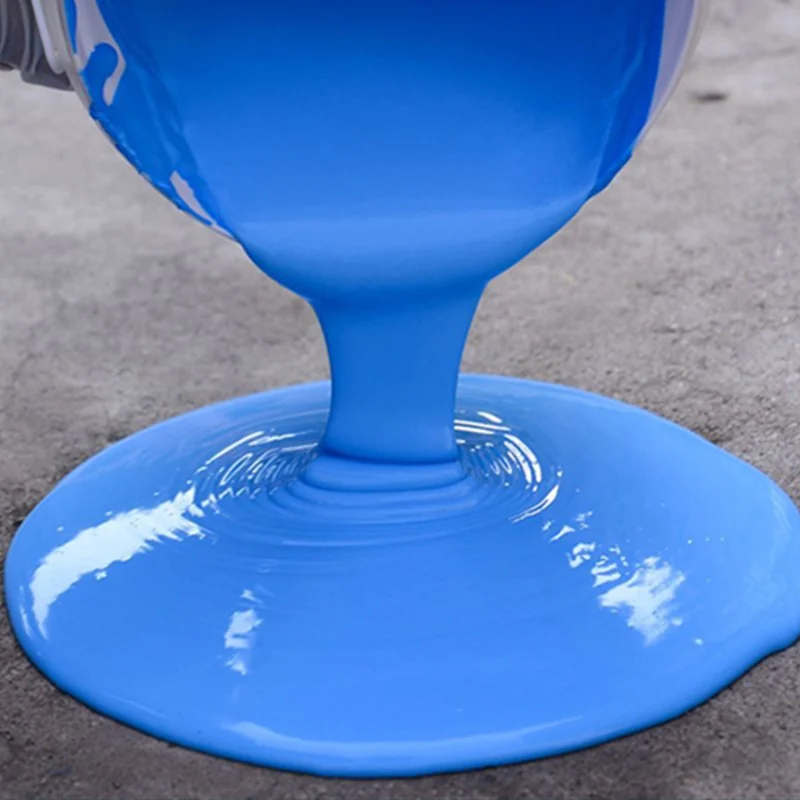
Choosing waterproofing materials involves more than preventing water penetration. Construction teams and property owners may also need to consider application conditions, indoor air quality, surface compatibility, and environmental documentation. A water-based waterproof coating is one option worth evaluating, particularly for projects where low-VOC material selection is a concern.
Unlike solvent-based formulations, water-based products use water as the dispersion medium. This formulation approach can help reduce reliance on certain organic solvents, but it does not automatically mean that a product is VOC-free or harmless. The actual VOC content and emissions depend on the specific formulation and should be confirmed through reliable product documentation.
Volatile organic compounds, commonly known as VOCs, can be released from certain building materials and household products. The U.S. Environmental Protection Agency explains that some VOCs may affect indoor air quality and that exposure levels can vary depending on the product and conditions of use. Therefore, selecting a water-based waterproof coating should involve checking its technical information rather than relying only on general environmental descriptions.
DT Waterproof lists two options in its water-based waterproof coating range. Although both use a water-based formulation, their specifications differ. Buyers should compare each grade with the actual requirements of the construction project instead of treating them as interchangeable products.
The first option is High Solid Content Water-Based Waterproof Coating. The product page specifies a solid content of at least 75%, a 20 kg package, and water tightness rated at 0.4 MPa. The page also lists CE certification. These details can help buyers assess the product when comparing material requirements for a particular waterproofing application. However, the listed solid content and water-tightness value should be checked against the latest technical documentation before being included in a project specification.
The second option is Standard Grade Water-Based Waterproof Coating, also supplied in a 20 kg package. DT Waterproof describes this grade as a low-VOC product that can be applied with a brush or roller. Its listed applications include rooftops, balconies, basements, and bathroom floors. The product page specifies elongation at break of at least 200% and tensile strength of 1.0 MPa, and lists CE certification. These performance figures belong to the standard grade and should not be applied to the high-solid-content product.
A water-based waterproof coating may be considered for different building areas, depending on the product grade, substrate, exposure conditions, and project specification. DT Waterproof lists several application areas for its standard-grade product, including rooftops, balconies, basements, and bathroom floors.
In bathrooms and other wet areas, the waterproofing layer is generally installed before the final floor or wall finish. The installer needs to pay particular attention to corners, floor-to-wall connections, drainage outlets, and pipe penetrations. These locations can be difficult to protect with an uneven or poorly applied coating. A continuous coating layer and careful detailing help reduce the risk of water finding weak points.
For balconies and rooftops, the selection process should consider exposure to sunlight, temperature changes, standing water, and the condition of the existing substrate. A product's flexibility and other technical properties may be relevant where the surface experiences movement. For basement projects, the source of water pressure and the direction of water exposure should be assessed before selecting a waterproofing system. A water-based waterproof coating should only be used where its documented performance is suitable for the intended application.
Even a suitable water-based waterproof coating may not perform as expected if the substrate is poorly prepared. Dust, loose particles, oil, and other contaminants can interfere with adhesion. Before application, the surface should be inspected and prepared according to the manufacturer's instructions.
Cracks, joints, corners, and pipe openings also need attention. These areas may require additional detailing or compatible reinforcement materials, depending on the project design. Applying a coating over an unstable or damaged surface without addressing the underlying problem may lead to defects in the waterproofing layer.
Application conditions are another important consideration. Temperature, humidity, ventilation, substrate moisture, and drying time can affect the installation process. Contractors should follow the product's technical data sheet for recommended application thickness, number of coats, recoat intervals, and curing conditions. The listed application methods for DT Waterproof's standard-grade water-based waterproof coating include brush and roller application. Other methods should not be assumed unless confirmed by the manufacturer.
A practical example is a bathroom renovation. Before applying a water-based waterproof coating, the installer can check the floor condition, clean the surface, repair visible defects, and confirm that drainage details are properly prepared. The coating can then be applied in accordance with the product instructions. This is a general workflow illustration, not a report of a specific DT Waterproof customer project.
The term "eco-friendly" is widely used in building-material marketing, but it should not replace technical verification. A water-based waterproof coating may be a suitable option for projects that prioritize low-VOC materials, but buyers should review the available evidence before making environmental or health-related claims.
First, request the latest Technical Data Sheet (TDS) and Safety Data Sheet (SDS). These documents help buyers understand product characteristics, handling requirements, and application precautions. If a project has a specific VOC limit, ask the supplier for relevant test reports or declarations that identify the applicable test method and results.
Second, check certification information carefully. A certification should be associated with the correct product, manufacturer, and applicable standard. For example, ISO 14001 relates to an environmental management system; it should not be presented as proof that an individual coating product is VOC-free. Similarly, a CE reference should be checked against the relevant product documentation and intended market requirements.
Finally, compare the technical requirements of the project with the specifications of each water-based waterproof coating grade. Solid content, water tightness, tensile strength, elongation, application method, and substrate compatibility may all be relevant, but not every value applies to every product. Reviewing the documentation helps prevent specification errors and supports more informed purchasing decisions.
Not necessarily. Water-based formulations may help reduce the use of certain solvents, but the actual VOC content varies by product. Buyers should check the manufacturer's VOC declaration or relevant test documentation instead of assuming that every water-based product is VOC-free.
It may be suitable for bathroom waterproofing when the selected product is specified for that application. DT Waterproof lists bathroom floors among the application areas for its standard-grade water-based waterproof coating. Surface preparation, detailing, application thickness, and curing should follow the product instructions.
Start with the project specification and compare the documented properties of each grade. DT Waterproof lists at least 75% solid content and 0.4 MPa water tightness for its high-solid-content grade. Its standard grade lists at least 200% elongation at break and 1.0 MPa tensile strength. These figures describe different products, so buyers should request the latest TDS before selecting a grade.

2026/11/20
How an APP waterproof membrane handles heat: 130°C softening point, torch application windows, overheating signs, summer storage, and thermal aging checks.

2026/11/20
The science of a breathable waterproof membrane: water vapor diffusion, Sd values, three grammage grades, water column resistance, and wrong-use cases.

2026/11/20
Single-ply or two-ply, every flat roof is a stack. See how a self adhesive waterproof membrane for roof systems handles base, cap, insulation and drains.

2026/11/20
How the polyester scrim sets tensile strength and dimensional stability of reinforced TPO membrane rolls, with welding, roll sizes and selection tips.

2026/11/20
How an aluminum foil coated bitumen waterproof membrane reflects solar radiation, lowers surface temperature, and what maintenance keeps savings alive.

2026/11/20
SBS modified bitumen waterproof membrane property groups: tensile strength, low-temperature flexibility, heat resistance, surface finishes, applications.
Links to the corresponding full news page.

The eight questions overseas buyers ask most — factory ownership, capacity, batch consistency and lead times, answered straight.

SBS membranes, polymer sheets, coatings and geomembranes — six product lines are operating simultaneously.

Pre-sales specification, on-site technical support and post-delivery maintenance across 100+ export markets.

Waterproofing performance is decided in the specification and the detailing, not just the material. Our technical team helps you select the right system, resolve site questions as they arise, and stay reachable long after the container lands.
