 EN
APP Waterproof Membrane: High-Temperature Stability Guide
2026/11/20
How an APP waterproof membrane handles heat: 130°C softening point, torch application windows, overheating signs, summer storage, and thermal aging checks.

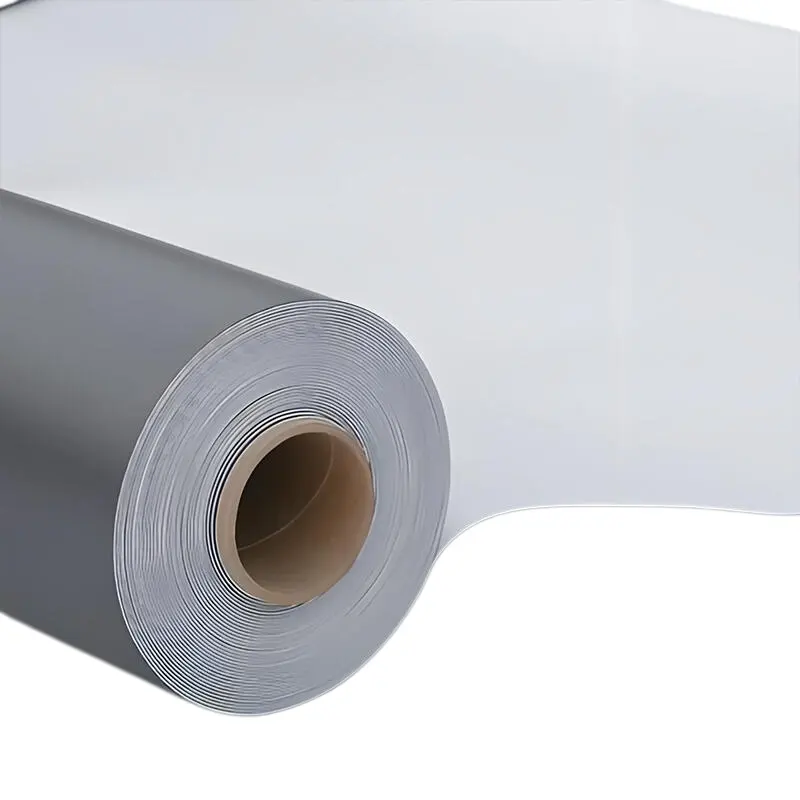
An external waterproofing membrane is installed on the positive side of a structure — the face that meets the water source. For basement waterproofing, retaining walls, tunnels and buried tanks, that means the outside face of the concrete, applied before backfilling. Because it intercepts groundwater where it first arrives, positive side waterproofing is widely treated as the most dependable form of below grade waterproofing.
Every buried wall has two faces: the positive side, facing soil and groundwater, and the negative side, facing the interior. A sheet fixed to the positive side is pressed against the concrete by water pressure, so the barrier is held in compression rather than peeled away — the structural argument for positive side waterproofing. That is the case for doing it before backfill.
The work happens during construction: the external waterproofing membrane goes onto the foundation or shotcrete surface while the excavation is open, then protection layers and soil follow. Once backfilled there is no route back to the sheet without re-excavation, which is why most below grade waterproofing decisions are made at excavation stage.
First, the concrete stays dry, which slows carbonation and limits chloride and sulfate attack on the reinforcement. Second, defects stay on the water face, so a small seam imperfection weeps into soil rather than dripping onto finished interiors, the failure mode basement waterproofing clients fear most. Third, one continuous sheet can run under the blinding layer and over parapets and pipe penetrations, forming an envelope rather than interior patches, which is the whole point of below grade waterproofing.
The trade-offs are practical: the substrate must be reachable, weather matters during installation, and post-backfill repairs are expensive. That is why seam quality matters in positive side waterproofing, and why a cheap external waterproofing membrane rarely stays cheap once the excavation closes.
Three families cover most of this work, from basement waterproofing to tunnel linings:
These figures come from documentation published by Shandong Dingtai Waterproof; for below grade waterproofing an external waterproofing membrane order should be traceable to such documents.
Installation starts with the substrate: remove protrusions, form ties and loose material; fill honeycombs and cracks with repair mortar; prime where the system requires it. Roll out the sheet with correct laps and close every joint — a self-adhesive membrane lap is pressed and rolled, while hot-air welded seams specify a minimum 40 mm overlap, the detail that decides whether positive side waterproofing survives backfill.
Cover the work with a protection board or soft backfill the same day; on a basement waterproofing site nobody inspects it again once soil is in place.
One corridor shows the routine. The excavation sat below the seasonal water table and the fire permit banned open flame beside an occupied building, so the contractor chose a cold-applied self-adhesive membrane: crews primed the diaphragm wall, rolled the sheet in sections and checked every lap by hand roller. No torch, no permit, and the interior stayed dry through the first rainy season — for below grade waterproofing on tight urban sites, speed and fire safety often decide the method.
Ask for certificates rather than catalog claims. Benchmarks that matter in basement waterproofing include EN 13956 and GB 12952 for flexible sheet, EN 1928 for water tightness, EN 12311-2 for tensile strength and EN 495-5 for low-temperature flexibility (published PVC grades list −25°C). Request EN reports, COA, MSDS and TDS before a trial order, and confirm ISO 9001.
A supplier who can name the standard behind each figure beats one quoting "high performance". That separates a real external waterproofing membrane source from a trading desk, and a self-adhesive membrane shipment should arrive with batch-matched reports — the same discipline applies to any basement waterproofing order.
Not usually. The positive side is buried once backfilling is complete — the core difficulty of below grade waterproofing — so re-application means excavating the wall again. An external waterproofing membrane cannot be bonded to a face nobody can reach, and later leaks are handled from the negative side with coatings or crystalline treatments. Positive side waterproofing therefore belongs in design, before the first pour.
Thickness follows water pressure, substrate condition and access. In basement waterproofing, 1.2 mm self-adhesive membrane is enough for a transition layer, while exposed or high-pressure work calls for 3 mm slate-granule or reinforced polymer sheet. Match the number to the published water tightness data, and to what positive side waterproofing must survive at that detail.
Three checks matter most on site: seam integrity (welded seams probed or tested, self-adhesive membrane laps rolled and inspected), full coverage at corners and penetrations, and protection of the completed external waterproofing membrane before backfill. Batch reports and offcuts give the project a reference if a dispute arises; in below grade waterproofing those checks cost hours, not months.

2026/11/20
How an APP waterproof membrane handles heat: 130°C softening point, torch application windows, overheating signs, summer storage, and thermal aging checks.

2026/11/20
The science of a breathable waterproof membrane: water vapor diffusion, Sd values, three grammage grades, water column resistance, and wrong-use cases.

2026/11/20
Single-ply or two-ply, every flat roof is a stack. See how a self adhesive waterproof membrane for roof systems handles base, cap, insulation and drains.

2026/11/20
How the polyester scrim sets tensile strength and dimensional stability of reinforced TPO membrane rolls, with welding, roll sizes and selection tips.

2026/11/20
How an aluminum foil coated bitumen waterproof membrane reflects solar radiation, lowers surface temperature, and what maintenance keeps savings alive.

2026/11/20
SBS modified bitumen waterproof membrane property groups: tensile strength, low-temperature flexibility, heat resistance, surface finishes, applications.
Links to the corresponding full news page.

The eight questions overseas buyers ask most — factory ownership, capacity, batch consistency and lead times, answered straight.

SBS membranes, polymer sheets, coatings and geomembranes — six product lines are operating simultaneously.

Pre-sales specification, on-site technical support and post-delivery maintenance across 100+ export markets.

Waterproofing performance is decided in the specification and the detailing, not just the material. Our technical team helps you select the right system, resolve site questions as they arise, and stay reachable long after the container lands.
