 EN
APP Waterproof Membrane: High-Temperature Stability Guide
2026/11/20
How an APP waterproof membrane handles heat: 130°C softening point, torch application windows, overheating signs, summer storage, and thermal aging checks.

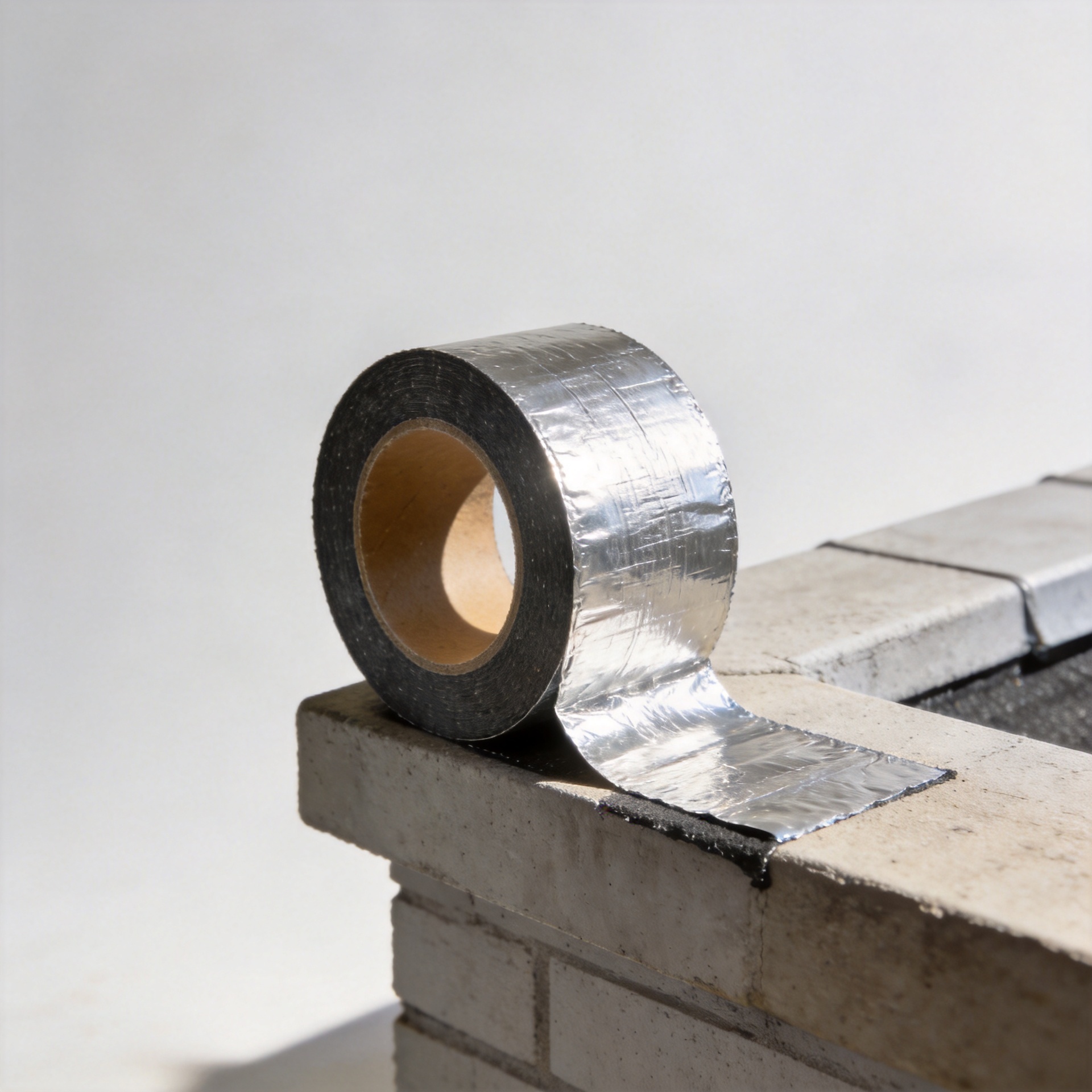
Every roof joint is a line where two materials meet, and sunlight finds it first. An aluminum foil bitumen waterproof flashing tape answers it at the surface, putting a reflective metal skin over the compound so ultraviolet light reaches metal instead of bitumen. A joint sealing tape chosen for exposure keeps the next joint sound, an aluminum foil tape spreads thermal load, and a reflective flashing tape at a rooflight perimeter changes how long the line lasts.
A joint fails from the top down. Bitumen at a lap edge is thin, exposed on three sides, and sits where movement is greatest; UV oxidises it, rain washes the film away, and the cycle repeats until it cracks. A joint sealing tape moves the wearing surface off the bitumen: an aluminum foil tape presents metal to the sun, and an aluminum foil bitumen waterproof flashing tape keeps the compound beneath cooler and steadier. That is a durability argument, and it is why a reflective flashing tape appears on exposed details.
The foil is a metal skin, and metal does not oxidise as bitumen does. Ultraviolet light breaks polymer chains; a continuous foil face intercepts it before it reaches the adhesive, so degradation stays at the surface. Published build: 1.5 mm compound, widths of 100 to 600 mm, rolls of 7.5 to 20 m. Foil is also a vapour barrier, so an aluminum foil bitumen waterproof flashing tape closes a lap against vapour as well as water. A joint sealing tape that only sheds water leaves that path open, while a reflective flashing tape covers both, which is why an aluminum foil tape is specified up front.
A bright metal face reflects much of the solar radiation, so the surface runs cooler than bare bitumen. The effect is local, but at a joint it matters: the adhesive interface sees a smaller temperature swing, and cycling fatigue builds more slowly. That is why a joint sealing tape with a foil face ages differently from a bare lap. Bond values stay as published, peel at least 1.5 N/mm and tensile at least 400 N/50mm, so the gain comes from exposure, not a stronger adhesive. An aluminum foil tape under screed adds nothing; the reflective flashing tape belongs where the detail stays visible, and the aluminum foil bitumen waterproof flashing tape earns its cost on the face.
Three details carry the work: membrane laps on an exposed roof, where the tape bridges the overlap edge and ends on sound sheet; metal flashing and parapet caps, where a dissimilar-metal joint moves at a different rate from the deck; rooflight kerbs, where frame, kerb, and membrane meet on one line and water collects. On each, an aluminum foil tape goes down with 50 mm of margin either side, rolled from the centre out, overlapped 50 mm at strip ends. A joint sealing tape on a kerb should follow the frame profile rather than bridge a gap, since a strip spanning air pumps. At a corner, cut and lap rather than fold, keeping the foil face of the reflective flashing tape outward.
The family also includes a 1.2 mm PE-film grade: 50 to 300 mm widths, custom to 1000 mm, peel at least 1.2 N/mm, tensile at least 300 N/50mm, the same -20°C flexibility and 0.3 MPa water tightness. It costs less per metre and follows awkward profiles with less bridging. What it lacks is a UV barrier, so it belongs under a finish. Choose the aluminum foil bitumen waterproof flashing tape for permanent exposure; a reflective flashing tape buried under screed wastes its advantage, and a joint sealing tape left bare needs the foil an aluminum foil tape provides.
Specify by exposure first, width second. Exposure decides the face; width decides coverage, with 100 to 600 mm on the foil grade covering parapet caps and lap bridges. Rolls of 7.5 to 20 m keep long runs in one piece. Then check the numbers: peel at least 1.5 N/mm, tensile at least 400 N/50mm, flexibility -20°C, water tightness at 0.3 MPa, CE and ISO 14001 certification. Those figures belong on the joint detail drawing, so installer and inspector read one document, and the reflective flashing tape listed is the aluminum foil bitumen waterproof flashing tape.
A facilities team traced repeat damp patches to rooflight kerbs at a distribution centre. The joints had been sealed with a mastic bead, renewed twice in four years. The team replaced the beads with a 100 mm strip of aluminum foil tape dressed over each kerb, rolled flat with 50 mm laps at the corners. Two summers later the kerbs were dry and the annual reseal had dropped off the schedule. The foil face, not a thicker compound, changed the outcome, and the joint sealing tape under it was not touched again.
It intercepts ultraviolet light at the surface, so the compound beneath degrades far more slowly than a bare bitumen edge. The foil itself weathers, and the joint still needs inspection.
On details that stay visible: parapet caps, metal flashing, exposed membrane laps, and rooflight kerbs. On concealed work a joint sealing tape in the PE-film grade does the same job for less than an aluminum foil tape.
Metal takes paint differently from bitumen, so check compatibility before coating. Where a colour match matters, the PE-film grade under a finish is the simpler route, and the aluminum foil bitumen waterproof flashing tape stays where it started: exposed.

2026/11/20
How an APP waterproof membrane handles heat: 130°C softening point, torch application windows, overheating signs, summer storage, and thermal aging checks.

2026/11/20
The science of a breathable waterproof membrane: water vapor diffusion, Sd values, three grammage grades, water column resistance, and wrong-use cases.

2026/11/20
Single-ply or two-ply, every flat roof is a stack. See how a self adhesive waterproof membrane for roof systems handles base, cap, insulation and drains.

2026/11/20
How the polyester scrim sets tensile strength and dimensional stability of reinforced TPO membrane rolls, with welding, roll sizes and selection tips.

2026/11/20
How an aluminum foil coated bitumen waterproof membrane reflects solar radiation, lowers surface temperature, and what maintenance keeps savings alive.

2026/11/20
SBS modified bitumen waterproof membrane property groups: tensile strength, low-temperature flexibility, heat resistance, surface finishes, applications.
Links to the corresponding full news page.

The eight questions overseas buyers ask most — factory ownership, capacity, batch consistency and lead times, answered straight.

SBS membranes, polymer sheets, coatings and geomembranes — six product lines are operating simultaneously.

Pre-sales specification, on-site technical support and post-delivery maintenance across 100+ export markets.

Waterproofing performance is decided in the specification and the detailing, not just the material. Our technical team helps you select the right system, resolve site questions as they arise, and stay reachable long after the container lands.
