 EN
APP Waterproof Membrane: High-Temperature Stability Guide
2026/11/20
How an APP waterproof membrane handles heat: 130°C softening point, torch application windows, overheating signs, summer storage, and thermal aging checks.

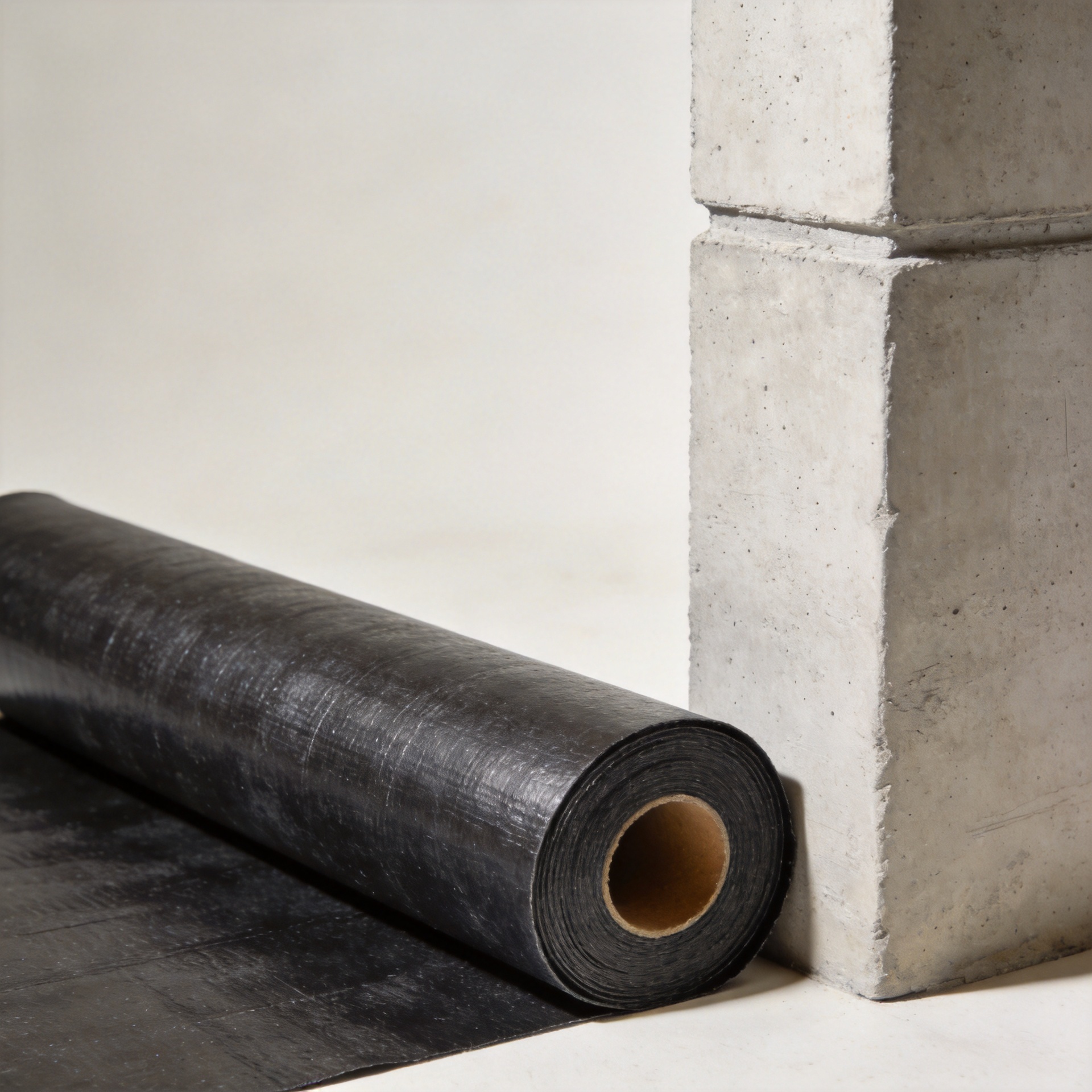
Buyers searching for a high polymer self adhesive waterproof membrane usually mean one thing: a polymer-modified bituminous sheet with a factory-applied adhesive layer that bonds without torch or hot asphalt. This guide reads the spectrum through two published data sheets — 1.2mm smooth PE film and 1.5mm colored mineral sand — and shows which figures decide whether a sheet suits your substrate, temperature range, and exposure conditions.
On the manufacturer's product list, the category is named self-adhesive bitumen waterproof membrane, and every grade in it is built on an SBS (styrene-butadiene-styrene) polymer modifier with polyester reinforcement. That is the polymer content behind the label: the modifier keeps the bitumen elastic instead of brittle and sets the low-temperature flexibility rating, while the adhesive layer belongs to the same modified compound — the source of the rated peel adhesion. A high polymer self adhesive waterproof membrane therefore inherits two property sets — SBS elasticity and a pressure-sensitive bond. Ask which polymer modifies the bitumen before comparing prices, because the modifier sets the temperature envelope.
Two published grades define the range. The 1.2mm grade carries a smooth PE film surface over SBS-modified bitumen reinforced with polyester fiber; rolls come in 1m × 10m or 1m × 20m. The 1.5mm grade adds a colored mineral sand surface — red, brown, grey, or green — over a polyester mat, in 1m × 10m rolls. Thickness correlates with mechanical reserve rather than with adhesion, and neither line replaces the low-temperature flexibility rating. That is why a high polymer self adhesive waterproof membrane quote should be compared parameter by parameter, not by millimeters: substrate preparation, not thickness, decides bond quality in practice.
Four figures deserve line-by-line attention. Peel adhesion: ≥ 1.5 N/mm on both data sheets, measured against concrete under factory-validated conditions; on dusty or damp substrates the rated figure is never reached, so priming is a prerequisite. Tensile strength: ≥ 300 N/50mm for the 1.2mm grade and ≥ 400 N/50mm for the 1.5mm mineral sand grade — the polyester reinforcement carries this load, which is why peel adhesion and tensile strength are reported separately. Elongation at break: ≥ 30% on both grades, enough to follow substrate movement without splitting at inside corners or pipe penetrations. Together these numbers describe the sheet more reliably than thickness alone, because sound adhesion beats gauge on a contaminated surface.
The temperature envelope differs by grade and matters most for cold-climate projects. The 1.2mm PE film grade keeps its low-temperature flexibility down to -20°C, which suits unheated spaces, basements, and refrigerated floors. The 1.5mm mineral sand grade is rated at -15°C with heat resistance to 90°C, covering exposed roofs in hot-weather regions. Water tightness is documented for the 1.2mm grade at 0.3 MPa for 120 minutes with no leakage. Laps self-bond under compression on both grades, so no seam sealant enters the installation — but laps bond only as well as the peel adhesion achieved on the cleaned, primed substrate. A high polymer self adhesive waterproof membrane specified outside its temperature envelope fails at laps first, so read this block before the strength figures.
Choose PE film where the membrane is covered: under-tile bathrooms, balconies with screed, basement linings, and cold storage floors. The smooth surface bonds with tile adhesive, keeping floor build-up below threshold clearances. Choose a mineral sand self adhesive waterproof membrane where the sheet is the finished layer: the granules shield the bitumen from UV, resist fading, and give footing for maintenance access on accessible roofs. Weathering changes what the surface must resist, not the rated peel adhesion beneath it. Low-temperature flexibility then acts as a screening filter — a refrigerated facility at -18°C rules out the -15°C grade regardless of surface appeal.
A contractor renovating an occupied hospital's wet rooms needed a waterproofing system without hot work. Torching was prohibited, so the 1.2mm PE film grade of the high polymer self adhesive waterproof membrane range was specified: peel-and-press installation, no gas cylinders, no fire watch, and a tile-adhesive-compatible surface that let tiling proceed the same week. Its rated low-temperature flexibility of -20°C also covered the unheated plant room beyond the wet areas.
Both grades ship with CE certification and ISO 9001-controlled production, batch COA with every order, and TDS and MSDS on request. MOQ starts from 500 m², roll sizes are customizable, and OEM or private-label arrangements are supported for project-specific procurement without warehouse stock. When you request a quotation, ask the supplier to state the modifier, reinforcement, peel adhesion, low-temperature flexibility, and heat rating on the quotation sheet itself — this keeps published parameters traceable from inquiry to material inspection.
No. The adhesive layer of a high polymer self adhesive waterproof membrane is the same chemistry at every gauge; bond quality depends on substrate preparation — clean, dry, primed surfaces — far more than on membrane thickness. Always confirm substrate condition before installation.
The 1.2mm PE film grade. Its rated peel adhesion matches ≥ 1.5 N/mm like the 1.5mm sheet, its low-temperature flexibility rating of -20°C covers refrigerated operating conditions, and the 0.3 MPa / 120-minute water tightness result documents wet-area performance.
Request the CE certificate, ISO 9001 certificate, batch COA, TDS, and MSDS with the first order. Confirm that the batch COA of the high polymer self adhesive waterproof membrane you ordered references the same low-temperature flexibility and peel adhesion figures as the quotation, so delivered rolls stay traceable to published data.

2026/11/20
How an APP waterproof membrane handles heat: 130°C softening point, torch application windows, overheating signs, summer storage, and thermal aging checks.

2026/11/20
The science of a breathable waterproof membrane: water vapor diffusion, Sd values, three grammage grades, water column resistance, and wrong-use cases.

2026/11/20
Single-ply or two-ply, every flat roof is a stack. See how a self adhesive waterproof membrane for roof systems handles base, cap, insulation and drains.

2026/11/20
How the polyester scrim sets tensile strength and dimensional stability of reinforced TPO membrane rolls, with welding, roll sizes and selection tips.

2026/11/20
How an aluminum foil coated bitumen waterproof membrane reflects solar radiation, lowers surface temperature, and what maintenance keeps savings alive.

2026/11/20
SBS modified bitumen waterproof membrane property groups: tensile strength, low-temperature flexibility, heat resistance, surface finishes, applications.
Links to the corresponding full news page.

The eight questions overseas buyers ask most — factory ownership, capacity, batch consistency and lead times, answered straight.

SBS membranes, polymer sheets, coatings and geomembranes — six product lines are operating simultaneously.

Pre-sales specification, on-site technical support and post-delivery maintenance across 100+ export markets.

Waterproofing performance is decided in the specification and the detailing, not just the material. Our technical team helps you select the right system, resolve site questions as they arise, and stay reachable long after the container lands.
