 EN
APP Waterproof Membrane: High-Temperature Stability Guide
2026/11/20
How an APP waterproof membrane handles heat: 130°C softening point, torch application windows, overheating signs, summer storage, and thermal aging checks.

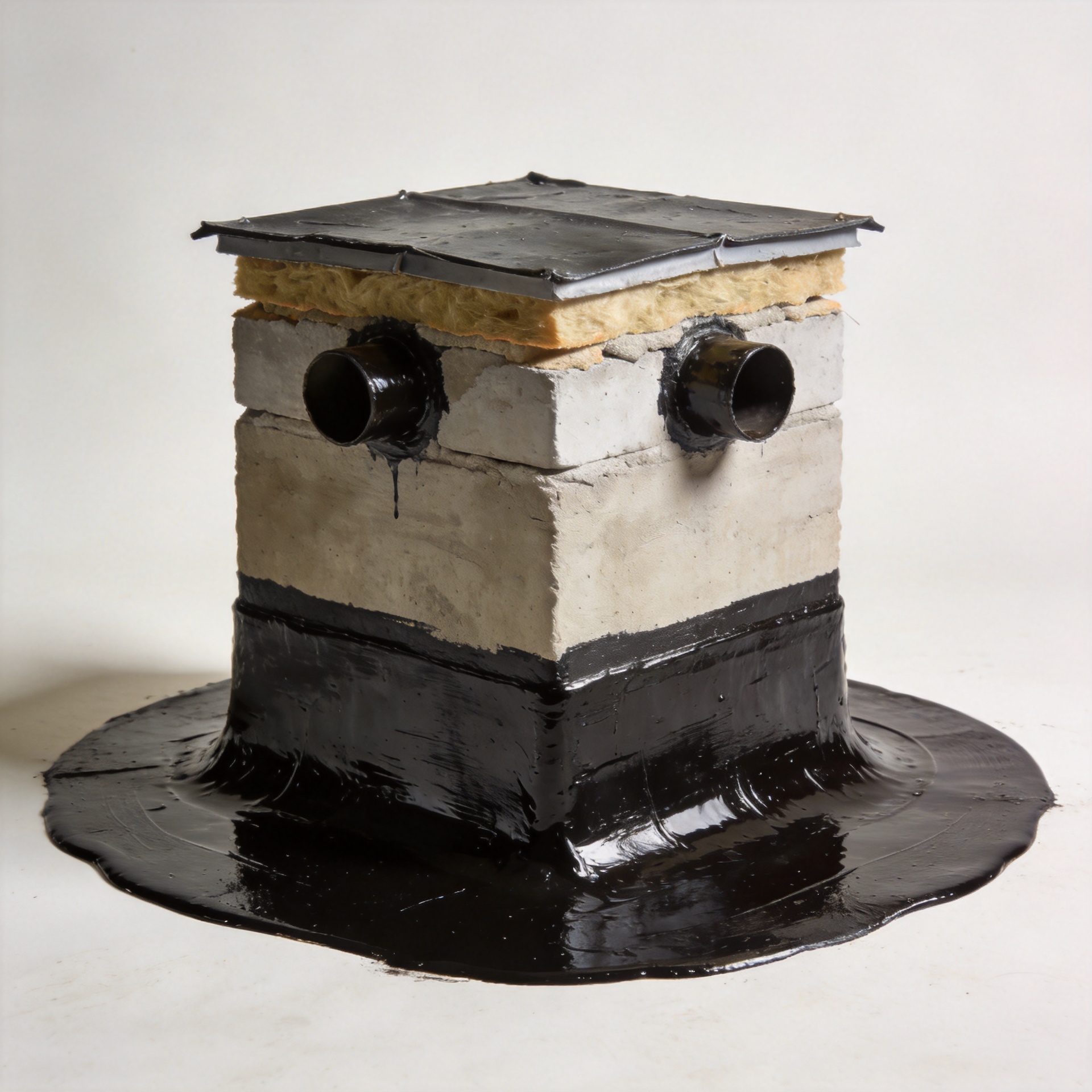
A liquid rubber waterproofing membrane is the trade name buyers use for elastomeric, cold-applied coatings that cure into a continuous waterproof film. The category overlaps with what manufacturers list as liquid waterproof membrane products, such as polyurethane and acrylic systems. This article explains how the cured film works, why seamless waterproofing matters, where a liquid-applied system outperforms sheets, and which published figures to check before specifying an elastomeric coating.
A liquid rubber waterproofing membrane starts as a viscous compound in a 20 kg bucket and cures in place into an elastomeric coating that stretches and recovers with the substrate. On the manufacturer's polyurethane grade, the cured film reaches elongation at break of 450 percent or more with tensile strength of at least 1.5 MPa, and the water-based acrylic grade reaches 400 percent at 0.8 MPa. Those are liquid applied waterproofing figures, measured on the cured film, not on a rolled sheet. Because the film forms from a liquid waterproof membrane compound, it follows every corner, upstand, and pipe it is brushed onto — the mechanical basis of the seamless waterproofing advantage below.
Every lap in a sheet system is a joint; every square metre of a liquid-applied film is continuous. Seamless waterproofing removes the failure mode that dominates leak reports: open or poorly bonded laps. Around complex geometry, a liquid rubber waterproofing membrane needs no cutting — no patches, corner splits, or fastener penetrations. The published polyurethane system passes water tightness at 0.4 MPa for 30 minutes, and the acrylic system at 0.3 MPa for 30 minutes; in a liquid waterproof membrane these results apply to a film without a single joint. For an elastomeric coating applied correctly, thickness control through the stated coat count secures that rating, which is why liquid applied waterproofing data sheets give both a rate per square metre and a coat count.
Elasticity is where an elastomeric coating earns its place over rigid cementitious systems. The polyurethane film bridges live cracks up to 5 mm and the acrylic film up to 3 mm, and both recover after repeated movement because elongation stays in the hundreds of percent. A liquid rubber waterproofing membrane specified for a plaza deck or balcony must absorb thermal movement and small structural deflections without rupturing, and this is what the published elongation values describe. Rigid mortars crack along with the substrate, while a liquid waterproof membrane film stretches, recovers, and keeps the watertight layer intact. That behaviour also suits retrofit work, where seamless waterproofing over an existing, movement-prone surface avoids tearing out sound material, and where liquid applied waterproofing can be built up in two or three coats without demolition.
Liquid systems win at the details. Gutters, rainwater outlets, pipe penetrations, parapet coves, and flashing transitions are where sheet laps multiply — and where a liquid rubber waterproofing membrane forms a continuous collar instead. On a plaza-deck renovation, an applicator sealed more than thirty outlets and two movement joints with a two-component polyurethane system faster than a sheet crew could cut patches; the cured elastomeric coating tied every detail into the field. Interior wet rooms, under-tile bathrooms, and balcony thresholds benefit likewise, because seamless waterproofing under tile cannot be inspected later. Where a design mixes systems, a liquid waterproof membrane flashing pass details the edges before sheets cover the field — liquid applied waterproofing is often the fastest way to guarantee those junctions.
Neither category is universally better. Factory-made sheets give thickness control at the plant; a liquid rubber waterproofing membrane gives geometry control on site. Use the film where shape is complex or movement is high, and sheets where the field is large and flat. Published figures make the comparison concrete: the polyurethane grade carries CE certification and ISO 14001 registration, applies at 1.5 to 2.5 kg per square metre over two or three coats, and is offered as single- or two-component. For buyers weighing an elastomeric coating against bitumen sheets, the honest framing is seamless waterproofing versus factory-controlled thickness, and the answer is usually a combination: a liquid waterproof membrane field with sheet protection, or the reverse — how experienced specifiers deploy liquid applied waterproofing alongside rolled systems.
Application discipline decides the film. Surfaces must be sound and dry, the stated rate of 1.5 to 2.5 kg per square metre respected, and each coat cured before the next, so a liquid rubber waterproofing membrane is a scheduled activity, not a patch task. Verify before ordering: the CE certificate and ISO 14001 registration behind the published elongation and water-tightness values, batch COA documents, whether the elastomeric coating is single- or two-component, and the minimum order, one ton from this factory. Storage matters too: a liquid waterproof membrane compound in a 20 kg pail must be sealed as the data sheet directs, and seamless waterproofing depends on film thickness, so ask for wet-film checks during application. Treated this way, liquid applied waterproofing delivers the figures the brochure promises.
Yes, if the existing surface is sound, clean, and well adhered. Adhesion and compatibility checks matter more than on new build; a small patch test before seamless waterproofing proceeds over an unknown surface is standard practice.
Recoat intervals are measured in hours and depend on temperature and system type. Keep the film dry until fully cured and respect the coat count before rain or traffic.
Only grades with specific certification for potable or aquatic contact; standard grades should not be used for drinking-water storage, so confirm the intended use with the supplier in writing.

2026/11/20
How an APP waterproof membrane handles heat: 130°C softening point, torch application windows, overheating signs, summer storage, and thermal aging checks.

2026/11/20
The science of a breathable waterproof membrane: water vapor diffusion, Sd values, three grammage grades, water column resistance, and wrong-use cases.

2026/11/20
Single-ply or two-ply, every flat roof is a stack. See how a self adhesive waterproof membrane for roof systems handles base, cap, insulation and drains.

2026/11/20
How the polyester scrim sets tensile strength and dimensional stability of reinforced TPO membrane rolls, with welding, roll sizes and selection tips.

2026/11/20
How an aluminum foil coated bitumen waterproof membrane reflects solar radiation, lowers surface temperature, and what maintenance keeps savings alive.

2026/11/20
SBS modified bitumen waterproof membrane property groups: tensile strength, low-temperature flexibility, heat resistance, surface finishes, applications.
Links to the corresponding full news page.

The eight questions overseas buyers ask most — factory ownership, capacity, batch consistency and lead times, answered straight.

SBS membranes, polymer sheets, coatings and geomembranes — six product lines are operating simultaneously.

Pre-sales specification, on-site technical support and post-delivery maintenance across 100+ export markets.

Waterproofing performance is decided in the specification and the detailing, not just the material. Our technical team helps you select the right system, resolve site questions as they arise, and stay reachable long after the container lands.
