Liquid Waterproof Membrane Comparison: Liquid-Applied vs Sheet Systems
For procurement teams evaluating roofing, basement, or balcony waterproofing, the liquid waterproof membrane comparison is critical. The decision is not simply unit price per kilogram — it is which system holds up under continuous water exposure, structural movement, and UV stress for 20 years without costly remedial work. Understanding where sheet membranes end and where liquid-applied polyurethane begins is the first step in making the right sourcing decision.
What Is a Polyurethane Liquid Waterproof Membrane?
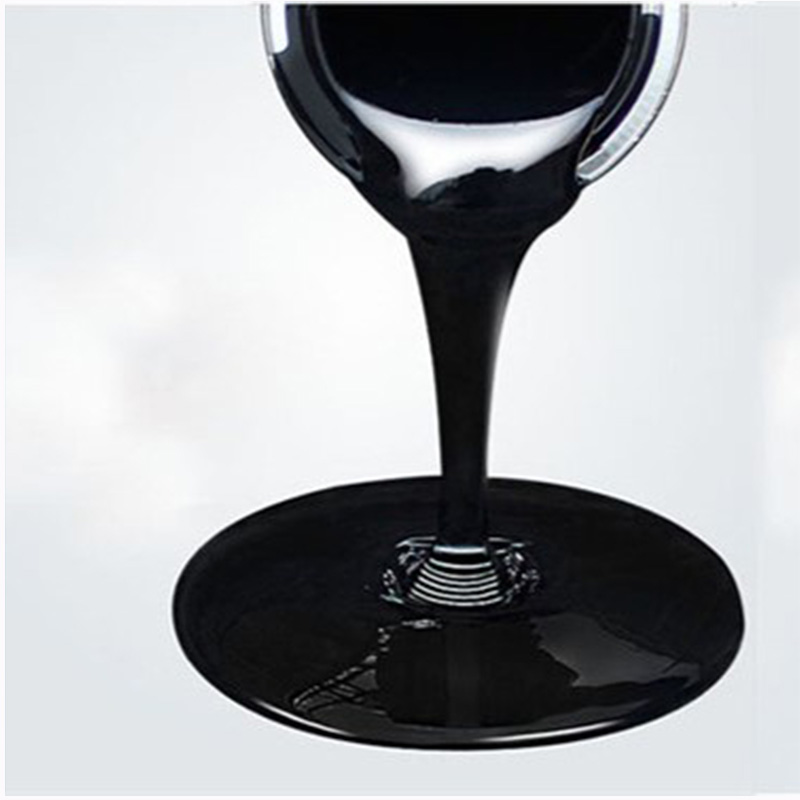
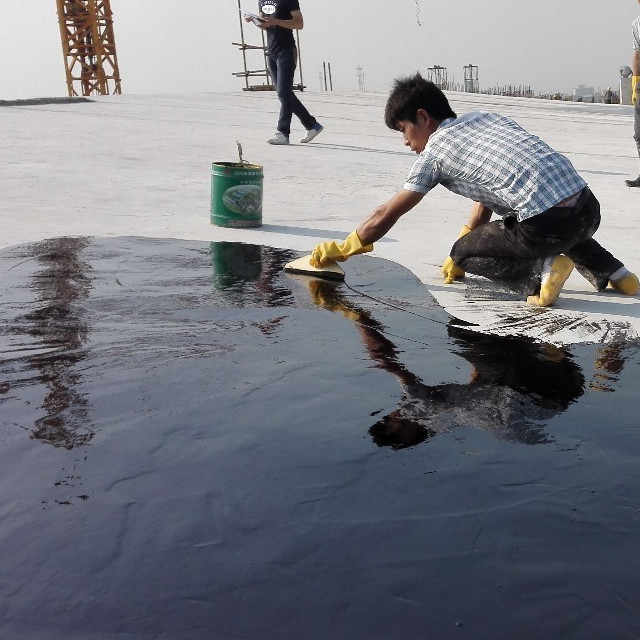
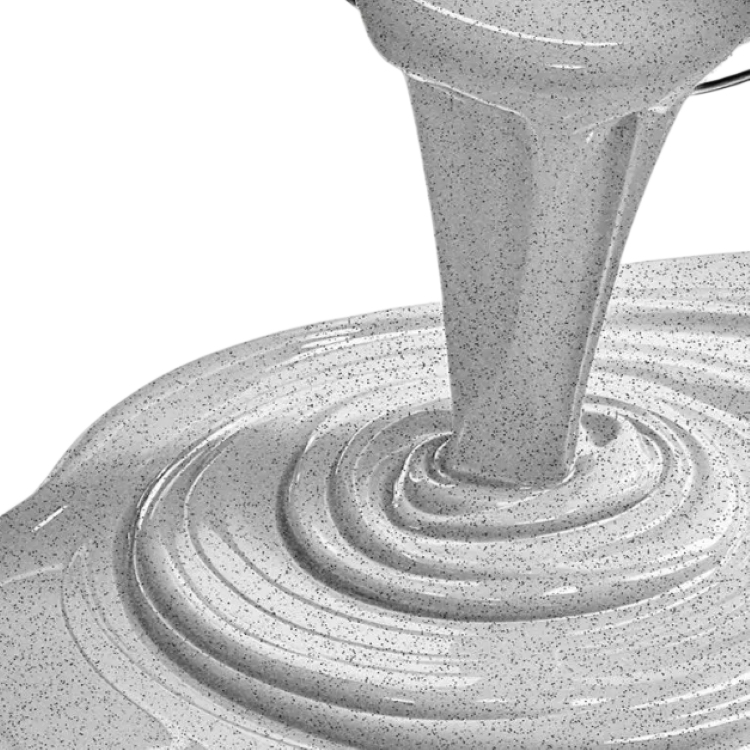
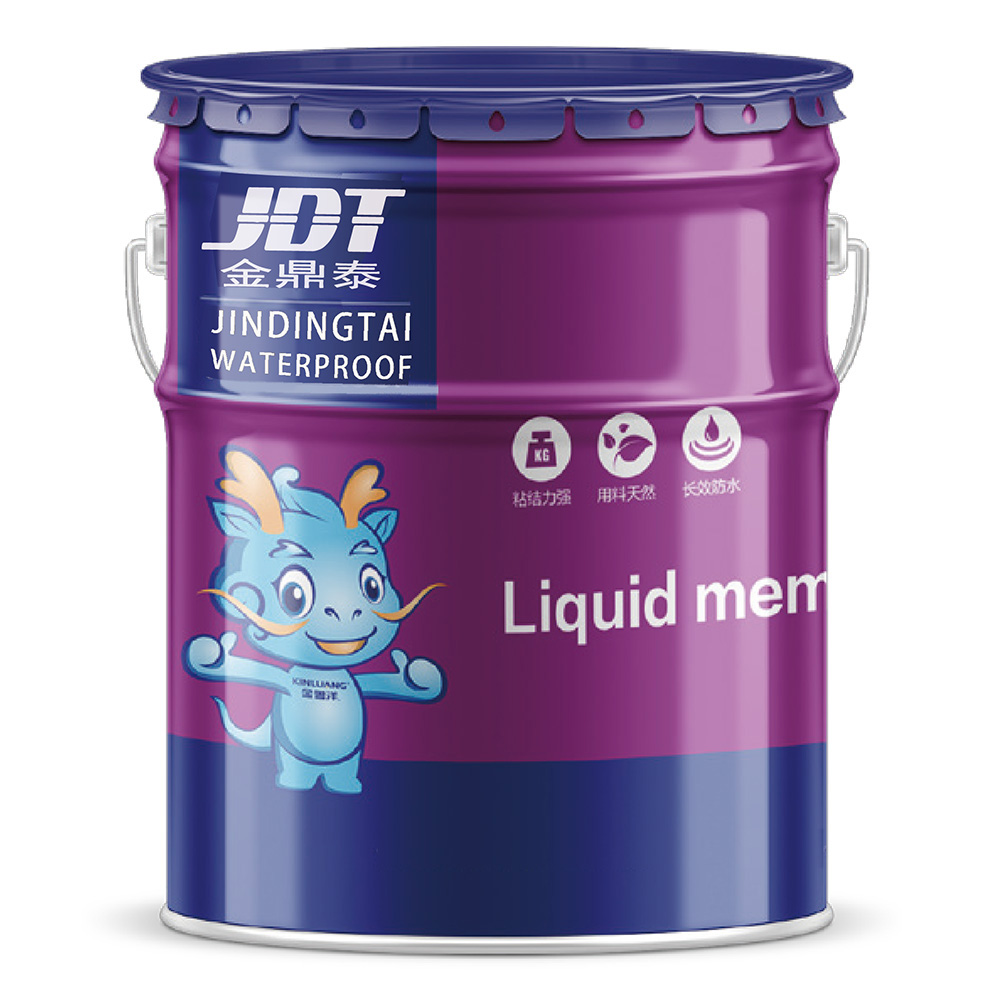
A polyurethane liquid waterproof membrane is a single- or two-component liquid-applied coating that cures in place to form a seamless, monolithic, fully bonded film. Unlike sheet membranes cut from fixed-width rolls, the liquid membrane is applied by brush, roller, or spray and flows around every penetration, corner, and detail — curing into a continuous elastic film with no seams and no laps. Think of it as the difference between wrapping a parcel with cut strips of tape versus dipping it in a continuous rubber skin: every lap edge on a sheet is a potential failure point eliminated by liquid application.
The cured polyurethane film achieves elongation at break of ≥ 450%, stretching and recovering without rupture when the substrate beneath it moves or cracks — the defining advantage over bitumen-based sheet systems in high-movement or retrofit projects.
Key Performance Advantages
Seamless Film — Eliminating the Primary Failure Mode
Waterproofing failures concentrate at seams, laps, terminations, and penetrations — exactly where sheet membranes require overlapping joints and heat-welded edges. A liquid membrane eliminates those joints entirely. The entire surface, including drain surrounds, pipe penetrations, and parapet upstands, is protected by one continuous cured film. For project teams managing quality risk on complex-geometry roofs or basement slabs, eliminating seam risk is the single most important advantage in any liquid waterproof membrane comparison.
High Elasticity Roof Membrane: ≥ 450% Elongation
The cured film bridges substrate cracks up to 5 mm and absorbs structural movement — thermal cycling, settlement, or vibration — without rupturing. This makes it the preferred high elasticity roof membrane for flat and low-slope commercial roofs with significant temperature swings and for underground slabs under hydrostatic pressure. One practical note: applying extra material beyond the specified rate does not proportionally improve crack bridging. Consistent coverage at 1.5–2.5 kg/m² across the full surface, including all detail areas, delivers better performance than an over-thick single coat on a poorly prepared substrate.
UV Resistance and Polyurethane Waterproofing ROI
The UV-stabilised formulation maintains colour, elasticity, and waterproofing integrity on fully exposed rooftops for 20+ years. When calculating polyurethane waterproofing ROI against modified bitumen sheet alternatives, the lifecycle cost favours systems with documented 20-year service life: fewer replacement cycles, lower remedial labour, and reduced consequential damage costs over the building's life. For a commercial roof with a 20-year PU membrane service life versus a 10-year modified bitumen sheet requiring replacement, the avoided second installation cycle — materials and labour combined — often exceeds the initial premium paid for the longer-life system.
Multi-Substrate Adhesion and Application Flexibility
The membrane bonds directly to concrete, cement mortar, metal, timber, and existing waterproof coatings — versatile for both new construction and retrofit. Single- or two-component formulations are available; elongation and cure speed are adjustable on request for specific substrate or climate conditions.
Technical Specifications
| Parameter |
Value |
| Type |
Polyurethane-based liquid membrane |
| Solid Content |
≥ 80% |
| Elongation at Break |
≥ 450% |
| Tensile Strength |
≥ 1.5 MPa |
| Water Tightness |
Pass at 0.4 MPa, 30 min |
| Crack Bridging |
Up to 5 mm |
| Application Rate |
1.5–2.5 kg/m² (2–3 coats) |
| Packaging |
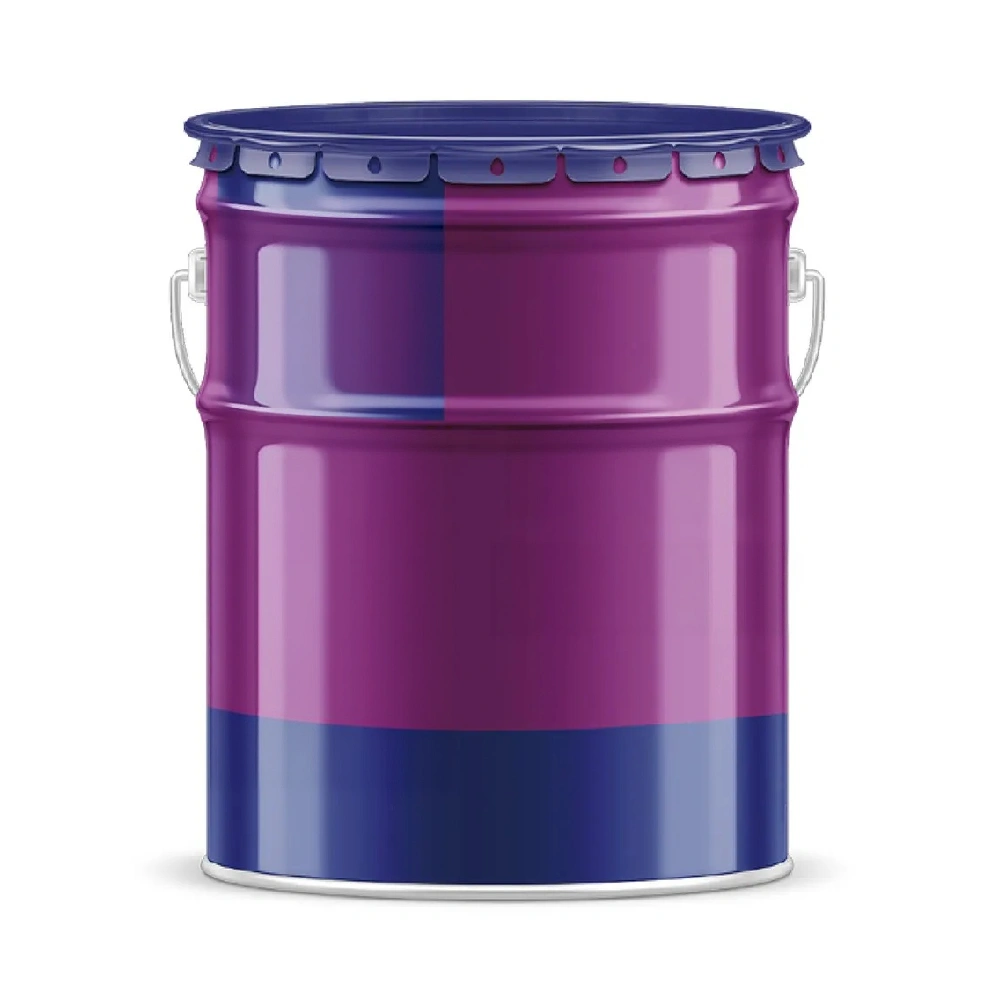
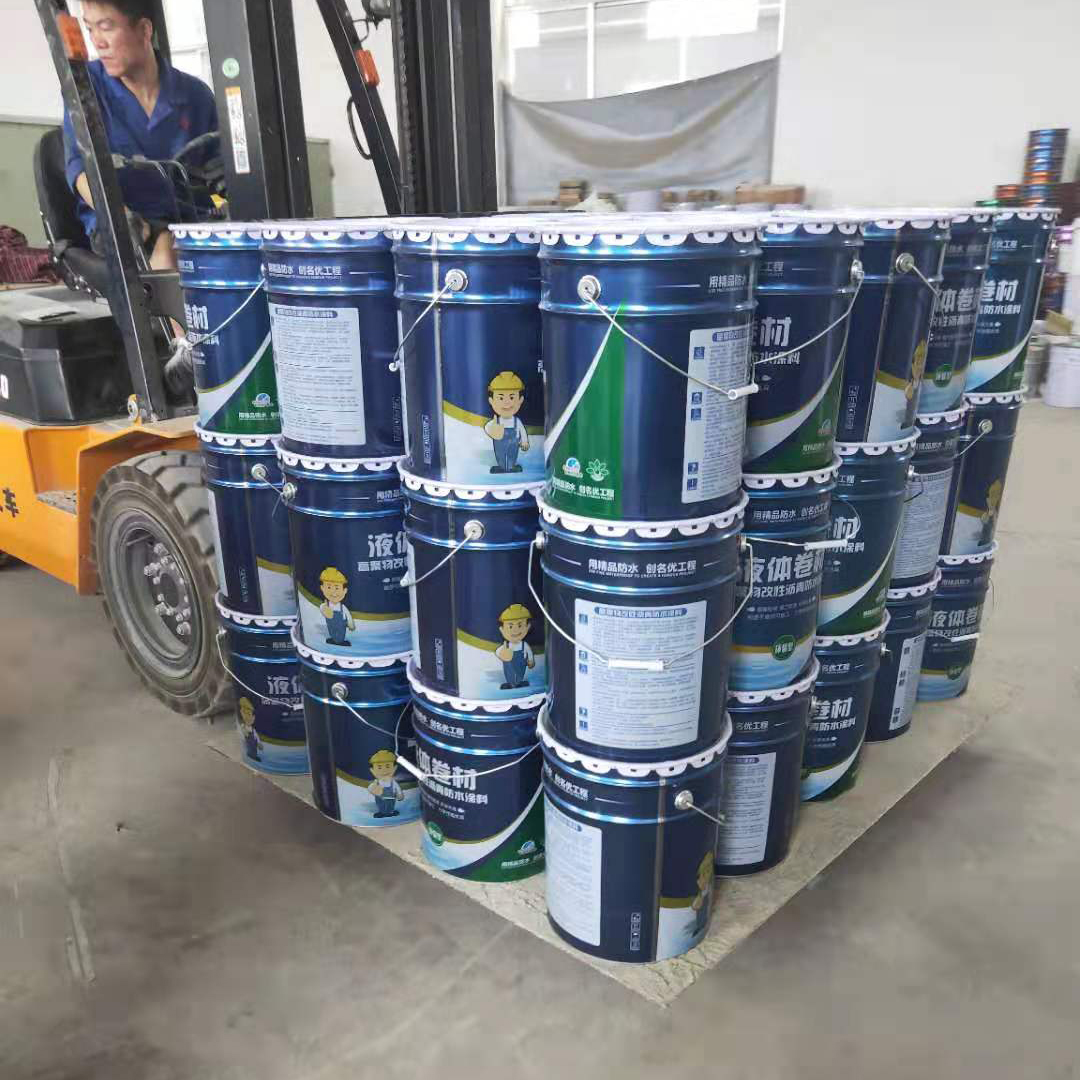
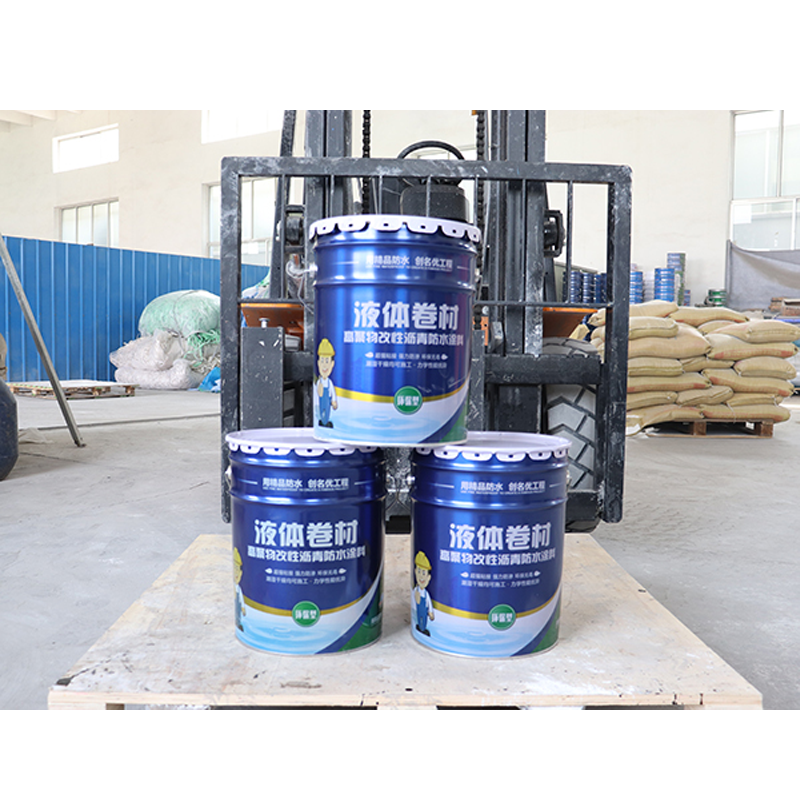
20 kg/bucket |
| MOQ |
1 ton |
| Certification |
CE, ISO 14001 |
Note: performance values are measured under standard test conditions. Actual elongation, tensile strength, and crack-bridging performance should be confirmed against site-specific substrate conditions and project specifications before procurement sign-off — meeting a datasheet value is the starting point, not the guarantee of system success.
Application Scenarios
Flat and Low-Slope Roofing
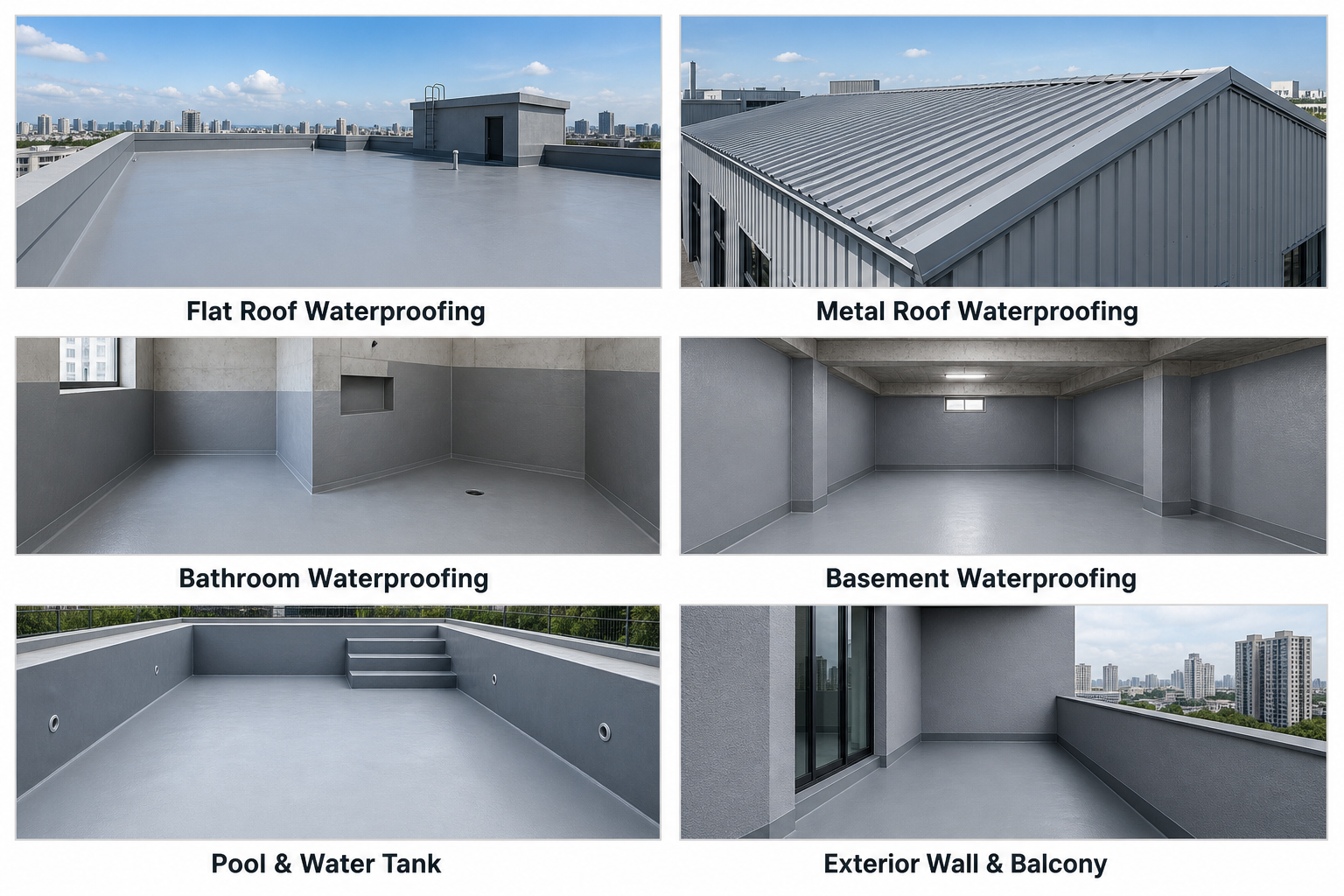
Flat roofs with HVAC penetrations, expansion joints, and parapet corners accumulate detail terminations that multiply seam risk for sheet systems. The liquid membrane covers all details in a single application without introducing additional material types or seam profiles. Combined with its ≥ 450% elongation, it is the specified high elasticity roof membrane for demanding commercial and industrial flat roofing.
Underground Waterproofing: Basements and Car Parks
Underground structures face constant hydrostatic pressure and zero tolerance for post-backfill remediation. In underground waterproofing case studies and specification reviews, fully bonded application is consistently noted as key to preventing lateral water migration beneath the membrane layer — a failure mode that can cause hidden damage before any surface leak appears. This product passes water tightness testing at 0.4 MPa for 30 minutes, confirming resistance at hydrostatic pressures relevant to most basement and car park depths.
Balconies, Terraces, and Wet Rooms
Balcony and terrace decks with tile drainage details and wall-floor junctions, and wet rooms with pipe penetrations, are ideal candidates for liquid application. Seamless coverage under tiles eliminates hidden seam failures that cause a disproportionate share of bathroom and terrace leak claims. For projects requiring waterproofing verification at handover, the continuous bonded film also simplifies flood-test confirmation compared with lap-jointed sheet alternatives.
Why Choose Us
- 20 years of liquid membrane manufacturing with proven polyurethane formulation expertise
- ISO 9001 & ISO 14001 certified; annual coating production capacity 11,000 tons
- Single or two-component formulation available; elongation and cure speed adjustable on request
- MOQ 1 ton; OEM/private label with custom colour and 20kg packaging
- Full documentation: CE certificate, COA, TDS, MSDS
- Technical support for application rate and dry film thickness specification
About Company
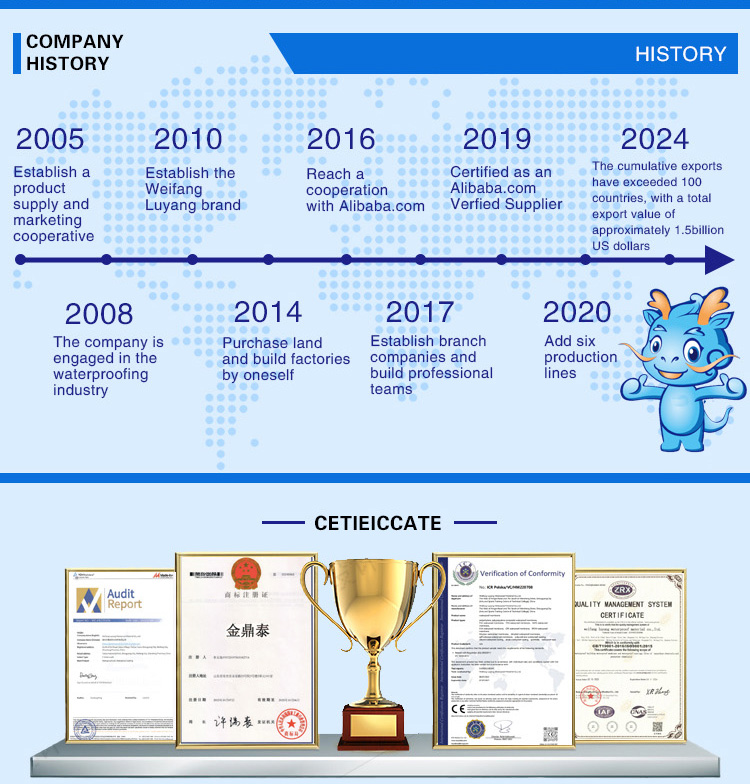
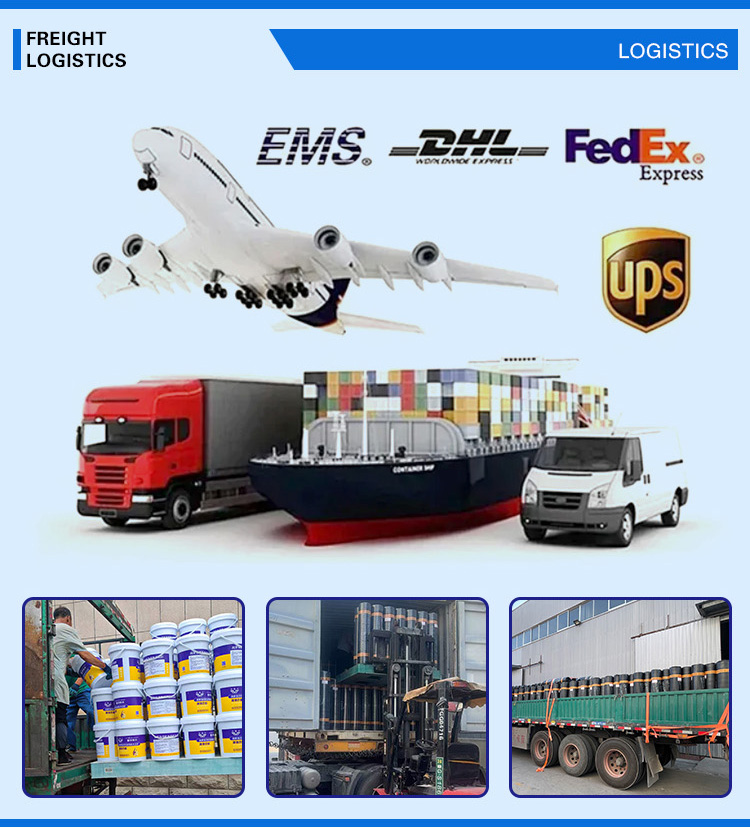
Shandong Dingtai Waterproof Technology Co., Ltd. is a leading manufacturer based in China' s largest waterproof material production hub-Taitou Industrial Park.As a company with independent import-export rights,we have successfully supplied products across global markets countriesand regions such as North America, Southeast Asia, South America, Africa,Europe and the Middle East. Our commitment to superior quality andreliable service has earned us a strong international reputation andgrowing market presence.
Frequently Asked Questions
Q1: Why choose us ?
A: We are professional manufacturer, and we can provide the best product ,competitive priceand excellent service.
Q2: Do you provide sample ?ls it free or extra ?
A: Yes,we can provide free sample for quality inspection.According to the regulations of our company , you should assume the freight ,and we will return the freight if you place the order.
Q3: How about the delivery time ?
A: 7-15 days after receive the deposit or LC at sight
Q4: How does your factory do regarding quality control?
A: Quality is priority,. We always attach great importance to quality control from the very beginning to the end. We have a professional QA/QC team to ensure the quality.
Q5: Do you accept OEM or ODM order?
A: Yes, we accept both OEM and ODM for customers.
Q6: What are your terms of delivery?
A: We can accept EXW, FOB, ClF, etc. You can choose one which is the most convenient for you.
Q7: What is the payment way?
A: TT, L/C at sight, West Union,Online Bank Payment.
Q8: Are you trading company or manufacturer?
A: We are manufacturer.So we have a lower price than trading company.

 EN