 EN
APP Waterproof Membrane: High-Temperature Stability Guide
2026/11/20
How an APP waterproof membrane handles heat: 130°C softening point, torch application windows, overheating signs, summer storage, and thermal aging checks.

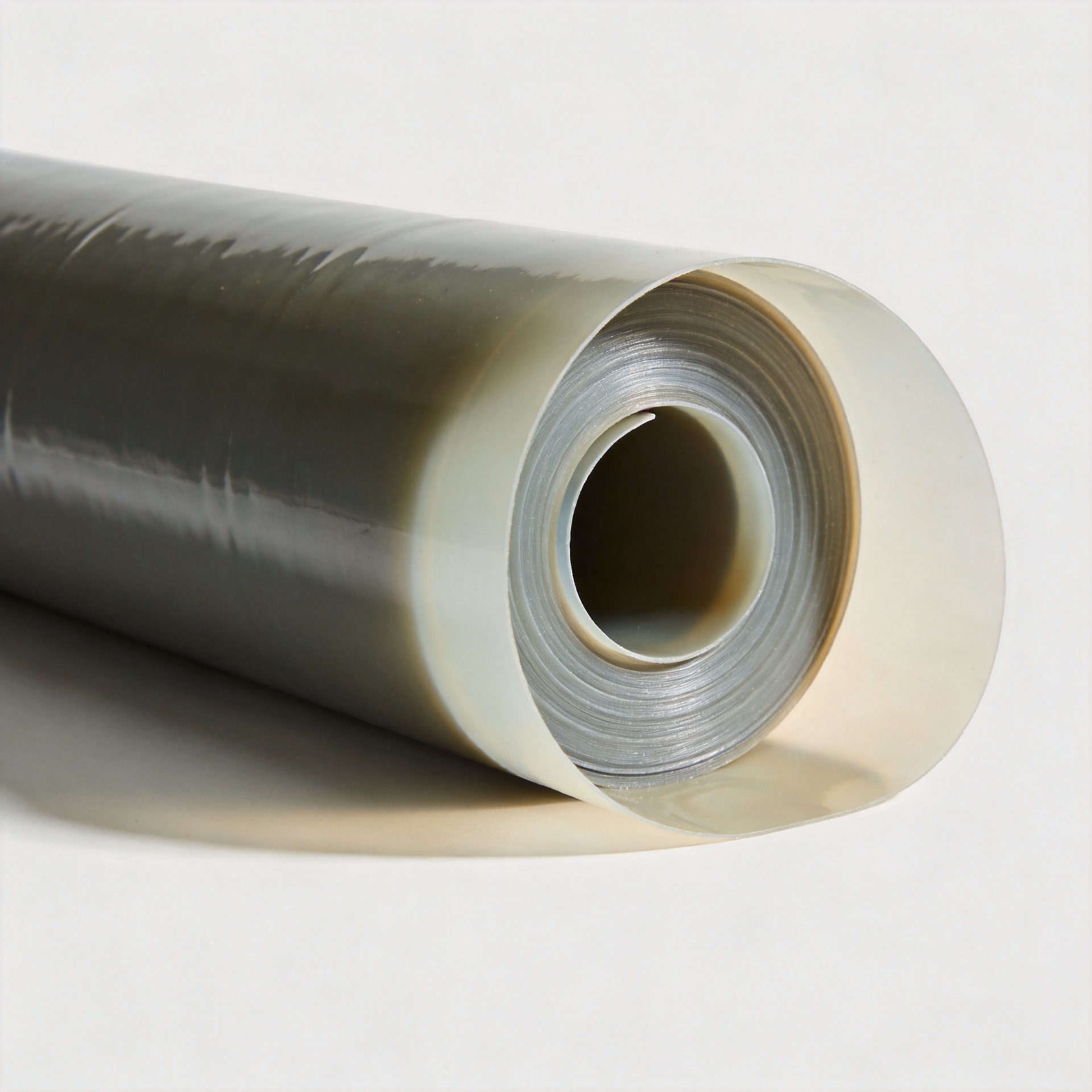
When waterproofing complex architectural geometries, standard rigid sheets often struggle to hug tight corners without tenting or creasing. A non-reinforced PVC waterproofing membrane—commonly referred to in the industry as a homogeneous PVC membrane—is manufactured from premium thermoplastic polyvinyl chloride resin combined with specialized plasticizers and ultraviolet stabilizers. Unlike reinforced rolls that embed an internal polyester or fiberglass mesh, a non-reinforced PVC waterproofing membrane features a uniform, single-layer polymer structure from top to bottom. Because there is no internal scrim restricting its movement, this material acts as an exceptionally flexible lining that stretches and conforms effortlessly in all directions. At Shandong Dingtai Waterproof Technology Co., Ltd., located in the renowned waterproofing manufacturing base of Shouguang, our production lines formulate thermoplastic high-polymer sheets designed to solve the toughest detailing challenges. For property owners and contractors alike, understanding how this homogeneous sheet works is the first step toward building a leak-free structure.
Drawing from years of practical site support across commercial roofs, subterranean basements, and municipal water containment projects, our technical team frequently sees leaks originate not on flat open surfaces, but around pipe penetrations, irregular parapets, and expansion joints. In real-world construction scenarios, installers often pair reinforced sheets on broad roof fields with a non-reinforced PVC waterproofing membrane specifically for flashing and intricate transitions. Because a non-reinforced PVC waterproofing membrane possesses outstanding multi-directional elongation and plasticity, field technicians can warm the sheet gently with a hand-held hot air tool and mold it directly around circular vents, internal drain sumps, and sharp ninety-degree wall corners. Whether applied as a continuous flexible lining inside a curved underground utility tunnel or used to seal complex planter boxes on a garden roof, this material eliminates the mechanical stress and edge-delamination risks commonly associated with stiffer, mesh-backed rolls.
From a materials engineering perspective, the long-term reliability of a PVC waterproofing membrane depends heavily on its molecular stability and seam integrity. During our extrusion manufacturing process, advanced stabilizers are blended into the polyvinyl chloride compound to ensure strong resistance against ultraviolet radiation, chemical corrosion, acid rain, and biological root penetration. Furthermore, a standout technical advantage of a non-reinforced PVC waterproofing membrane is its exceptional hot-air weldability. Rather than relying on chemical glues or asphalt tapes that can degrade when exposed to standing water, installers use automated or hand-held hot air welders to fuse overlapping sheets together. Once heated and pressed with a silicone roller, the overlapping layers of the PVC waterproofing membrane melt and bond at the molecular level, turning separate rolls into a single, monolithic waterproof barrier. In addition, the material maintains impressive low-temperature flexibility and water vapor diffusivity, allowing trapped substrate moisture to disperse smoothly without blistering the flexible lining.
Selecting a high-polymer waterproofing system requires alignment with internationally recognized construction practices and building envelope science. Leading civil engineering institutions and waterproofing associations globally emphasize that homogeneous thermoplastic membranes are indispensable wherever structural settlement, thermal expansion, or vibration occurs. According to established polymer waterproofing guidelines, a non-reinforced PVC waterproofing membrane avoids the risk of wicking—a phenomenon where moisture travels microscopically along exposed reinforcing fibers at cut edges. Because a homogeneous PVC waterproofing membrane contains no fabric fibers, cut edges require no secondary edge-sealant fluid, which streamlines site inspection and speeds up installation. Furthermore, industry durability studies confirm that properly formulated polyvinyl chloride sheets maintain their elasticity over decades of service in both exposed weather conditions and concealed underground environments, making them a trusted specification for modern civil infrastructure.
For construction buyers, distributors, and project specifiers, achieving trustworthy waterproofing results means looking beyond surface appearance and verifying factory quality controls. When sourcing a non-reinforced PVC waterproofing membrane, buyers should always confirm that the roll surface is smooth, free of pinholes or blisters, and backed by consistent factory batch testing. A reliable PVC waterproofing membrane delivers measurable value by reducing installation labor hours on complex details, minimizing long-term maintenance expenses, and preventing costly structural water damage. At Shandong Dingtai Waterproof Technology Co., Ltd., we integrate research, development, production, and technical consultation across six major waterproof product series to help global clients match the exact membrane type to their environmental demands. By selecting a verified non-reinforced PVC waterproofing membrane and following strict hot-air welding protocols, contractors can deliver a durable, watertight flexible lining that protects buildings for decades.
A non-reinforced PVC waterproofing membrane is a homogeneous sheet made entirely of flexible polyvinyl chloride without an internal mesh. This gives it superior stretchability and pliability in all directions, making it ideal for complex corners, pipe flashings, and curved underground structures. A reinforced PVC membrane contains an internal polyester or fiberglass scrim that adds dimensional stability and mechanical pull resistance for mechanically fastened flat roofs.
Seams on a non-reinforced PVC waterproofing membrane are sealed using thermal hot-air welding rather than liquid adhesives or open flames. A specialty hot-air welding gun heats the overlapping membrane edges until the thermoplastic material softens, and a pressure roller fuses them together into a permanent, seamless bond that is just as strong as the sheet itself.
Thanks to its high elongation, root resistance, and chemical stability, a non-reinforced PVC waterproofing membrane is widely used for intricate roof detailing, subterranean basements, highway and railway tunnels, artificial lakes, swimming pool linings, and planted green roofs where the waterproof layer must adapt to irregular shapes or slight structural movement.

2026/11/20
How an APP waterproof membrane handles heat: 130°C softening point, torch application windows, overheating signs, summer storage, and thermal aging checks.

2026/11/20
The science of a breathable waterproof membrane: water vapor diffusion, Sd values, three grammage grades, water column resistance, and wrong-use cases.

2026/11/20
Single-ply or two-ply, every flat roof is a stack. See how a self adhesive waterproof membrane for roof systems handles base, cap, insulation and drains.

2026/11/20
How the polyester scrim sets tensile strength and dimensional stability of reinforced TPO membrane rolls, with welding, roll sizes and selection tips.

2026/11/20
How an aluminum foil coated bitumen waterproof membrane reflects solar radiation, lowers surface temperature, and what maintenance keeps savings alive.

2026/11/20
SBS modified bitumen waterproof membrane property groups: tensile strength, low-temperature flexibility, heat resistance, surface finishes, applications.
Links to the corresponding full news page.

The eight questions overseas buyers ask most — factory ownership, capacity, batch consistency and lead times, answered straight.

SBS membranes, polymer sheets, coatings and geomembranes — six product lines are operating simultaneously.

Pre-sales specification, on-site technical support and post-delivery maintenance across 100+ export markets.

Waterproofing performance is decided in the specification and the detailing, not just the material. Our technical team helps you select the right system, resolve site questions as they arise, and stay reachable long after the container lands.
