 EN
APP Waterproof Membrane: High-Temperature Stability Guide
2026/11/20
How an APP waterproof membrane handles heat: 130°C softening point, torch application windows, overheating signs, summer storage, and thermal aging checks.

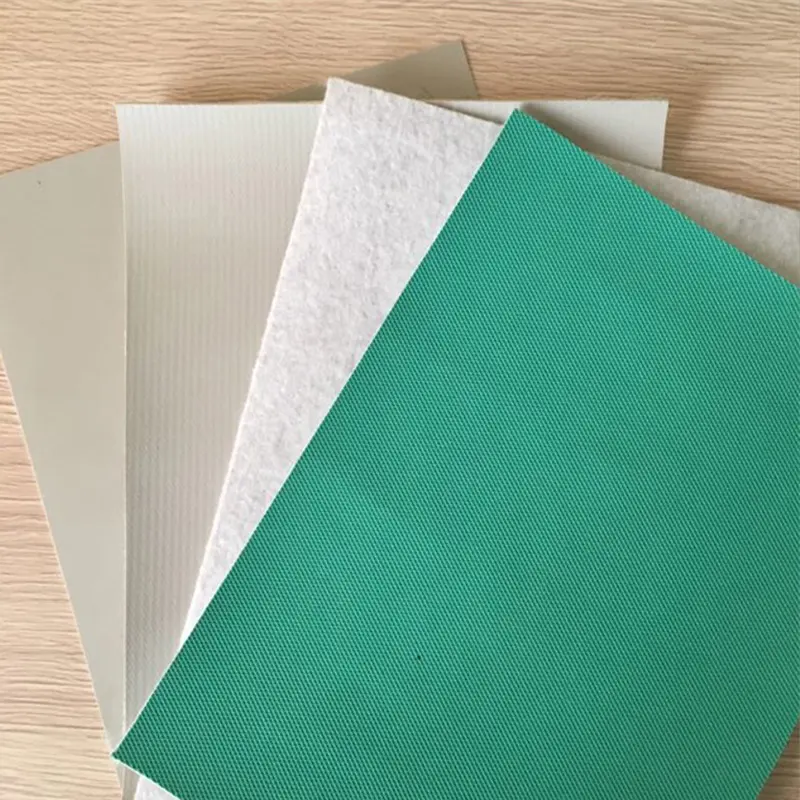
A self adhesive pvc waterproof membrane is a PVC waterproofing sheet with a factory-applied pressure-sensitive adhesive and a release liner. Strip the liner, place the sheet, roll it down. No flame and no hot-air welder are needed across the field. The catalogue lists welded PVC sheets only, so a peel-and-stick PVC membrane has no product page of its own. Figures below come from the PVC Type H page and a bitumen self-adhesive page. A cold-applied PVC membrane is therefore described here by construction, not by a datasheet that does not exist.
In practice, the term describes the underside of the sheet, not its face. A peel-and-stick PVC membrane keeps a plasticised PVC face; only the method of fixing it to the substrate changes. Because the pressure-sensitive adhesive is applied in the factory, the bond line is consistent and the field needs no solvent. A self adhesive pvc waterproof membrane must still be positioned correctly first time, since the adhesive grabs on contact and lifting a misplaced sheet damages it. That is why a cold-applied PVC membrane is a positioning discipline as much as a material choice, and why a PVC waterproofing sheet supplied with a weak liner causes more site problems than a weak face.
Three layers do the work in a cold-applied sheet, and each one can fail independently on site. The composite is only as good as its weakest interface under load. The face of a self adhesive pvc waterproof membrane is a plasticised PVC waterproofing sheet, and the PVC Type H page gives its welded counterpart as homogeneous, unreinforced, 1.2 mm to 2.0 mm, with elongation of at least 250%, tensile strength of at least 200 N/50mm, water tightness at 60 kPa, flexibility at -25°C and a minimum 40 mm welded overlap. Those values come from that page and describe a welded sheet, not this format. The middle layer of a peel-and-stick PVC membrane is the pressure-sensitive adhesive, usually butyl or acrylic, and its coat weight decides vertical behaviour. For a cold-applied PVC membrane, liner quality is a specification item, not packaging.
Cold application follows a fixed sequence: clean, dry, primed substrate, then pressure. The 1.2 mm PE-faced bitumen page declares peel adhesion of at least 1.5 N/mm to concrete, water tightness at 0.3 MPa for 120 minutes, tensile strength of at least 300 N/50mm, elongation of at least 30% and flexibility at -20°C. Those figures belong to a bitumen product and are quoted to show what a declared bond looks like. A self adhesive pvc waterproof membrane should be specified the same way: adhesion value, substrate, temperature window, roller procedure. Without those four on the project file, a cold-applied PVC membrane claim is marketing. With them, a pressure-sensitive adhesive becomes a measurable system rather than a promise.
Bitumen and PVC answer the adhesive question differently. In bitumen the compound is both barrier and adhesive; in a peel-and-stick PVC membrane the face is not adhesive at all, so a separate layer is laminated to it. That is why the seam of a self adhesive pvc waterproof membrane is usually welded or solvent-bonded rather than lapped. A welded seam is monolithic; an adhesive lap depends on the same contact quality as the field. Plasticiser migration is the second difference, since a flexible PVC waterproofing sheet can carry plasticiser into the pressure-sensitive adhesive over time. For any cold-applied PVC membrane, ask which chemistry was tested against which face, and for how long.
The format fits where flame is prohibited: occupied buildings, plant rooms, small roofs, balcony repairs and detail work. A peel-and-stick PVC membrane also suits temporary weatherproofing that will be lifted later. It fits less well under high wind uplift, in ponding areas, under heavy plant, or on dark roofs in hot climates where the pressure-sensitive adhesive softens. A refurbishment team working on an occupied municipal building in a humid region used a cold-applied PVC membrane on the plant-room roof and around penetrations, because flame permits could not be issued, while the main field went to a welded system. That split is common, and it usually holds for the rest of the programme. A self adhesive pvc waterproof membrane handles detail, and a PVC waterproofing sheet welded by hot air handles area.
Six questions are worth putting to a supplier. Which adhesive chemistry, and at what coat weight? Is the liner paper or film, and does it release at site temperature? What primer is needed on concrete, metal or existing membrane? How is the seam closed, and is seam strength tested to the same standard as the face? What is the service temperature range? Which test data cover the finished composite rather than the face alone? A peel-and-stick PVC membrane without those answers is a face with an unverified underside. A cold-applied PVC membrane, a self adhesive pvc waterproof membrane and a PVC waterproofing sheet are three descriptions of one object, and the adhesive layer is the part that carries the risk.
No. A pressure-sensitive adhesive needs contact, and a water film prevents it.
Usually yes, at least at the perimeter and at each upstand. A self adhesive pvc waterproof membrane fixes the field by adhesive, but the seam is welded, because an adhesive lap on PVC is less reliable than a fused one.
Only if the face is rated for exposure. Face data and bond data are separate questions for any peel-and-stick PVC membrane.

2026/11/20
How an APP waterproof membrane handles heat: 130°C softening point, torch application windows, overheating signs, summer storage, and thermal aging checks.

2026/11/20
The science of a breathable waterproof membrane: water vapor diffusion, Sd values, three grammage grades, water column resistance, and wrong-use cases.

2026/11/20
Single-ply or two-ply, every flat roof is a stack. See how a self adhesive waterproof membrane for roof systems handles base, cap, insulation and drains.

2026/11/20
How the polyester scrim sets tensile strength and dimensional stability of reinforced TPO membrane rolls, with welding, roll sizes and selection tips.

2026/11/20
How an aluminum foil coated bitumen waterproof membrane reflects solar radiation, lowers surface temperature, and what maintenance keeps savings alive.

2026/11/20
SBS modified bitumen waterproof membrane property groups: tensile strength, low-temperature flexibility, heat resistance, surface finishes, applications.
Links to the corresponding full news page.

The eight questions overseas buyers ask most — factory ownership, capacity, batch consistency and lead times, answered straight.

SBS membranes, polymer sheets, coatings and geomembranes — six product lines are operating simultaneously.

Pre-sales specification, on-site technical support and post-delivery maintenance across 100+ export markets.

Waterproofing performance is decided in the specification and the detailing, not just the material. Our technical team helps you select the right system, resolve site questions as they arise, and stay reachable long after the container lands.
