 EN
APP Waterproof Membrane: High-Temperature Stability Guide
2026/11/20
How an APP waterproof membrane handles heat: 130°C softening point, torch application windows, overheating signs, summer storage, and thermal aging checks.

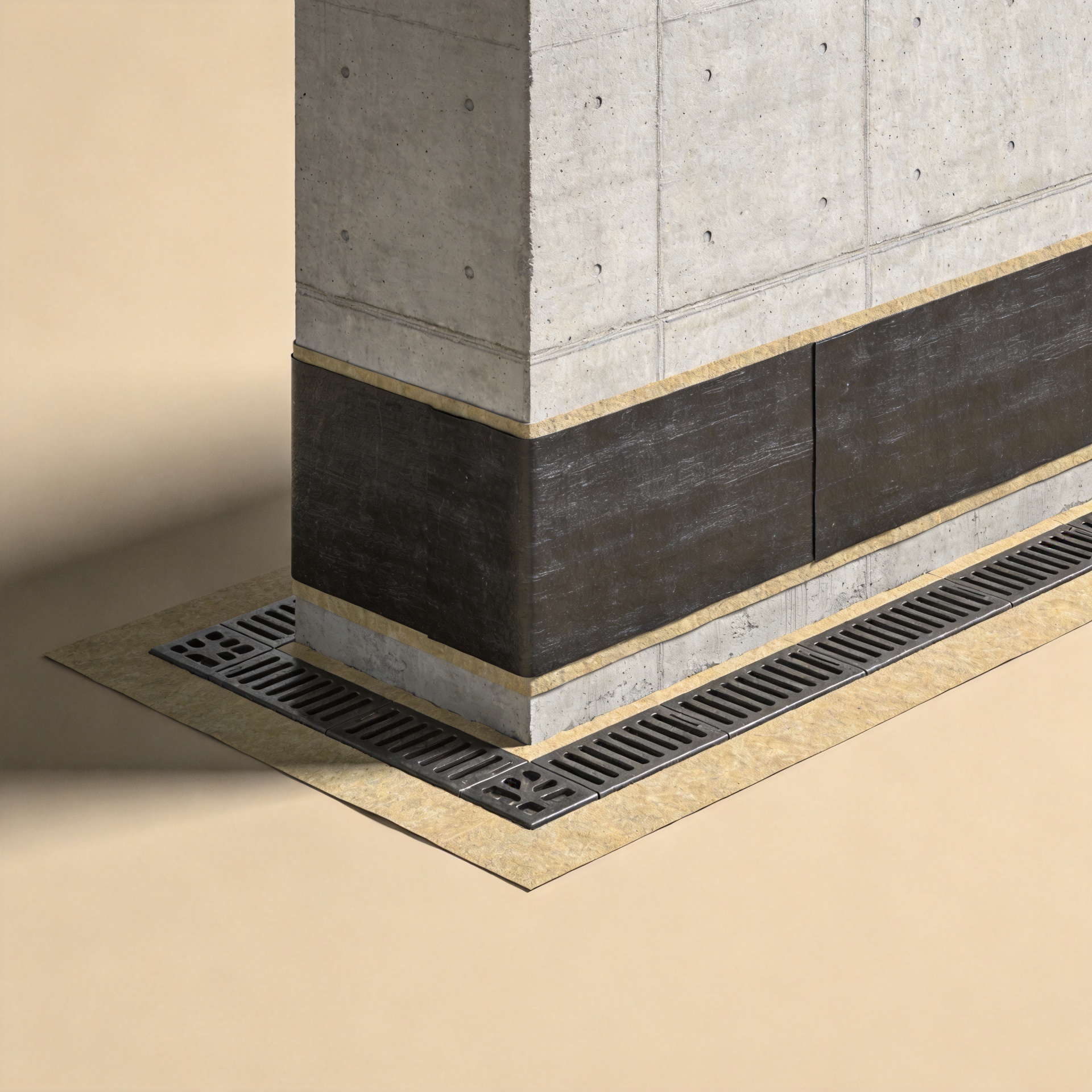
An sbs bitumen membrane for basement foundation work is installed on the positive side: the outer face of walls and slabs that directly contacts soil and groundwater. Positive side waterproofing stops water before it reaches the concrete, so reinforcing steel stays dry and dissolved salts cannot migrate inward. It is the only position that works against full hydrostatic pressure, because the barrier sits where the water presses. Once a structure is backfilled, that face becomes unreachable, and every later intervention happens from inside. Procurement teams therefore treat the data sheet as a long-term decision for this torch applied membrane system: 3mm, 4mm or 5mm thickness, polyester mat reinforcement, tensile strength of at least 800 N/50mm, certified to GB 18242 and EN 13707. Basement waterproofing placed on this face protects the structure before water ever enters it.
Water pushes the barrier in one direction, and direction decides everything. On the positive side, hydrostatic pressure compresses an sbs bitumen membrane for basement foundation walls against the substrate, so the load improves contact and closes the bond. Applied on the negative side, the same pressure peels the sheet away, and performance depends on an adhesive layer water is actively attacking. Elongation matters just as much: this grade delivers at least 40% elongation at break with elastic recovery, so settlement and wall deflection stretch the sheet without tearing the laps. Flexibility down to -25°C keeps the compound pliable through winter installation in cold regions. For basement waterproofing that must hold for the life of the structure, elongation and low-temperature flexibility separate a positive side waterproofing system from a make-do inner lining.
A torch applied membrane bonds by fusion, so the substrate decides the bond quality before the torch is lit. Concrete is struck flush of fins, tie stubs and loose laitance, then levelled with a cement mortar screed; voids and honeycombing are repaired first, and internal corners receive a chamfer fillet so the sheet turns the corner without bridging air gaps. The base must be clean, dry and sound: dust and damp most often cause debonding, and debonding at depth cannot be corrected later. Before the first roll of sbs bitumen membrane for basement foundation work is unrolled, a primer is rolled onto the surface and left to dry tack-free. Skipping this preparation to save schedule time is the most frequent installation error, and the remediation costs far more than the days it saved. In basement waterproofing, the base layer decides everything that follows.
Positive side waterproofing on walls is laid from the lowest point upward, so every upper sheet sheds water over the lap below it rather than into it. Each roll of sbs bitumen membrane for basement foundation use is aligned, re-rolled, then fused progressively with the flame moving, so the bitumen melts without charring. Overlaps of 80-100mm are maintained and every lap is pressed down until bitumen bleeds evenly from the edge, confirming full fusion with no voids where water could travel laterally beneath the sheet, even under sustained hydrostatic pressure. This torch applied membrane sequence leaves a monolithic barrier that pressure can only push tighter against the wall. A PE film surface suits the buried layer, while the 3mm, 4mm and 5mm grades match thickness to depth and load. Basement waterproofing in cold regions gains twice: the -25°C rating keeps the sheet workable when lesser grades would crack at corner turns.
Positive side waterproofing survives only if it is protected from the work that follows it. A protection board or similar cushioning layer is fixed over the finished membrane before backfill begins, keeping stones and shovels off the sheet. Backfill is placed and compacted in stages, free of debris, so basement waterproofing never takes a point impact. On a two-level basement for a distribution centre, the contractor set the 4mm polyester mat grade against the retaining wall, covered it with protection board the same day, and staged the backfill so no plant tracked the finished face; the torch applied membrane reached handover with every lap intact. An sbs bitumen membrane for basement foundation service depends on this discipline, because hydrostatic pressure will find every puncture a careless operator leaves behind.
A positive side failure cannot be repaired in place. Reaching the barrier again means re-excavating the perimeter, at a cost that routinely exceeds the original budget. Internal measures such as injection or inner coatings manage the symptom from behind, but the torch applied membrane defects remain and the concrete stays exposed to moisture and hydrostatic pressure. That asymmetry is the strongest procurement argument for specifying an sbs bitumen membrane for basement foundation work on the positive side, done properly the first time: certified values - at least 800 N/50mm tensile strength, 40% elongation, -25°C flexibility, 90°C heat resistance - verified against GB 18242 and EN 13707 rather than taken on trust. Basement waterproofing is one of the few trades where the cheapest failure never happens, and positive side waterproofing installed correctly is how to keep it that way.
It can, but that converts it into a negative side lining: water still enters the concrete and pressure works against the bond.
Fusion bonding leaves no voids, and full-depth laps of 80-100mm become monolithic, so there is no adhesive film for groundwater to attack over time.
Water pressure presses the sheet onto the substrate and strengthens contact at the laps; with at least 40% elongation, the system absorbs settlement strain without opening seams.

2026/11/20
How an APP waterproof membrane handles heat: 130°C softening point, torch application windows, overheating signs, summer storage, and thermal aging checks.

2026/11/20
The science of a breathable waterproof membrane: water vapor diffusion, Sd values, three grammage grades, water column resistance, and wrong-use cases.

2026/11/20
Single-ply or two-ply, every flat roof is a stack. See how a self adhesive waterproof membrane for roof systems handles base, cap, insulation and drains.

2026/11/20
How the polyester scrim sets tensile strength and dimensional stability of reinforced TPO membrane rolls, with welding, roll sizes and selection tips.

2026/11/20
How an aluminum foil coated bitumen waterproof membrane reflects solar radiation, lowers surface temperature, and what maintenance keeps savings alive.

2026/11/20
SBS modified bitumen waterproof membrane property groups: tensile strength, low-temperature flexibility, heat resistance, surface finishes, applications.
Links to the corresponding full news page.

The eight questions overseas buyers ask most — factory ownership, capacity, batch consistency and lead times, answered straight.

SBS membranes, polymer sheets, coatings and geomembranes — six product lines are operating simultaneously.

Pre-sales specification, on-site technical support and post-delivery maintenance across 100+ export markets.

Waterproofing performance is decided in the specification and the detailing, not just the material. Our technical team helps you select the right system, resolve site questions as they arise, and stay reachable long after the container lands.
