 EN
APP Waterproof Membrane: High-Temperature Stability Guide
2026/11/20
How an APP waterproof membrane handles heat: 130°C softening point, torch application windows, overheating signs, summer storage, and thermal aging checks.

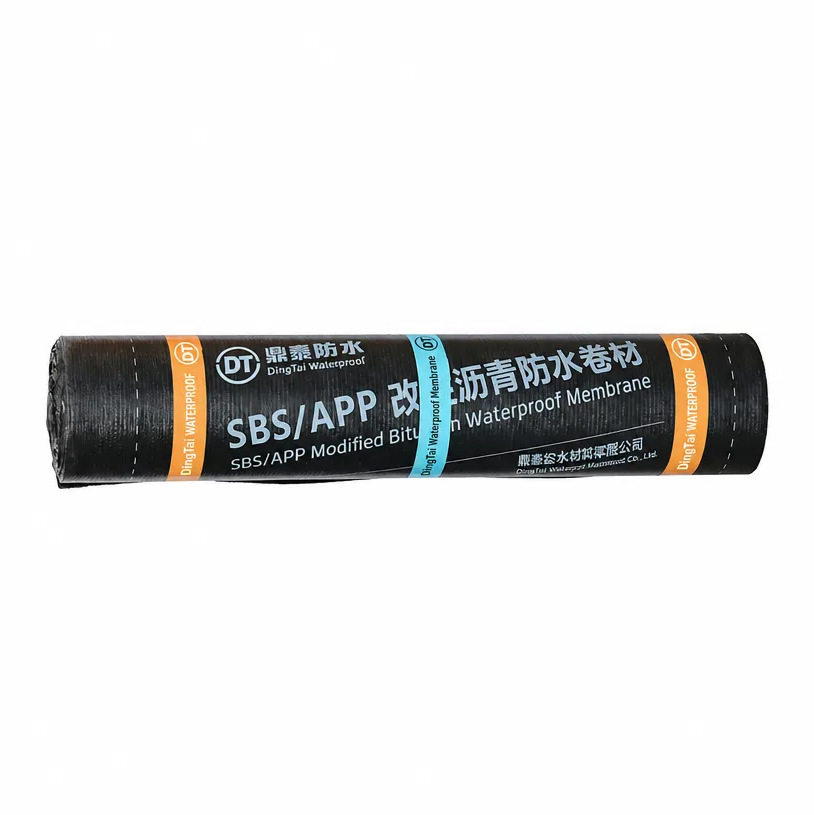
Most waterproofing specifications are not decided by price. They are decided by which sheet can survive the site. The sbs modified bitumen waterproof membrane is a family rather than one product, and three variables inside it, thickness, reinforcement, and surface finish, decide what a roll can do. This guide follows the order a project raises them, then sets out the return over a service life.
Design winter temperature comes first. A site that reaches -20°C needs a sheet rated below it, and the published low temperature flexibility for this family is -25°C. The figure belongs to a specific grade, so confirm it on the datasheet for the thickness being ordered.
Structural movement comes second. Settlement, deflection, and thermal cycling load the sheet the same way, and the answer is elongation. A membrane that stretches and recovers keeps continuity; one that cannot stretches once and tears at a lap. Where winters are severe, low temperature flexibility is the line that decides the tender, because a stiff sheet has nothing to give when the deck contracts.
Exposure comes third: the sbs modified bitumen waterproof membrane is offered with surface finish options for covered and visible positions, and that choice carries much of the life cycle cost.
The family publishes three thicknesses, and the difference is duty rather than quality. The 4mm sheet with polyester mat reinforcement suits commercial flat roofs under normal maintenance, where traffic is occasional and the covering is screed or ballast. The 5mm sheet takes heavier traffic, vehicle loading, and detailing where more material is needed at upstands and outlets. The 3mm sheet works as a base ply or a protected single layer. Duty, not thickness, sets life cycle cost here.
Thickness is also a cost decision: a 5mm sbs modified bitumen waterproof membrane on a roof nobody walks buys margin, not performance. Match it to the load the roof will see, and confirm the low temperature flexibility rating holds at the thickness chosen.
Reinforcement decides behaviour under strain. A polyester mat reinforcement is a non-woven of continuous filaments: it stretches with the bitumen, spreads stress around fasteners and penetrations, and carries the published tensile strength of at least 800 N/50mm. Fiberglass is dimensionally stable and cheaper, and suits work where movement is small.
The test is the substrate. Concrete slabs, timber decks, and bridge decks all move under load, so polyester mat reinforcement is the safer line. Metal decking with a rigid profile and a protected covering can justify glass on cost grounds, though the sbs modified bitumen waterproof membrane then depends on detailing and on low temperature flexibility at the grade ordered.
Surface finish tells the next trade what to expect. A PE film finish is designed to be covered: it bonds to the next ply and to a screed, and it is the usual choice for base layers and buried work. Fine sand gives grip for maintenance access. Aluminum foil reflects solar gain and protects the bitumen where the sheet stays visible.
Choosing a surface finish for the wrong position is a common error. Foil on an interply surface wastes money, and film left exposed weathers quickly. Match the finish to the layer, and the sbs modified bitumen waterproof membrane behaves as designed rather than as a compromise. A polyester mat reinforcement under sand or foil still carries the tensile load.
The benefits appear later. They appear as elongation at break of at least 40 percent with elastic recovery, which lets the sheet absorb movement instead of cracking at a seam. Life cycle cost is where the argument turns financial. A membrane that lasts the design period costs material and installation, and nothing else. A cheaper sheet that fails at year eight costs removal, disposal, new material, and a second installation over an occupied building, and the total exceeds the first option by a wide margin. The sbs modified bitumen waterproof membrane is rarely the cheapest line in a tender; it is often the cheapest line in the building's accounts.
Fatigue is the quiet benefit, and the one a life cycle cost model usually misses: every warm day and cold night moves the sheet a little, and a material that recovers accumulates no damage, which is the line any cost model should reward.
A cold-store distribution centre in northern China needed a roof over a frozen interior, with winters near -22°C and heavy plant above. The specifier made low temperature flexibility at -25°C a mandatory line, chose the 5mm sheet with polyester mat reinforcement for the plant loads, specified sand as the surface finish for maintenance access, and kept foil off the drawing because no area stayed exposed.
The logic reverses. A temporary office in a mild climate needs none of it: a 3mm sheet with glass reinforcement and a film finish meets the requirement at the lowest life cycle cost, and the sbs modified bitumen waterproof membrane specified beyond that is simply waste.
Not directly. The -25°C figure belongs to the grade tested, so confirm low temperature flexibility for the thickness on the order; a thin sheet can be rated colder than a thick one from another formulation.
No. Glass suits stable substrates and cost-driven work. Polyester mat reinforcement earns its cost where the deck moves, and that is a substrate question; the sbs modified bitumen waterproof membrane datasheet will name the reinforcement of the grade ordered.
By position. Film for covered layers, sand for access, foil for exposed areas. Life cycle cost follows from that choice more than from the price per roll.

2026/11/20
How an APP waterproof membrane handles heat: 130°C softening point, torch application windows, overheating signs, summer storage, and thermal aging checks.

2026/11/20
The science of a breathable waterproof membrane: water vapor diffusion, Sd values, three grammage grades, water column resistance, and wrong-use cases.

2026/11/20
Single-ply or two-ply, every flat roof is a stack. See how a self adhesive waterproof membrane for roof systems handles base, cap, insulation and drains.

2026/11/20
How the polyester scrim sets tensile strength and dimensional stability of reinforced TPO membrane rolls, with welding, roll sizes and selection tips.

2026/11/20
How an aluminum foil coated bitumen waterproof membrane reflects solar radiation, lowers surface temperature, and what maintenance keeps savings alive.

2026/11/20
SBS modified bitumen waterproof membrane property groups: tensile strength, low-temperature flexibility, heat resistance, surface finishes, applications.
Links to the corresponding full news page.

The eight questions overseas buyers ask most — factory ownership, capacity, batch consistency and lead times, answered straight.

SBS membranes, polymer sheets, coatings and geomembranes — six product lines are operating simultaneously.

Pre-sales specification, on-site technical support and post-delivery maintenance across 100+ export markets.

Waterproofing performance is decided in the specification and the detailing, not just the material. Our technical team helps you select the right system, resolve site questions as they arise, and stay reachable long after the container lands.
