 EN
APP Waterproof Membrane: High-Temperature Stability Guide
2026/11/20
How an APP waterproof membrane handles heat: 130°C softening point, torch application windows, overheating signs, summer storage, and thermal aging checks.

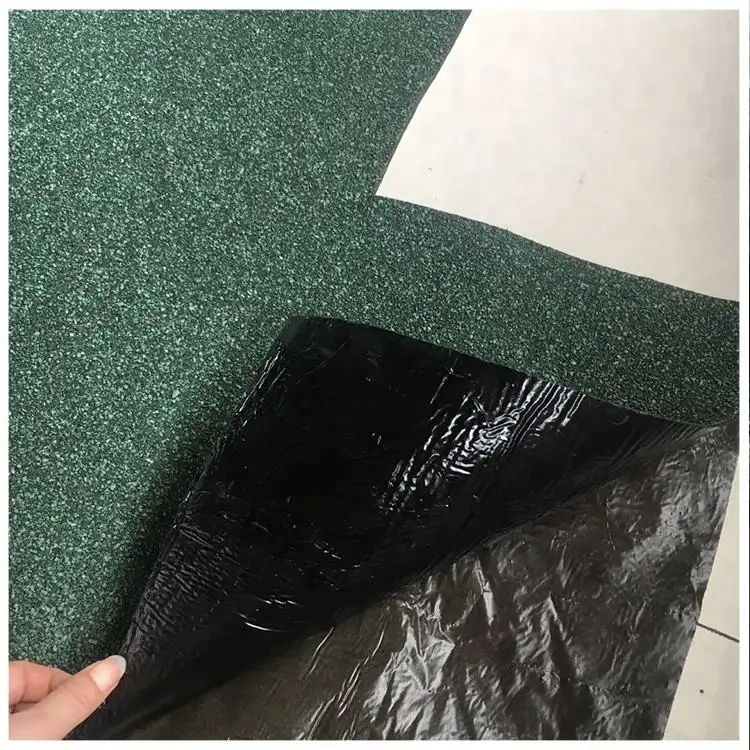
Three thicknesses of the same sheet sit in a catalogue, and the datasheet rarely explains which one belongs where. Thickness is a starting point, not a performance rating, and it means little without reinforcement and surface finish beside it. Read one field alone and a 3 mm sheet looks interchangeable with a 5 mm one. An sbs modified bitumen waterproofing membrane is a set of four fields that must be read together, because each one changes what the others mean.
Membrane thickness measures compound plus reinforcement, not compound alone. A 3 mm sheet with a polyester mat carries less bitumen than a 3 mm sheet with a glass mat, so the number says little about crack bridging. The range exists for position, not prestige: 3 mm suits a base ply, 4 mm a single-layer roof or a cap, and 5 mm traffic. A bitumen membrane roll is normally 1 m wide and 10 m long, though 7.5 m lengths are also made. Polyester reinforcement changes the picture, because a mat with high elongation carries strain that a glass mat would pass to the compound. That is why two sheets of the same thickness can behave differently on the same deck.
Position decides thickness before budget does. A two-ply system commonly pairs a 3 mm base with a 4 mm cap, giving two layers of compound and a lap offset no single sheet can match. A single-layer system moves to 4 mm, or 5 mm where equipment is dragged. The sbs modified bitumen waterproofing membrane holds 90°C heat resistance and -25°C flexibility, with 800 N/50mm tensile and 40% elongation from its polyester reinforcement, so one grade covers a wide climate band. A mineral granule surface on the cap adds abrasion resistance, but it also adds weight. Every bitumen membrane roll in the range shares the same 1 m width, so ply count, not roll size, sets coverage.
The reinforcement line decides how a sheet behaves under strain. Polyester reinforcement gives high elongation and puncture resistance, which suits decks that crack. Glass fibre gives dimensional stability and low elongation, which suits details that must stay flat. Composite mats combine both, at a cost. The sbs modified bitumen waterproofing membrane datasheet names the mat, so read that line before thickness. A bitumen membrane roll with glass reinforcement should not be specified where subsidence is expected. A mineral granule surface tells you the sheet is a cap, not a base, whatever the mat underneath.
The finish tells you where the sheet sits in the build-up, and it rarely appears in the product name. A PE film face is a base or interply surface, because it accepts adhesive and does not weather. A mineral granule surface is a cap, giving ultraviolet and abrasion resistance. Aluminum foil reflects heat on exposed roofs in hot climates. Membrane thickness is unchanged by the finish, but finished roll weight is not, and a foil face should not be used where the next layer needs to bond. An sbs modified bitumen waterproofing membrane with a sand surface should not be buried under a screed without protection.
Each bitumen membrane roll covers 10 m² at 1 m by 10 m, or 7.5 m² at 1 m by 7.5 m. The usable figure is lower. With an 80 to 100 mm side lap, effective width falls to 0.90 or 0.92 m, and a 100 mm end lap shortens each roll. A 10 m roll therefore places roughly 8.9 m² on the roof. Polyester reinforcement does not change that arithmetic, and a mineral granule surface does not either. Membrane thickness changes weight and stiffness, not coverage. The sbs modified bitumen waterproofing membrane order should be priced on placed area, not on nominal area. A contractor pricing a 900 m² school roof in a windy region worked from the 8.9 m² figure and finished with four rolls spare, while an estimate built on nominal area would have needed two more.
Start with the standard: GB 18242 or EN 13707 tells you which test methods apply. Then thickness and tolerance, reinforcement, surface finish and roll size. A bitumen membrane roll described without tolerance is a nominal figure, and nominal figures do not survive a site measurement. Next come tensile strength, elongation, low-temperature flexibility and heat resistance. Membrane thickness quoted alone cannot be compared across suppliers. An sbs modified bitumen waterproofing membrane datasheet that omits lap width is incomplete, because lap width changes the quantity you buy. Mineral granule surface data should include granule mass, and polyester reinforcement should name the mat weight.
Usually yes, on a stable deck with normal traffic. A 5 mm sheet is worth the extra where equipment is dragged, and the sbs modified bitumen waterproofing membrane should keep its lap width at the upper end.
No. Membrane thickness adds compound and mass, but service life depends on reinforcement, finish and detailing. A 4 mm mineral granule surface cap with proper laps can outlast a 5 mm bitumen membrane roll on a poorly prepared deck.
A standard roll is 10 m² at 1 m by 10 m. Allow for laps: a 10 m roll places about 8.9 m². Polyester reinforcement and membrane thickness do not change that, so order by placed area.

2026/11/20
How an APP waterproof membrane handles heat: 130°C softening point, torch application windows, overheating signs, summer storage, and thermal aging checks.

2026/11/20
The science of a breathable waterproof membrane: water vapor diffusion, Sd values, three grammage grades, water column resistance, and wrong-use cases.

2026/11/20
Single-ply or two-ply, every flat roof is a stack. See how a self adhesive waterproof membrane for roof systems handles base, cap, insulation and drains.

2026/11/20
How the polyester scrim sets tensile strength and dimensional stability of reinforced TPO membrane rolls, with welding, roll sizes and selection tips.

2026/11/20
How an aluminum foil coated bitumen waterproof membrane reflects solar radiation, lowers surface temperature, and what maintenance keeps savings alive.

2026/11/20
SBS modified bitumen waterproof membrane property groups: tensile strength, low-temperature flexibility, heat resistance, surface finishes, applications.
Links to the corresponding full news page.

The eight questions overseas buyers ask most — factory ownership, capacity, batch consistency and lead times, answered straight.

SBS membranes, polymer sheets, coatings and geomembranes — six product lines are operating simultaneously.

Pre-sales specification, on-site technical support and post-delivery maintenance across 100+ export markets.

Waterproofing performance is decided in the specification and the detailing, not just the material. Our technical team helps you select the right system, resolve site questions as they arise, and stay reachable long after the container lands.
