 EN
APP Waterproof Membrane: High-Temperature Stability Guide
2026/11/20
How an APP waterproof membrane handles heat: 130°C softening point, torch application windows, overheating signs, summer storage, and thermal aging checks.

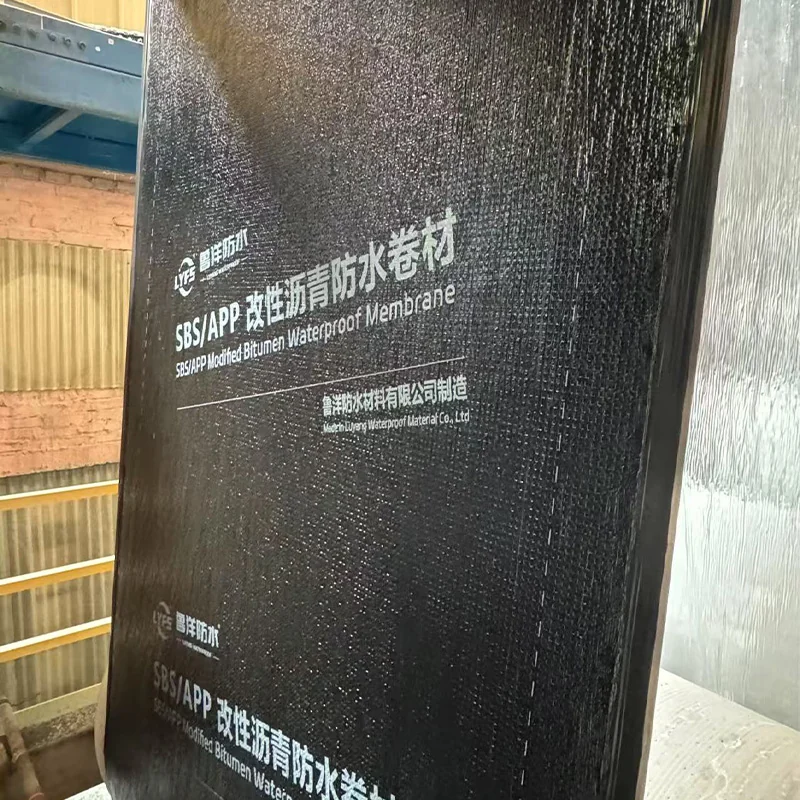
A self adhesive bitumen waterproof membrane bonds through pressure rather than heat: no torch, no kettle, no hot-work permit. That makes cold applied waterproofing attractive for occupied buildings, but it raises the stakes on surface condition, because a peel and stick membrane grips only what it touches. This guide follows a complete waterproof membrane installation, from substrate preparation and the waterproofing primer decision to rolling, laps, terminations, and cold-weather handling. Examples use the published 1.2 mm PE-film and 1.5 mm mineral-sand grades.
Cold applied waterproofing replaces heat with contact pressure. The underside carries an SBS-modified bitumen adhesive behind a release film, so a self adhesive bitumen waterproof membrane bonds the moment it is pressed down. The published 1.2 mm grade specifies peel adhesion to concrete of at least 1.5 N/mm, tensile strength of at least 300 N/50mm, and flexibility to minus 20 C, and a peel and stick membrane delivers them only under full contact. Because the process is dry, crews can work in occupied buildings and beside services where flame is banned. On a cold-storage retrofit, one contractor sealed the junction between an existing freezer floor and a new annex in a single shift, wheeling 1 m x 10 m rolls through an access route a kettle could never pass.
Preparation decides everything in a peel and stick membrane system. Before any waterproof membrane installation begins, the deck must be sound, smooth, dry, and free of dust: grind laitance off new concrete, fill honeycombs, and form a fillet at internal corners. Cut back protruding ties and nails. The 1.5 mm mineral-sand grade, a self adhesive bitumen waterproof membrane with a polyester mat, can only be as strong as the layer it grips. Damp substrates block the pressure-sensitive bond and invite blisters, so ventilate enclosed rooms and let them dry. Cold applied waterproofing on doubtful masonry starts with a waterproofing primer that consolidates the surface.
Not every surface needs priming. Dense, smooth concrete often bonds directly; porous, dusty, or friable bases usually do not. The practical test is a tape pull: press a strip of the peel and stick membrane onto the base and tear it away. If particles lift with the strip, the surface is too weak and needs a bonding primer before work proceeds. If the strip releases cleanly and the sheet tears first, priming is optional. Where a primer is used, let it dry completely; solvent sealed under an impermeable sheet blisters the membrane later on. Cold applied waterproofing on porous masonry often needs a second priming coat, cheaper than repairing a self adhesive bitumen waterproof membrane that debonds.
Good waterproof membrane installation follows one rule: align first, bond second. Position the roll dry, snap a chalk line, then peel the release film progressively so the adhesive meets the deck only where the sheet is straight. Press from the centre outward with a heavy roller; in a peel and stick membrane, a wrinkle is a void and a void is a leak. Cold applied waterproofing allows small repositioning early, but corrections become difficult once full pressure is applied. Where a waterproofing primer was applied, keep the primed surface clean. A sheet that is stretched into place will pull back at the laps, so butt each new roll without tension.
Laps cause most early failures. Follow the lap width on the data sheet, press every side lap with a hand roller, and stagger end laps so no four corners meet. The specified peel value, at least 1.5 N/mm on both grades, develops only under real contact pressure. At parapets, carry the self adhesive bitumen waterproof membrane up the vertical face and secure the top edge as detailed. Narrow seams and metal flashings close neatly with a 1.5 mm aluminum-foil bitumen tape, supplied in widths of 100 to 600 mm and lengths to 20 m; the foil reflects heat on fastener lines. At penetrations, cut a collar from the peel and stick membrane rather than forcing the sheet around the pipe, set it over the fillet above the waterproofing primer, and re-roll every closed edge.
Cold applied waterproofing has a temperature envelope. The 1.2 mm grade stays flexible to minus 20 C and the mineral-sand grade to minus 15 C, but adhesive stiffens as rolls cool, so store material warm, carry out smaller batches, and press harder with a steel roller. After laying, protect the finished waterproof membrane installation from traffic and rain for the interval on the data sheet. A self adhesive bitumen waterproof membrane needs no curing water, but a protection board should follow before tiling or backfill. Where a waterproofing primer sits under the sheet, confirm full cure before loading the area. Even a flexible peel and stick membrane loses tack in deep cold, which is why staging defines winter work.
Yes, within its envelope. Cold applied waterproofing relies on pressure-sensitive adhesion, and both grades stay flexible to minus 20 C and minus 15 C. Store rolls warm, work in short sections, and press harder.
No. Use the tape-pull test: if particles lift with the strip, consolidate the base first. Sound concrete often bonds directly, and a properly chosen peel and stick membrane should tear in the sheet, never at the interface; on weak masonry, that is exactly what a waterproofing primer corrects.
Light traffic is normally acceptable after the interval on the data sheet. Protect the completed waterproof membrane installation with a board or screed before tiling or backfill; the bond is not designed for abrasion.

2026/11/20
How an APP waterproof membrane handles heat: 130°C softening point, torch application windows, overheating signs, summer storage, and thermal aging checks.

2026/11/20
The science of a breathable waterproof membrane: water vapor diffusion, Sd values, three grammage grades, water column resistance, and wrong-use cases.

2026/11/20
Single-ply or two-ply, every flat roof is a stack. See how a self adhesive waterproof membrane for roof systems handles base, cap, insulation and drains.

2026/11/20
How the polyester scrim sets tensile strength and dimensional stability of reinforced TPO membrane rolls, with welding, roll sizes and selection tips.

2026/11/20
How an aluminum foil coated bitumen waterproof membrane reflects solar radiation, lowers surface temperature, and what maintenance keeps savings alive.

2026/11/20
SBS modified bitumen waterproof membrane property groups: tensile strength, low-temperature flexibility, heat resistance, surface finishes, applications.
Links to the corresponding full news page.

The eight questions overseas buyers ask most — factory ownership, capacity, batch consistency and lead times, answered straight.

SBS membranes, polymer sheets, coatings and geomembranes — six product lines are operating simultaneously.

Pre-sales specification, on-site technical support and post-delivery maintenance across 100+ export markets.

Waterproofing performance is decided in the specification and the detailing, not just the material. Our technical team helps you select the right system, resolve site questions as they arise, and stay reachable long after the container lands.
