 EN
APP Waterproof Membrane: High-Temperature Stability Guide
2026/11/20
How an APP waterproof membrane handles heat: 130°C softening point, torch application windows, overheating signs, summer storage, and thermal aging checks.

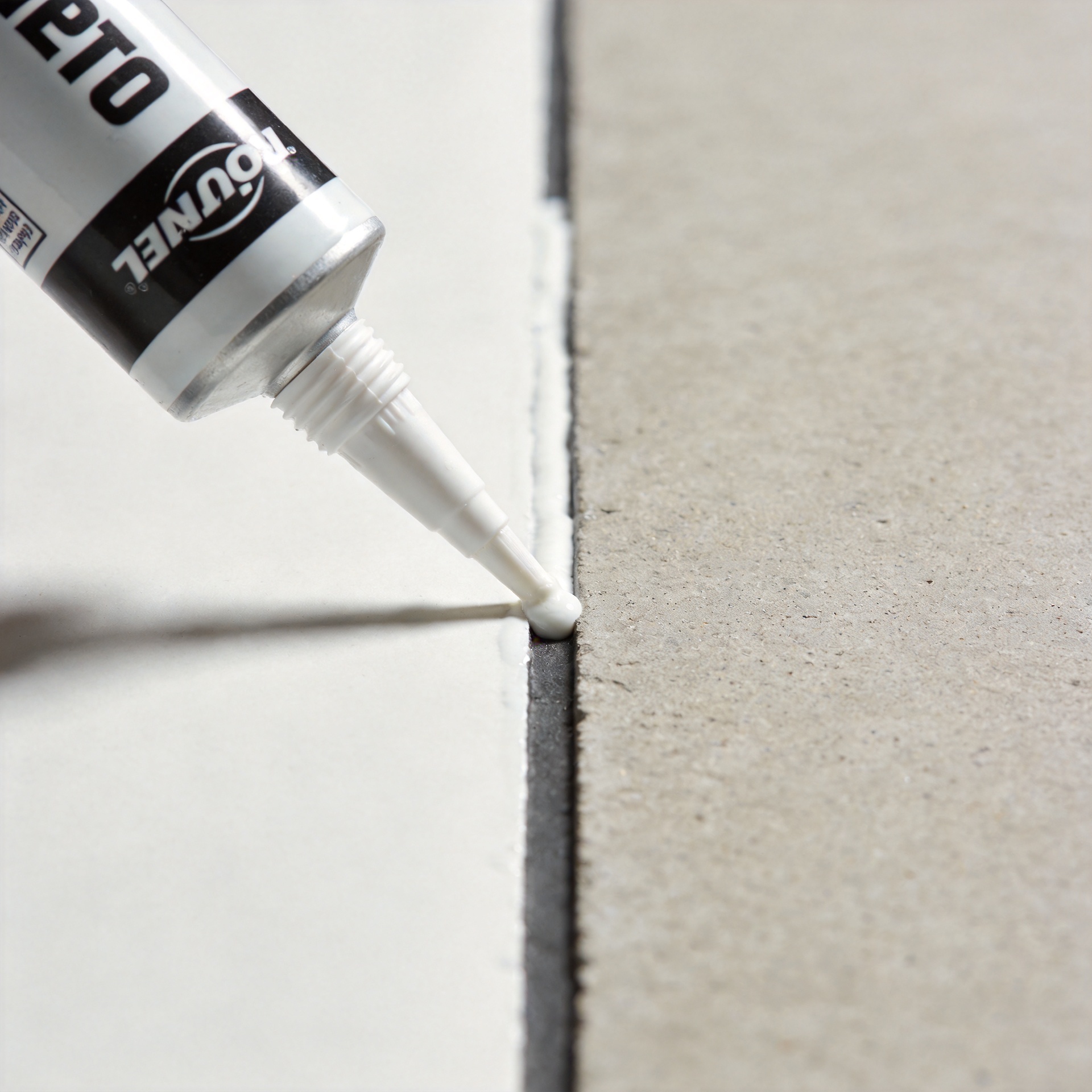
Both products keep water out, both are applied cold, and both appear in the same enquiry mail — yet they solve different problems. A moving joint needs elastic, gap-filling material; a waterproof coating for walls needs to be a continuous film. Getting this division right decides whether an exterior waterproofing system survives its first seasons. This article sets out the working differences, the relevant data, and where a white sealant earns its place.
The silicone sealant vs waterproof coating question repeats across construction markets because the products look similar in buckets and cartridges. The confusion is expensive: a sealant squeezed into a joint behaves nothing like a coating brushed across a field, and swapping them produces failures within a rainy season or two. A sealant is a linear material for joints and gaps; a waterproof coating for walls and roofs is an areal material for surfaces. The comparison is not about which product is better, only which failure mode you are specifying against; a sound exterior waterproofing system uses both properly.
A sealant works at line details: movement joints, window perimeters, pipe penetrations, material connections. Within any silicone sealant vs waterproof coating comparison, it fills a gap and then stretches and compresses as the joint opens and closes. A correctly chosen sealant for expansion joints adheres to both flanks, absorbs cyclic displacement, and keeps that one line watertight — a small but critical part of any exterior waterproofing system. A white waterproof silicone sealant is the visible version of this job: the colour matches render, PVC, and sanitary finishes, and silicone chemistry tolerates UV and temperature cycling in exposed joints. The limit: a sealant protects a line, not an area. It cannot treat a cracked wall across a metre of surface, and no sealant for expansion joints is designed for field coverage.
A coating works across surfaces. Brushed, rolled, or sprayed, it builds one continuous film over the whole field, sealing pores, hairline cracks, and transitions in a single operation. For a waterproof coating for walls, the manufacturer's published high-elasticity silicone coating data shows what the family delivers: solid content of at least 58 percent, elongation at break of at least 350 percent, tensile strength of at least 1.0 MPa, active crack bridging up to 2 mm, water tightness passing at 0.3 MPa for 30 minutes, and 0.4 to 0.6 kg per square metre per coat. Such figures describe a film that flexes across an entire facade — an exterior waterproofing system component, not a bead in a joint. At perimeter details, a bead of white waterproof silicone sealant complements this film.
Selection starts with geometry: continuous areas call for a waterproof coating for walls, roofs, podiums, and wet rooms, where value lies in unbroken coverage. Linear joints call for a sealant, whose value lies in displacement capacity and two-flank adhesion. Within one silicone sealant vs waterproof coating project the sequence is practical: the coating covers the field; a sealant for expansion joints and penetrations is placed at the details. The working rule: if water hits a surface, specify a coating; if two surfaces move against each other, specify a sealant. Inverting this rule is the most common cause of rework in facade waterproofing.
White is a working colour, not a decoration. In the silicone sealant vs waterproof coating division of labour, the sealant owns the visible line. A white grade is specified where the joint stays visible against a light finish: white render, light cladding, sanitary and wet-room joints, window frames on painted facades. The joint then reads as part of the finish rather than a dark line across it, while a waterproof coating for walls behind and around it handles the area, and the sealant for expansion joints at the window line handles the movement. Typical positions: window and door perimeters, sanitary installations, visible connections on light facades. Used this way, a white waterproof silicone sealant and the field coating complement each other without overlap.
Before ordering either family, confirm six points. First, geometry: line detail or surface area — this alone settles the silicone sealant vs waterproof coating decision. Second, movement: joint width change dictates the choice of a sealant for expansion joints, not coating build. Third, substrate: coatings need prepared surfaces; sealants need clean joint flanks. Fourth, exposure: UV, temperature range, and water pressure. Fifth, finish: colour matters where a white waterproof silicone sealant stays visible. Sixth, documentation: published data, CE certification, TDS and MSDS, as with any exterior waterproofing system component. Both families perform when these points are answered honestly; a product used outside its role becomes the failure point.
No. A sealant fills a joint between two defined flanks; a wall crack is an unpredictable, growing surface defect. Area defects need area products — specify a waterproof coating for walls with verified crack-bridging data, and keep sealants at proper joints. The silicone sealant vs waterproof coating distinction exists precisely because no single product does both jobs in one exterior waterproofing system.
Finish and maintenance. White reads as part of light render, PVC, or sanitary ware and hides slight discolouration better than a clear bead. Against dark substrates, clear or grey grades remain sensible.
A sealant for expansion joints, perimeters, and penetrations at the detail level; a coating across the field for continuous cover — and, on light finishes, a white waterproof silicone sealant wherever the line shows. Sequence follows the system specification, but neither product replaces the other in a complete scheme.

2026/11/20
How an APP waterproof membrane handles heat: 130°C softening point, torch application windows, overheating signs, summer storage, and thermal aging checks.

2026/11/20
The science of a breathable waterproof membrane: water vapor diffusion, Sd values, three grammage grades, water column resistance, and wrong-use cases.

2026/11/20
Single-ply or two-ply, every flat roof is a stack. See how a self adhesive waterproof membrane for roof systems handles base, cap, insulation and drains.

2026/11/20
How the polyester scrim sets tensile strength and dimensional stability of reinforced TPO membrane rolls, with welding, roll sizes and selection tips.

2026/11/20
How an aluminum foil coated bitumen waterproof membrane reflects solar radiation, lowers surface temperature, and what maintenance keeps savings alive.

2026/11/20
SBS modified bitumen waterproof membrane property groups: tensile strength, low-temperature flexibility, heat resistance, surface finishes, applications.
Links to the corresponding full news page.

The eight questions overseas buyers ask most — factory ownership, capacity, batch consistency and lead times, answered straight.

SBS membranes, polymer sheets, coatings and geomembranes — six product lines are operating simultaneously.

Pre-sales specification, on-site technical support and post-delivery maintenance across 100+ export markets.

Waterproofing performance is decided in the specification and the detailing, not just the material. Our technical team helps you select the right system, resolve site questions as they arise, and stay reachable long after the container lands.
