 EN
APP Waterproof Membrane: High-Temperature Stability Guide
2026/11/20
How an APP waterproof membrane handles heat: 130°C softening point, torch application windows, overheating signs, summer storage, and thermal aging checks.

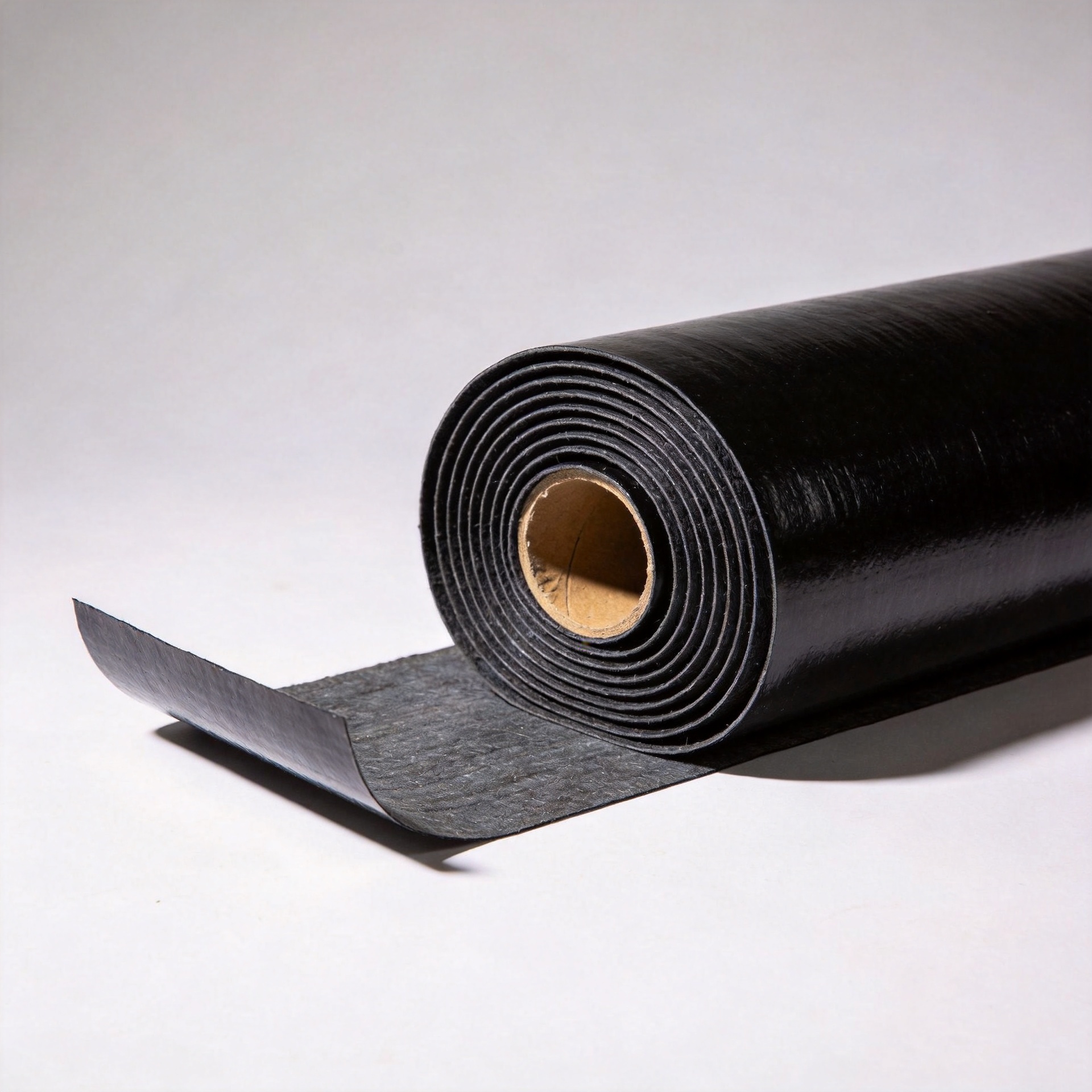
Bitumen sheets are often named by facing rather than compound, which causes confusion. A cap sheet and a base ply may share a compound yet behave differently, because the face controls contact. No stand-alone page for a film-faced roll appears in the catalogue, so each figure below is attributed to the SBS product page or the 1.2 mm PE-faced self-adhesive page. In practice, a smooth surface bitumen waterproof membrane is a facing option rather than a grade. A bitumen underlay chosen this way is a decision about slip, not about waterproofing chemistry.
That page lists surface finish options as PE film, sand and aluminum foil, so smooth means the first. The film is laminated before the sheet is cooled and wound, and it does three jobs: it stops the coil sticking to itself, keeps the face clean until the roll is opened, and gives a defined non-tacky plane for whatever sits above. Neither a wearing surface nor a bonding surface, a PE film facing exists to control contact. The 1.2 mm cold-applied page states the same top surface in plain terms. A smooth surface bitumen waterproof membrane should be specified by film type, because smooth alone does not say whether the film is plain or talc-dusted. Nor does it say whether the SBS membrane beneath is a base or a cap sheet.
An underlay rarely needs to grip or to look neat. A bitumen underlay has to stay continuous, shed water, and let the layers around it move without tearing. A PE film facing delivers exactly that: slick enough to act as a slip plane between deck and finish, and slick enough that a cap sheet above is not bonded at isolated spots. In metal roofing the SBS membrane slip plane absorbs repeated thermal expansion of the profiled deck, which otherwise concentrates stress along fastener lines. A smooth surface bitumen waterproof membrane used this way is a separator as much as a barrier.
Three positions dominate. The first is beneath standing-seam and trapezoidal metal roofing, over the deck or a separator fleece. The second is beneath tiles and slates on pitched roofs, catching wind-driven rain that passes the outer covering. The third is the base ply of a multi-ply system, and in that position a cap sheet is laid above; the manufacturer's page notes that PE film suits base-layer positions in multi-ply torch-applied assemblies. A contractor pricing a distribution warehouse in a coastal industrial zone used the same logic: a smooth surface bitumen waterproof membrane as base ply over concrete, a mineral cap above, and no bond between them except at laps. The bitumen underlay carried continuity while the SBS membrane cap took the weather.
Underlay and cap answer different questions; mixing their requirements produces waste or failure. The underlay provides continuity, vapour control where needed, and a second line of defence; the cap sheet provides UV resistance, traffic resistance and the visible weathering surface. Sheet properties belong to the product, not to the facing. The SBS membrane page states flexibility at -25°C, tensile strength of at least 800 N/50mm, elongation of at least 40%, heat resistance at 90°C and thickness grades of 3 mm, 4 mm and 5 mm. The 1.2 mm page states peel adhesion of at least 1.5 N/mm, tensile strength of at least 300 N/50mm, elongation of at least 30%, flexibility at -20°C, water tightness at 0.3 MPa for 120 minutes, and rolls of 1 m x 10 m or 1 m x 20 m. A smooth surface bitumen waterproof membrane inherits those values and nothing more; they describe sheets, not a PE film facing, and they do not turn a bitumen underlay into a cap.
Sand and granule facings exist for traction and keying: they accept adhesive, mortar or a later torch bond, and they resist foot traffic on accessible roofs. Foil facings exist for reflectivity and UV exposure. Where two layers should act as one, as when a cap sheet is fused to a base, a PE film facing is the wrong interface unless the specification calls for heat fusion or a primer. Where they should move independently, that same face is correct and sand would defeat the intent. A smooth surface bitumen waterproof membrane also inspects more easily, because laps and wrinkles show without granule camouflage. Choose the bitumen underlay facing from the movement strategy, not from habit.
Four points deserve confirmation before a PE film facing is ordered. First, the data sheet should name the facing positively, as polyethylene film, rather than leaving the field blank. Second, ask whether the film is plain or talc-dusted, since dust changes primer uptake. Third, confirm the low-temperature grade against the site, because the two cited pages differ by five degrees. Fourth, confirm roll dimensions and lap strategy against the cap sheet, since a mineral cap and a self-adhesive base may need different laps. A smooth surface bitumen waterproof membrane ordered without those checks is a roll with an undefined interface. Ask also whether the SBS membrane is intended for torch or cold application, because that answer changes the primer and the lap detail on a bitumen underlay.
The film is slippery, though the sheet is rarely walked on. Temporary walkways or a sand-faced sheet answer access needs. A PE film facing is meant for concealed positions, with an SBS membrane cap above.
Only where protected. The face has no UV stabiliser and no granule armour.
No. Smooth describes the upper face; self-adhesive describes the underside. The 1.2 mm page carries both.

2026/11/20
How an APP waterproof membrane handles heat: 130°C softening point, torch application windows, overheating signs, summer storage, and thermal aging checks.

2026/11/20
The science of a breathable waterproof membrane: water vapor diffusion, Sd values, three grammage grades, water column resistance, and wrong-use cases.

2026/11/20
Single-ply or two-ply, every flat roof is a stack. See how a self adhesive waterproof membrane for roof systems handles base, cap, insulation and drains.

2026/11/20
How the polyester scrim sets tensile strength and dimensional stability of reinforced TPO membrane rolls, with welding, roll sizes and selection tips.

2026/11/20
How an aluminum foil coated bitumen waterproof membrane reflects solar radiation, lowers surface temperature, and what maintenance keeps savings alive.

2026/11/20
SBS modified bitumen waterproof membrane property groups: tensile strength, low-temperature flexibility, heat resistance, surface finishes, applications.
Links to the corresponding full news page.

The eight questions overseas buyers ask most — factory ownership, capacity, batch consistency and lead times, answered straight.

SBS membranes, polymer sheets, coatings and geomembranes — six product lines are operating simultaneously.

Pre-sales specification, on-site technical support and post-delivery maintenance across 100+ export markets.

Waterproofing performance is decided in the specification and the detailing, not just the material. Our technical team helps you select the right system, resolve site questions as they arise, and stay reachable long after the container lands.
