 EN
APP Waterproof Membrane: High-Temperature Stability Guide
2026/11/20
How an APP waterproof membrane handles heat: 130°C softening point, torch application windows, overheating signs, summer storage, and thermal aging checks.

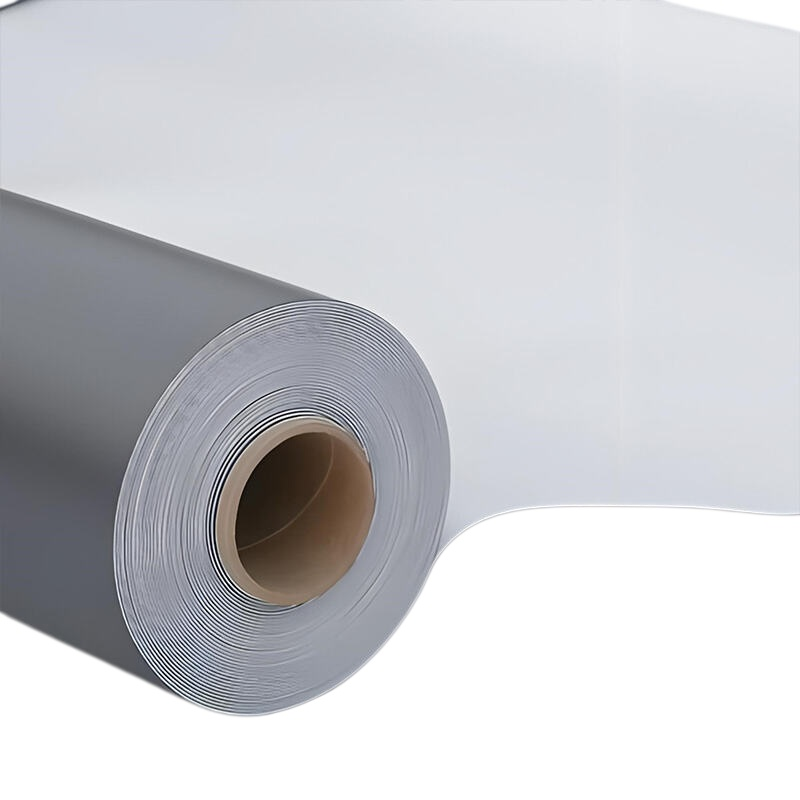
On any large low-slope commercial roof, field membranes only solve part of the waterproofing challenge. The areas most vulnerable to water intrusion are pipe penetrations, curbs, corners, drains, and perimeter transitions. This is where TPO membrane flashing accessories become essential for creating a continuous roof envelope. For roofing contractors, selecting compatible TPO membrane flashing accessories is critical to prevent leaks. A quality TPO waterproof membrane provides reliable performance, but detailing requires specialized components. By using prefabricated TPO membrane flashing accessories, installation crews can achieve watertight transitions without placing excessive mechanical stress on field sheets. Reliable TPO membrane flashing accessories ensure every roof penetration meets strict engineering standards.
Before ordering materials, contractors must survey the roof layout and identify every critical detail. Penetrations, HVAC curbs, parapet walls, drains, and scuppers all demand specific TPO membrane flashing accessories. Using prefabricated TPO membrane flashing accessories like molded pipe boots ensures a tight seal around round penetrations. For curbs and parapets, flexible non-reinforced TPO membrane flashing accessories allow seamless transitions without stretching. Drain bowls and scuppers also require target patches and compatible TPO membrane flashing accessories to withstand standing water. Coordinating coated metal edge profiles with TPO membrane flashing accessories prevents wind uplift and seam peeling. Planning these details early ensures the crew has the right components on site.
Standard field sheets feature internal polyester reinforcement to deliver dimensional stability across broad roof decks. However, this rigid scrim makes forming tight corners difficult. That is why professional assemblies pair field rolls with flexible TPO membrane flashing accessories. Non-reinforced TPO membrane flashing accessories stretch easily in multiple directions, conforming cleanly to complex three-dimensional geometries. In contrast, forcing reinforced sheets into sharp angles causes wrinkles and fishmouths. High-performance TPO membrane flashing accessories eliminate residual memory stress, ensuring seams lay flat. Contractors must verify that all chosen TPO membrane flashing accessories share chemical compatibility with the main roofing sheet. High-grade TPO membrane flashing accessories maintain roof integrity throughout severe thermal cycles.
When project specifications call for a 1.5mm roofing system, contractors must review technical data sheets carefully. The thickness, formulation, and weathering properties of TPO membrane flashing accessories must align with ASTM D6878 benchmarks. Ensuring that TPO membrane flashing accessories provide adequate polymer thickness above the reinforcement layer guarantees strong hot-air welds. In addition, TPO membrane flashing accessories must exhibit superior low-temperature flexibility so they do not crack during cold weather work. Verifying the peel strength and tear resistance of TPO membrane flashing accessories ensures dependable performance under high wind pressures. Quality assurance documentation should confirm that all detailing components meet local building code mandates.
Achieving dependable thermal welds requires proper tool calibration and strict jobsite cleanliness. Before welding TPO membrane flashing accessories, installers must ensure lap areas are dry and free of debris. Running daily test welds using offcuts of TPO membrane flashing accessories helps establish optimal temperature and speed settings. When installing TPO membrane flashing accessories around vertical penetrations, crews should maintain consistent hand roller pressure. Once welds cool, all edges of TPO membrane flashing accessories must be inspected with a blunt steel probe to detect voids. Promptly repairing any defective seam with certified TPO membrane flashing accessories preserves the watertight integrity of the roof envelope.
Single-ply roofing membranes differ significantly in their flashing and seaming techniques. TPO and PVC systems utilize hot-air welding, whereas EPDM systems rely on chemical primers and adhesive tapes. Because formulations differ, PVC materials cannot be welded directly to TPO membrane flashing accessories. Installing commercial roofs requires using dedicated TPO membrane flashing accessories specifically engineered for polyolefin systems. These specialized TPO membrane flashing accessories create molecular bonds that resist moisture and environmental degradation. Estimating project budgets requires evaluating the complete package, including field rolls, fasteners, and necessary TPO membrane flashing accessories. Choosing certified TPO membrane flashing accessories protects building owners against premature water damage.
No, PVC components cannot be welded to TPO roofing sheets due to differing chemical formulations. You must always install compatible TPO membrane flashing accessories to achieve a secure molecular weld. Mixing incompatible polymers causes seam failure under thermal movement, making certified TPO membrane flashing accessories essential for every penetration.
Non-reinforced TPO membrane flashing accessories provide superior flexibility and multi-directional stretch compared to reinforced field sheets. This pliable formulation allows TPO membrane flashing accessories to wrap tightly around irregular pipes, inside corners, and equipment curbs without forming wrinkles or structural stress points.
Prefabricated TPO membrane flashing accessories provide consistent factory-controlled dimensions and uniform thickness. Installing preformed TPO membrane flashing accessories saves substantial field labor, eliminates cutting errors, and ensures reliable, long-lasting watertight performance across all complex roof transitions.

2026/11/20
How an APP waterproof membrane handles heat: 130°C softening point, torch application windows, overheating signs, summer storage, and thermal aging checks.

2026/11/20
The science of a breathable waterproof membrane: water vapor diffusion, Sd values, three grammage grades, water column resistance, and wrong-use cases.

2026/11/20
Single-ply or two-ply, every flat roof is a stack. See how a self adhesive waterproof membrane for roof systems handles base, cap, insulation and drains.

2026/11/20
How the polyester scrim sets tensile strength and dimensional stability of reinforced TPO membrane rolls, with welding, roll sizes and selection tips.

2026/11/20
How an aluminum foil coated bitumen waterproof membrane reflects solar radiation, lowers surface temperature, and what maintenance keeps savings alive.

2026/11/20
SBS modified bitumen waterproof membrane property groups: tensile strength, low-temperature flexibility, heat resistance, surface finishes, applications.
Links to the corresponding full news page.

The eight questions overseas buyers ask most — factory ownership, capacity, batch consistency and lead times, answered straight.

SBS membranes, polymer sheets, coatings and geomembranes — six product lines are operating simultaneously.

Pre-sales specification, on-site technical support and post-delivery maintenance across 100+ export markets.

Waterproofing performance is decided in the specification and the detailing, not just the material. Our technical team helps you select the right system, resolve site questions as they arise, and stay reachable long after the container lands.
