 EN
APP Waterproof Membrane: High-Temperature Stability Guide
2026/11/20
How an APP waterproof membrane handles heat: 130°C softening point, torch application windows, overheating signs, summer storage, and thermal aging checks.

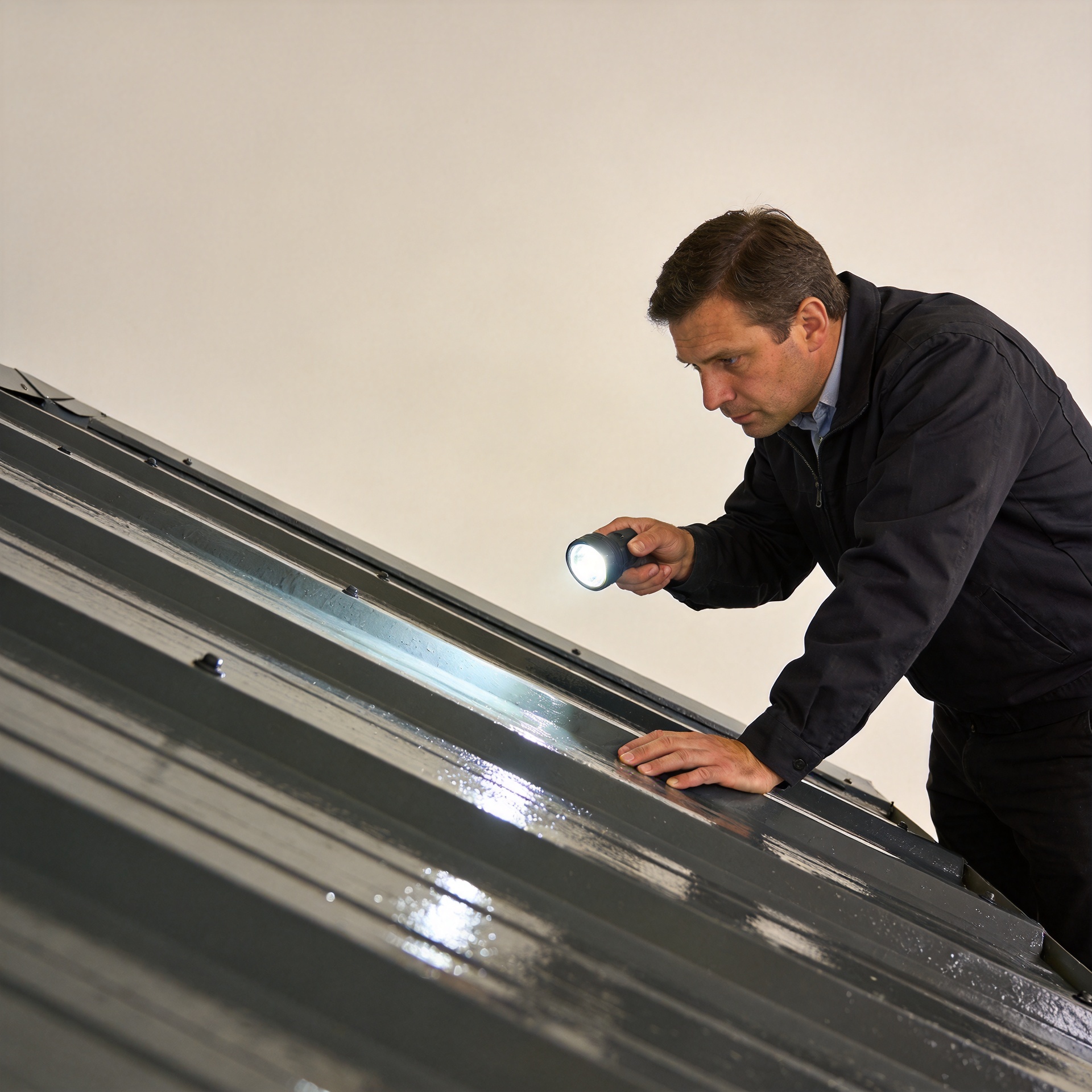
Metal panels punish coatings that behave like paint. This guide sets out where a water-based roof coating fits on metal: verified product data, rust and primer pairing, application conditions, and the division of labor against sheet systems.
Steel and aluminium move. A metal roof expands and contracts through every temperature cycle, so a brittle film cracks over fastener lines within a few seasons. Waterproofing metal starts with flexibility: a proper water-based waterproof coating for metal roof service, like any elastomeric roof coating, stretches with the panel instead of resisting it — which is why metal roof waterproofing specifications begin with elongation, not thickness. Second, adhesion: coatings bond differently to galvanized steel, aluminium, and weathered factory finishes, so mill scale and chalking paint must come off first. Third, details: seams, fasteners, flashings, and penetrations move more than the panel field, so a waterproof coating for metal roofs must brush into corners without sagging.
Anchor comparisons on published specifications. The standard grade water-based waterproof coating for metal roof and general use is a single-component polymer system: solid content at 55% or more, elongation at break of 200% or more, tensile strength of 1.0 MPa or more, and water tightness at 0.3 MPa for 30 minutes. Applied at 1.5–2.0 kg/m² in two coats, a 20kg bucket covers 10–13 m²; a 500 m² roof needs 38–50 buckets. Surface drying takes 2–4 hours at 20°C, allowing a same-day second coat. For metal roof waterproofing, the 200% elongation figure matters most: the film follows panel movement like an elastomeric roof coating, not a brittle paint. The product carries CE and ISO 14001 certification, applies by brush, roller, or airless spray, and as a water-based roof coating stays low VOC for occupied sites. Quote those published figures back to any supplier verbatim, and file the datasheet with the project quality record for tender use.
No elastomeric roof coating stops rust by itself; the film locks out water only after the corrosion question is settled by inspection and treatment. Sound practice runs in sequence: wash off dirt and chalking, remove loose rust, spot-treat with a rust-inhibiting primer where corrosion has started, then apply the water-based roof coating over a dry, primed surface. Where rust is widespread, treat the roof as a restoration project, not a coating job. On sound galvanized or pre-finished panels, a compatible bonding primer improves adhesion of the water-based waterproof coating for metal roof system and prevents film lifting at laps. This pairing — primer for the metal, coating for the water — separates a three-season patch from metal roof waterproofing that lasts.
These systems cure by evaporation, so conditions matter more than with solvent products. Apply a water-based roof coating at 5°C and rising, with no rain inside the 2–4 hour surface-dry window and dew point well below substrate temperature. Two coats at 1.5–2.0 kg/m² total are the published rate for a water-based waterproof coating for metal roof application — resist one thick coat, which skins over before the film below dries. Work the first coat into seams and fastener lines with a brush, then roll the field. Applied in this sequence, metal roof waterproofing cures to a seamless film with none of the joints that make sheet systems leak. An elastomeric roof coating needs that continuity to bridge movement. For a waterproof coating for metal roofs in hot climates, apply in the morning so the film dries before peak surface temperatures.
A coating and a sheet membrane solve different problems on the same roof. Sheet systems suit large low-slope decks where seams can be planned and traffic is controlled; a water-based waterproof coating for metal roof maintenance wins where geometry fights you — standing seams, close fastener spacing, curved ridges, and rooftop equipment that makes welding impractical. For metal roof waterproofing on refurbishment, the coating adds negligible weight and no fastener penetration, which matters on older structures. As a water-based roof coating it tolerates the brushes and rollers on site, with water cleanup and no solvent storage. Many programs combine them — sheet membrane on the field, a waterproof coating for metal roofs at details and penetrations.
A logistics operator inherited a 15-year-old warehouse roof: sound structure, leaking at every fastener line after storms. Repaneling quoted at several times the coating budget. The contractor pressure-washed the panels, replaced two rusted sheets, primed corrosion spots, then applied a water-based waterproof coating for metal roof system — first coat brushed into seams and fasteners, second rolled across the field at the published 1.5–2.0 kg/m². Surface dry in four hours let the crew finish both coats before dusk. Two winters on, the film still bridges the fastener movement; the metal roof waterproofing is holding. As an elastomeric roof coating it absorbed panel movement; as a water-based roof coating it cleaned up with water; and as a waterproof coating for metal roofs it cost a maintenance line, not a capital project.
Over sound, cleaned panels yes, but the reliable route is cleaning, rust treatment, and a compatible primer under the water-based waterproof coating for metal roof system.
Surface dry takes 2–4 hours at 20°C, so a water-based roof coating second coat can usually go on the same day if dew and rain stay away.
Inspect annually at seams and fasteners, wash off debris, and spot-recoat wear areas; a waterproof coating for metal roofs is easiest to extend while the film is sound, which keeps the elastomeric roof coating budget spread over years.

2026/11/20
How an APP waterproof membrane handles heat: 130°C softening point, torch application windows, overheating signs, summer storage, and thermal aging checks.

2026/11/20
The science of a breathable waterproof membrane: water vapor diffusion, Sd values, three grammage grades, water column resistance, and wrong-use cases.

2026/11/20
Single-ply or two-ply, every flat roof is a stack. See how a self adhesive waterproof membrane for roof systems handles base, cap, insulation and drains.

2026/11/20
How the polyester scrim sets tensile strength and dimensional stability of reinforced TPO membrane rolls, with welding, roll sizes and selection tips.

2026/11/20
How an aluminum foil coated bitumen waterproof membrane reflects solar radiation, lowers surface temperature, and what maintenance keeps savings alive.

2026/11/20
SBS modified bitumen waterproof membrane property groups: tensile strength, low-temperature flexibility, heat resistance, surface finishes, applications.
Links to the corresponding full news page.

The eight questions overseas buyers ask most — factory ownership, capacity, batch consistency and lead times, answered straight.

SBS membranes, polymer sheets, coatings and geomembranes — six product lines are operating simultaneously.

Pre-sales specification, on-site technical support and post-delivery maintenance across 100+ export markets.

Waterproofing performance is decided in the specification and the detailing, not just the material. Our technical team helps you select the right system, resolve site questions as they arise, and stay reachable long after the container lands.
