 EN
APP Waterproof Membrane: High-Temperature Stability Guide
2026/11/20
How an APP waterproof membrane handles heat: 130°C softening point, torch application windows, overheating signs, summer storage, and thermal aging checks.

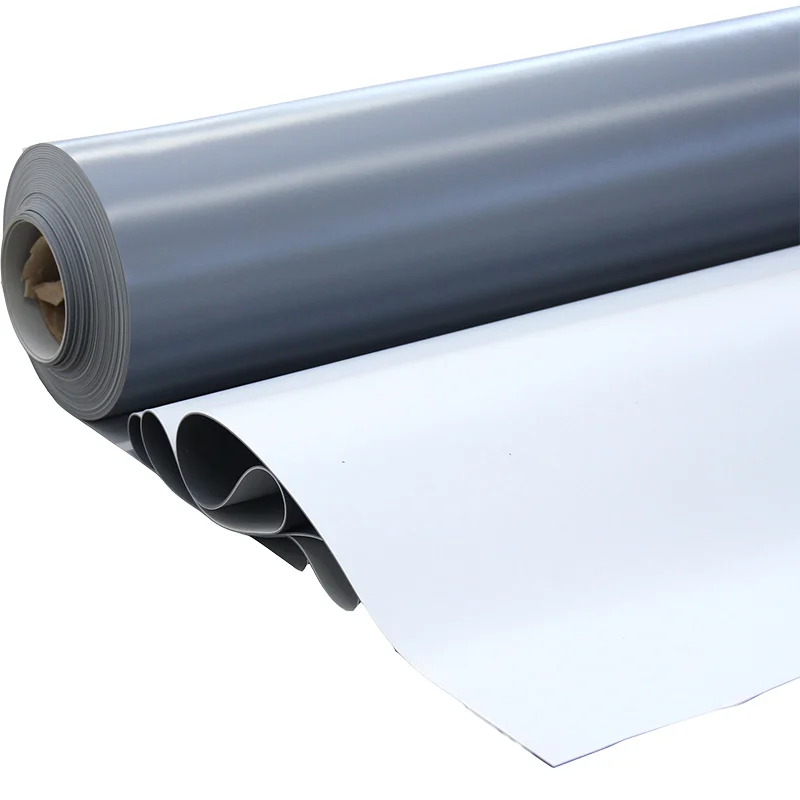
A finished shower looks waterproof and almost never is. Ceramic tile, grout, and adhesive are decorative layers; grout is porous, joints crack, and water passes through within minutes. Steam keeps the assembly wet for hours, and vapor travels into the wall long after the fan stops. What keeps the cavity dry is the waterproof membrane for tile shower assemblies installed underneath — a continuous layer that catches what gets past the face and manages it before it reaches framing. This article explains why the layer matters, which materials suit the job, and how walls are prepared.
Grout sheds standing water briefly but absorbs, and movement joints open with daily thermal cycling. A tiled wall therefore behaves like a sieve with good manners: it slows water, it does not stop it. Behind the face, vapor keeps moving into the stud wall for hours. Without a dedicated shower waterproofing membrane, that vapor condenses on cool framing, feeds mold in insulated cavities, and shows up years later as stained ceilings in the room below. The failure is rarely the tile; it is the missing layer behind it.
The layer has three jobs. First, it intercepts liquid water that passes through grout joints and directs it to the drain or weep paths. Second, it manages vapor, stopping moisture migrating into the wall while the assembly dries between uses. Third, it protects the substrate: saturated board loses strength and tile adhesive loses bond. A properly selected shower waterproofing membrane turns a porous assembly into a contained one, and it does so with thickness measured in millimeters. Continuous at corners, niches, and penetrations, a waterproof membrane performs silently for decades; punctured by a screw or skipped behind a niche, it leaks from day one.
Published product data gives buyers three workable families. A polyurethane liquid system cures into a seamless film with elongation of at least 450%, and its datasheet covers wet rooms explicitly — the film wraps corners, drain flanges, and pipe penetrations without a single lap. A water-based acrylic coating, CE certified and low in VOC, reaches elongation of at least 200% and tensile strength of at least 1.0 MPa at 1.5 to 2.0 kg/m² in two coats, surface-dry in 2 to 4 hours at 20°C; its published uses include bathroom floors. A 1.2 mm self-adhesive bituminous sheet with PE film is a shower waterproofing membrane designed for under-tile systems: peel-and-press, no flame, thin enough for door thresholds, bonding directly with tile adhesive without a separation course. For a residential waterproof membrane for tile shower project, the liquid families dominate, because geometry rather than strength is the difficulty; the sheet wins where build-up height or fire rules lead.
Substrate quality decides whether any shower waterproofing membrane works. Cement board or a rendered mortar bed is the standard base, not gypsum left exposed in wet zones. Joints are filled and flush, corners are pre-formed or taped, and falls run to the drain before the film starts. The film extends beyond the wet zone — to door openings and at least 1.8 m up shower walls — because spray does not respect drawings. A waterproof membrane for tile shower work must also survive the tiler: cure fully before adhesive, protect it from trades, never screw after closure. Every penetration, from valve bodies to niche boxes, is sealed with the same system, not with silicone and hope.
A second-floor bathroom in a 1990s apartment block showed the classic pattern: grout hairline cracks, a damp patch on the dining ceiling, and a stud wall whose lower plates had darkened. The retrofit opened the shower walls, replaced damaged board, and rebuilt the pan with falls to the new drain. A two-coat liquid shower waterproofing membrane was applied to walls and floor in one continuous field, with pre-formed corners at the niche and a fabric-reinforced collar at the drain. Flood testing held 24 hours before a single tile went down. The tiler bonded directly to the cured waterproof membrane for tile shower service the following week, and the ceiling below stayed dry through the first winter.
Acceptance is a short list, and it prevents callbacks. The film must be continuous: corners taped or pre-formed, drain collars dressed, pipe penetrations sealed. Thickness must match the datasheet, verified by wet-film checks. Falls must send water to the drain, confirmed by a flood test held for the datasheet period, typically 24 to 48 hours at weep level. Finally, the surface must be cured, clean, and compatible with the tile adhesive — cement-based adhesives bond well to correctly cured films, but the membrane datasheet, not habit, decides. A waterproof membrane for tile shower assembly accepted on those four points hands the tiler a surface worth bonding to.
No. Grout sealers slow absorption but wear out within a season of cleaning, and they do nothing at cracked joints or corners. They are maintenance for the face, not a barrier behind it. A waterproof membrane for tile shower assemblies is the rated barrier; sealer is not waterproofing.
Both are proven when installed to datasheet. A liquid shower waterproofing membrane wins on complex geometry; a self-adhesive sheet wins where thin build-up and no-flame rules matter. Choose by substrate, access, and the tiler's system.
Follow the datasheet, not habit. The published water-based system is surface-dry in 2 to 4 hours at 20°C, but full cure takes longer, and a shower waterproofing membrane tested early is a test of nothing.

2026/11/20
How an APP waterproof membrane handles heat: 130°C softening point, torch application windows, overheating signs, summer storage, and thermal aging checks.

2026/11/20
The science of a breathable waterproof membrane: water vapor diffusion, Sd values, three grammage grades, water column resistance, and wrong-use cases.

2026/11/20
Single-ply or two-ply, every flat roof is a stack. See how a self adhesive waterproof membrane for roof systems handles base, cap, insulation and drains.

2026/11/20
How the polyester scrim sets tensile strength and dimensional stability of reinforced TPO membrane rolls, with welding, roll sizes and selection tips.

2026/11/20
How an aluminum foil coated bitumen waterproof membrane reflects solar radiation, lowers surface temperature, and what maintenance keeps savings alive.

2026/11/20
SBS modified bitumen waterproof membrane property groups: tensile strength, low-temperature flexibility, heat resistance, surface finishes, applications.
Links to the corresponding full news page.

The eight questions overseas buyers ask most — factory ownership, capacity, batch consistency and lead times, answered straight.

SBS membranes, polymer sheets, coatings and geomembranes — six product lines are operating simultaneously.

Pre-sales specification, on-site technical support and post-delivery maintenance across 100+ export markets.

Waterproofing performance is decided in the specification and the detailing, not just the material. Our technical team helps you select the right system, resolve site questions as they arise, and stay reachable long after the container lands.
