 EN
APP Waterproof Membrane: High-Temperature Stability Guide
2026/11/20
How an APP waterproof membrane handles heat: 130°C softening point, torch application windows, overheating signs, summer storage, and thermal aging checks.

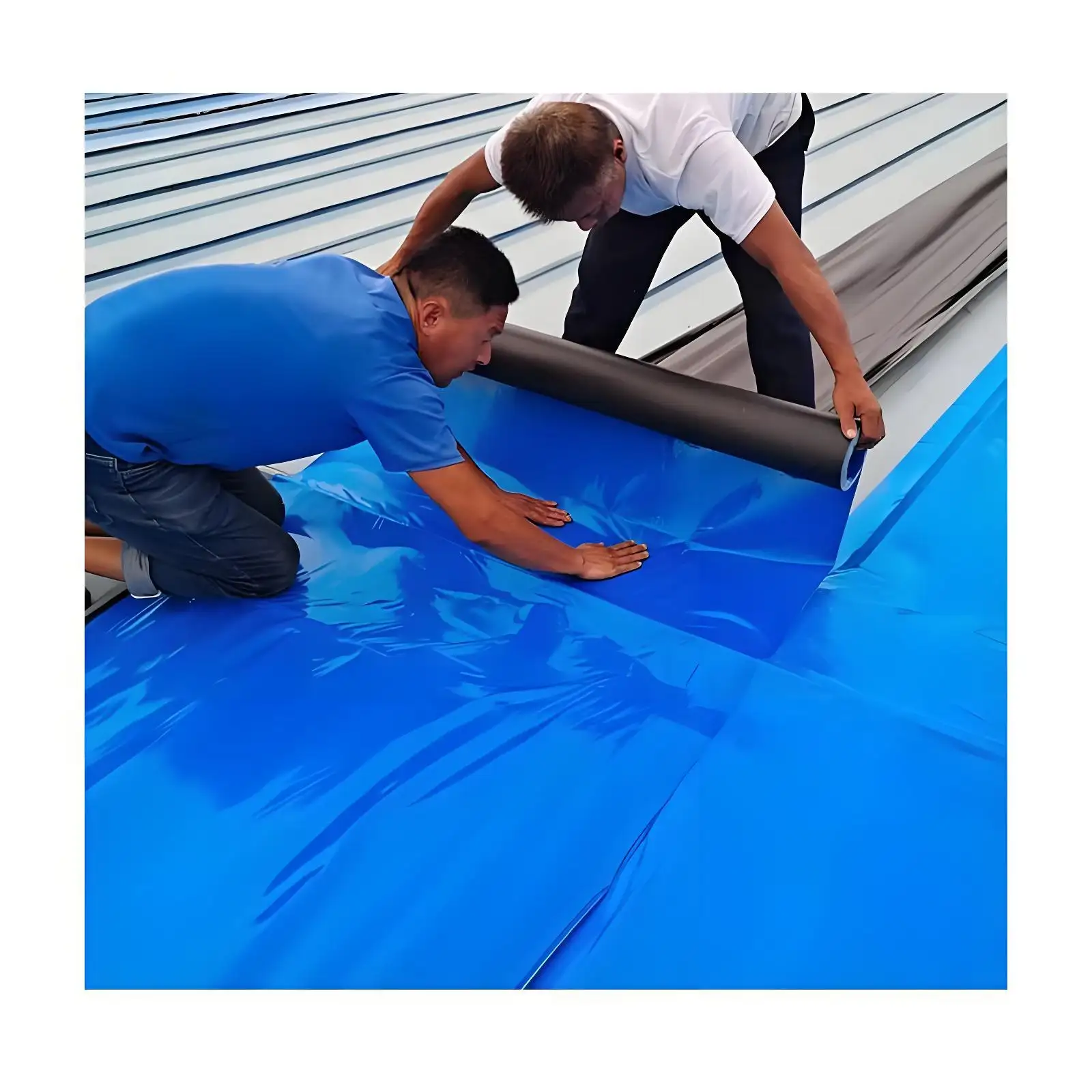
Choosing a membrane system for roof work is less a search for the best product than a sequence of decisions about the building. Roof shape, deck type, climate exposure, and the maintenance regime the owner can sustain each eliminate candidates before price is mentioned. This guide turns that sequence into four questions and shows where the main types answer them.
Most mis-specifications begin backwards: a product is admired first, the roof fitted after. The reliable order is the reverse. A waterproof membrane for roof service is chosen against load cases — water path, foot traffic, thermal movement, UV exposure — set by the building, not the catalogue. A warehouse deck and a pitched residence share nothing but the word roof: one roll can be ideal on the first and a liability on the second. Treat the questions as a funnel: each answer narrows the field before the next.
Geometry draws the steepest line. On a pitched roof, water leaves by gravity, so the sheet works as an under-layer beneath tiles or their sealing partner; a bitumen membrane serves at tile laps, and asphalt tiles form the weathering surface in residential profiles. On a flat roof, water lingers, ponds, and searches every lap, so the surface layer carries heavier duty, and the category splits again by whether its membrane is exposed or protected — a split a pitched roof rarely faces. Torch-applied cap sheets, self-adhesive layers, and single-ply membrane systems each start a different shortlist.
The second question for a waterproof membrane for roof is structural. A flat roof over a concrete deck tolerates torch-applied work that a timber-adjacent or occupied-building detail cannot, where a self-adhesive option earns its place: the 1.2mm PE-film grade, water tightness tested at 0.3 MPa for 120 minutes, flexible to -20°C, suits concealed positions. The 1.5mm mineral-sand grade — peel adhesion at least 1.5 N/mm, tensile at least 400 N/50mm, range -15°C to 90°C — can act as an exposed cap sheet on low-slope assemblies. Build-up height matters: where sills and tile levels are fixed, a thin layer beats a thick one, pitched roof or not. A single-ply membrane in TPO or PVC trades thickness for another constraint — PVC Type P sheets of 1.2mm to 2.0mm under EN 13956 weld at the seams, so the deck must take mechanical fastening or full adhesion. A bitumen membrane system only needs a substrate that takes flame or primer.
The third question sorts a waterproof membrane for roof by thermometer and sun. In cold regions, low-temperature flexibility decides: an SBS sheet certified to -25°C under GB 18242 and EN 13707, with elongation of at least 40% and tensile strength of at least 800 N/50mm in 3mm to 5mm grades, keeps working through cycles that crack stiffer products. In hot, high-UV regions, heat resistance decides: an APP-modified bitumen membrane is rated around 130°C with flexibility of -5°C to -10°C, holding its profile on exposed tropical decks. Where chemical resistance, reflectivity, or long exposed service dominates on a flat roof, a single-ply membrane in TPO, certified under EN 13956, is the durable answer. Match the rating to the site's design winter and the roof's summer surface temperature, not an average: a pitched roof and a flat one rarely share a worst case.
The last question for a waterproof membrane for roof budget is economic, and owners answer by building type. Where access is easy, a lighter specification with planned renewal is rational. Where the roof is hard to reach — a hospital, a production hall, a cold store — durability wins at almost any first cost. As a rough map of flat roof economics: a bitumen membrane system sits mid-range on first cost and rewards preparation with decades of service; a single-ply membrane costs more per square metre but welds into a seamless field; thin self-adhesive grades suit details, provided the preparation rule is kept. Ask who inspects the roof and how often, then weigh that answer, on a pitched roof especially, against the cost of work nobody will climb onto for a decade.
One example shows the decision in motion. A logistics developer held three roof types in one contract, only one a candidate for a single-ply membrane: a pitched office wing, a large flat roof over the warehouse, and sheltered balconies. Walking the questions: the pitched wing took tiles over an SBS under-layer; the warehouse deck, torch-ready and cold, took a 4mm polyester-mat SBS grade certified at -25°C with 40% elongation; the balconies, beside occupied floors where flame was barred, took the 1.2mm self-adhesive grade — a bitumen membrane that bonds without flame — with its 0.3 MPa / 120-minute water tightness. Each position got the waterproof membrane for roof type it could support, and one supplier, single-ply membrane alternatives included, covered all three.
Where hot work is restricted, self-adhesive grades or a fully adhered TPO or PVC sheet are the usual answers; the choice rests on deck type and budget.
No. At the under-layer, laps beneath tiles reward flexibility more than mass; a certified rating for the site's winter is the safer criterion.
Compare like with like: certified data for the thickness grade, referenced standards such as GB 18242, EN 13707 or EN 13956, and a scope that states who prepares the substrate; on a flat roof, preparation decides the bond — a bitumen membrane quotation should say so.

2026/11/20
How an APP waterproof membrane handles heat: 130°C softening point, torch application windows, overheating signs, summer storage, and thermal aging checks.

2026/11/20
The science of a breathable waterproof membrane: water vapor diffusion, Sd values, three grammage grades, water column resistance, and wrong-use cases.

2026/11/20
Single-ply or two-ply, every flat roof is a stack. See how a self adhesive waterproof membrane for roof systems handles base, cap, insulation and drains.

2026/11/20
How the polyester scrim sets tensile strength and dimensional stability of reinforced TPO membrane rolls, with welding, roll sizes and selection tips.

2026/11/20
How an aluminum foil coated bitumen waterproof membrane reflects solar radiation, lowers surface temperature, and what maintenance keeps savings alive.

2026/11/20
SBS modified bitumen waterproof membrane property groups: tensile strength, low-temperature flexibility, heat resistance, surface finishes, applications.
Links to the corresponding full news page.

The eight questions overseas buyers ask most — factory ownership, capacity, batch consistency and lead times, answered straight.

SBS membranes, polymer sheets, coatings and geomembranes — six product lines are operating simultaneously.

Pre-sales specification, on-site technical support and post-delivery maintenance across 100+ export markets.

Waterproofing performance is decided in the specification and the detailing, not just the material. Our technical team helps you select the right system, resolve site questions as they arise, and stay reachable long after the container lands.
