 EN
APP Waterproof Membrane: High-Temperature Stability Guide
2026/11/20
How an APP waterproof membrane handles heat: 130°C softening point, torch application windows, overheating signs, summer storage, and thermal aging checks.

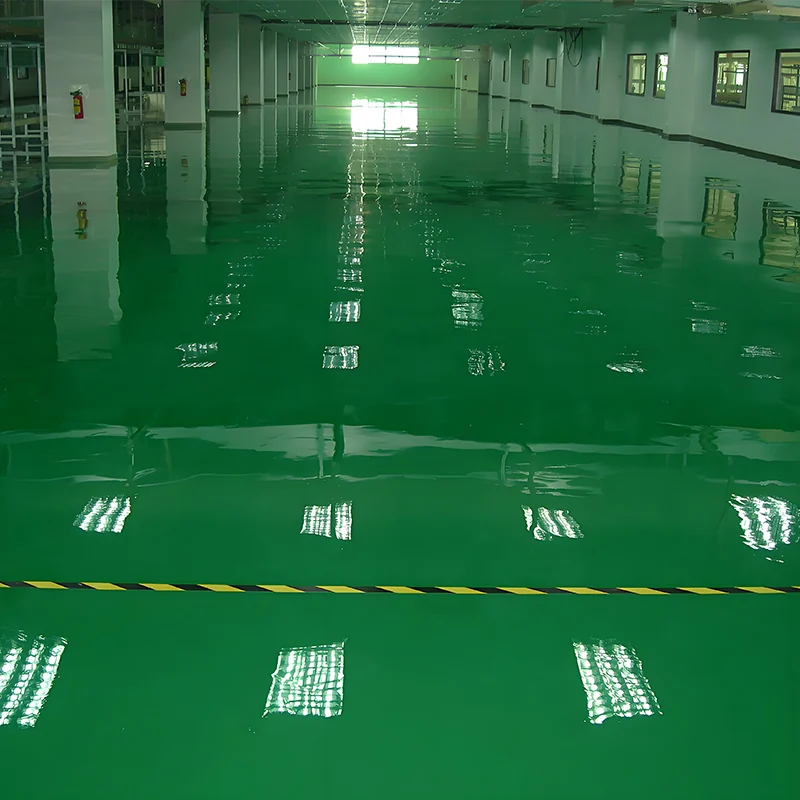
Specifying a commercial waterproof paint for concrete requires far more engineering precision than simply selecting the thickest liquid pail on a supplier quotation. Across industrial warehouse slabs, rendered building facades, subterranean basement walls, and elevated parking decks, cementitious substrates behave as dynamic, porous sponges rather than inert surfaces. While a garage floor, a concrete water tank, and an exterior retaining wall share the same basic material composition, each demands a fundamentally different polymer chemistry and application protocol. From a waterproofing engineer’s perspective, successful procurement follows a strict hierarchy: diagnose the hydraulic exposure first, match the resin formulation second, and finalize the purchase specification only after verifying substrate readiness.
Following this disciplined sequence prevents costly envelope failures. The vast majority of premature delamination incidents occur when a high-quality waterproof paint for concrete is rolled over an incompatible substrate condition, such as trapping rising groundwater vapor beneath a non-breathable epoxy film, painting directly over weak cement laitance, or expecting a rigid floor coating to bridge an active structural settlement crack. This buyer’s guide outlines how B2B contractors, facility managers, and wholesalers can evaluate and procure a reliable concrete waterproof coating system without falling for exaggerated marketing claims.
Before requesting manufacturer submittals for any waterproof paint for concrete, project specifiers must categorize the exact direction and intensity of water contact. In building envelope engineering, waterproofing demands vary drastically between wind-driven atmospheric rain on vertical facades, intermittent chemical washdowns on interior factory floors, and continuous hydrostatic head pressing against buried foundation structures. Buyers must document whether the liquid barrier will face positive-side water pressure pushing the coating into the slab or negative-side water pressure attempting to blister the film off the wall.
Furthermore, environmental variables dictate polymer survival. An exterior architectural wall requires a breathable, ultraviolet-stable waterproof paint for concrete that allows trapped interior moisture vapor to escape while flexing with seasonal thermal expansion. Conversely, a heavy-duty logistics warehouse slab prioritizes extreme abrasion resistance, forklift tire traction, and petrochemical spill protection. Where deep subterranean retaining walls or elevator pits face relentless negative-side groundwater seepage, a decorative surface paint will inevitably fail; those conditions require a crystalline capillary waterproofing system or a specialized moisture-mitigating cementitious epoxy barrier.
Penetrating concrete sealers—formulated from small-molecule silanes, siloxanes, or siliconates—soak deep into the microscopic capillary network of the cement paste rather than forming a visible topical skin. Inside the pores, these compounds react chemically with free calcium hydroxide and moisture to create a hydrophobic barrier that repels liquid water and de-icing salts while maintaining complete vapor breathability. While penetrating treatments keep exposed bridge decks, parking ramps, and architectural precast panels looking completely natural, they cannot bridge hairline cracks or withstand pressurized water, distinguishing them from a true film-forming waterproof paint for concrete.
When a project demands a continuous physical barrier alongside aesthetic color uniformity and dustproofing, specifiers turn to film-forming acrylic and epoxy systems. Waterborne and solvent-borne acrylic formulations serve as a versatile, economical waterproof paint for concrete across exterior vertical masonry, residential basements, and light-traffic walkways, offering rapid recoat intervals and strong resistance to solar yellowing. For interior industrial slabs, two-component polyamide and cycloaliphatic epoxies deliver superior mechanical bond strength, chemical resistance, and high-build durability. However, because cured epoxy resins are inherently rigid and chalk under direct sunlight, they should never be specified as an exposed exterior concrete waterproof coating or applied over unstabilized moving joints.
Where thermal cycling, structural vibration, or dynamic shrinkage cracking threatens slab integrity, specifying an elastomeric waterproof paint for concrete is essential. High-solids aliphatic polyurethanes, polyurea hybrids, and elastomeric acrylics cure into rubber-like membranes capable of stretching several hundred percent without rupturing. This high elongation enables the cured concrete waterproof coating to bridge non-structural hairline fissures across exposed roof decks, plaza podiums, and stadium bleachers. Before approving an elastomeric system for continuous water immersion or buried foundation duty, buyers must verify that the complete primer-to-topcoat assembly carries certified hydrostatic testing approvals.
Even the most advanced waterproof paint for concrete will peel within weeks if applied over a contaminated or improperly profiled cementitious surface. Freshly poured concrete must cure for a minimum of twenty-eight days so excess hydration water can evaporate and surface alkalinity can stabilize below a pH of nine to ten. Furthermore, as concrete cures, water bleeds upward to form a weak, powdery crust known as laitance, which must be completely stripped away alongside curing compounds, form-release oils, and efflorescence salts before any primer is introduced.
Professional surface preparation requires mechanical profiling rather than simple pressure washing. Contractors should utilize diamond grinding or enclosed shot-blasting equipment to achieve the exact International Concrete Repair Institute Concrete Surface Profile—typically ranging from CSP 2 for thin-film sealers to CSP 4 for high-build elastomeric coatings. All bug holes, honeycombs, and spalled edges must be patched using polymer-modified repair mortars, while moving expansion joints must be routed out and sealed with flexible polyurethane sealant rather than painted over.
Equally critical is formal sub-slab moisture verification. A concrete surface that looks bone-dry under sunny skies can still emit massive volumes of invisible water vapor from the underlying soil. Before applying an impermeable waterproof paint for concrete, inspectors must conduct in-situ relative humidity testing in accordance with ASTM F2170 or anhydrous calcium chloride testing under ASTM F1869. If internal slab humidity exceeds seventy-five to eighty percent, contractors must either switch to a vapor-permeable coating or install a specialized two-component moisture-vapor-mitigating epoxy primer prior to topcoating.
When issuing a formal request for quotation to a coating manufacturer or wholesale distributor, procurement teams must look far beyond the unit price per liter or pail. A low-cost waterproof paint for concrete containing only forty percent volume solids will require twice as many coats to achieve the same dry-film micron thickness as a premium seventy-percent solids formulation, quickly erasing any initial material savings through doubled labor expenses.
To guarantee transparent supplier comparisons, every procurement specification should mandate five technical disclosures. First, require the exact resin binder chemistry, volume solids percentage, and volatile organic compound rating. Second, specify the dedicated alkali-resistant penetrating primer required to seal porous concrete and prevent outgassing pinholes. Third, mandate a clear wet-film and dry-film thickness schedule measured in micrometers, adjusting coverage calculations to account for surface roughness and substrate absorption losses. Fourth, request certified laboratory data confirming water vapor transmission rates, tensile elongation, pull-off adhesion strength in megapascals, and crack-bridging performance. Fifth, establish strict batch traceability, shelf-life limits, and ambient dew-point application windows in the contract closeout package.
Securing a long-lasting waterproof paint for concrete requires aligning material science with disciplined site execution. Begin by auditing the structural zone to determine whether positive-side rain shedding, negative-side basement dampness, or heavy wheeled abrasion governs the specification. Select a penetrating hydrophobic sealer when preserving natural concrete texture is paramount, a high-build epoxy basement floor paint when interior chemical and mechanical wear dominate, or an elastomeric polyurethane concrete waterproof coating when exterior crack bridging and ponding water resistance are mandatory. By enforcing mechanical CSP profiling, verifying ASTM slab moisture limits, and purchasing systems based on cured dry-film cost per square meter, B2B buyers can deliver a permanent, leak-free concrete envelope.

2026/11/20
How an APP waterproof membrane handles heat: 130°C softening point, torch application windows, overheating signs, summer storage, and thermal aging checks.

2026/11/20
The science of a breathable waterproof membrane: water vapor diffusion, Sd values, three grammage grades, water column resistance, and wrong-use cases.

2026/11/20
Single-ply or two-ply, every flat roof is a stack. See how a self adhesive waterproof membrane for roof systems handles base, cap, insulation and drains.

2026/11/20
How the polyester scrim sets tensile strength and dimensional stability of reinforced TPO membrane rolls, with welding, roll sizes and selection tips.

2026/11/20
How an aluminum foil coated bitumen waterproof membrane reflects solar radiation, lowers surface temperature, and what maintenance keeps savings alive.

2026/11/20
SBS modified bitumen waterproof membrane property groups: tensile strength, low-temperature flexibility, heat resistance, surface finishes, applications.
Links to the corresponding full news page.

The eight questions overseas buyers ask most — factory ownership, capacity, batch consistency and lead times, answered straight.

SBS membranes, polymer sheets, coatings and geomembranes — six product lines are operating simultaneously.

Pre-sales specification, on-site technical support and post-delivery maintenance across 100+ export markets.

Waterproofing performance is decided in the specification and the detailing, not just the material. Our technical team helps you select the right system, resolve site questions as they arise, and stay reachable long after the container lands.
