 EN
APP Waterproof Membrane: High-Temperature Stability Guide
2026/11/20
How an APP waterproof membrane handles heat: 130°C softening point, torch application windows, overheating signs, summer storage, and thermal aging checks.

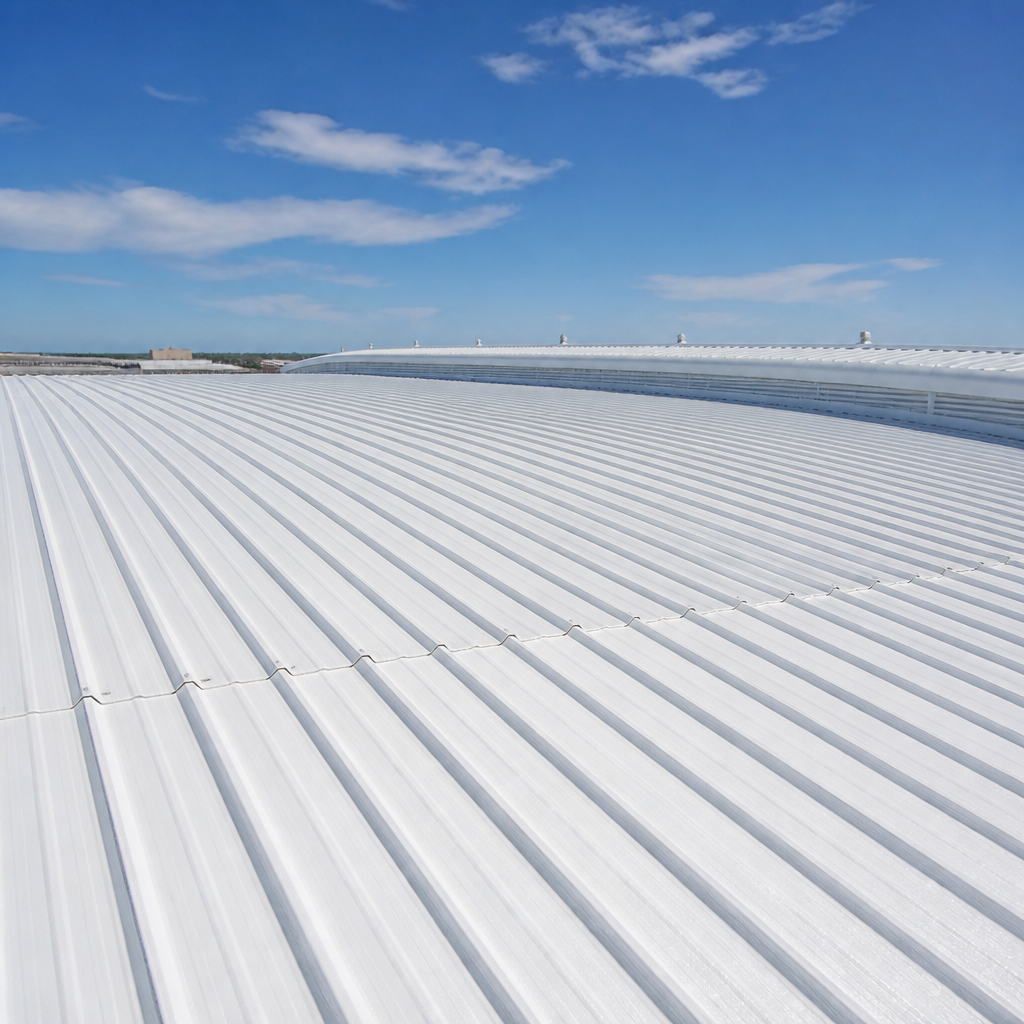
Specifying a commercial waterproof paint for metal requires far more engineering foresight than merely selecting an exterior color swatch. Across corrugated steel roofs, structural beams, storage tanks, perimeter railings, and architectural flashings, a protective liquid barrier must simultaneously prevent moisture penetration, arrest electrochemical oxidation, resist ultraviolet degradation, and flex with thermal expansion. A freshly coated steel structure may appear pristine upon project handover yet suffer catastrophic delamination within a single season if mill scale, microscopic grease, soluble salts, or incompatible primers remain trapped beneath the film. For industrial contractors and facility buyers, successful procurement centers on matching the resin chemistry to the exact atmospheric exposure and enforcing strict dry-film thickness controls on site.
Approaching metal protection as an integrated multi-coat assembly rather than a standalone can of paint eliminates premature maintenance failures. A complete waterproof paint for metal specification encompasses chemical degreasing, mechanical abrasive profiling, stripe coating along vulnerable sharp edges, inhibitive priming, and weather-resistant topcoating. This disciplined methodology is vital because moisture and oxygen rarely penetrate thick, flat steel plates first; instead, underfilm corrosion almost always initiates around fastener heads, lap seams, weld splatters, sheared panel edges, and microscopic pinholes.
When properly formulated and cured, a liquid-applied waterproof paint for metal cross-links into a seamless, monolithic membrane over the substrate. Unlike prefabricated sheet membranes that require heat-welded or taped overlaps, liquid coatings conform effortlessly around complex structural geometries, structural bolts, pipe brackets, and corrugated roof profiles without creating joint vulnerabilities. However, this geometric versatility depends entirely on field application discipline. Inadequate brush pressure around rivets, insufficient film build on vertical ridges, or coating over invisible surface condensation creates immediate pathways for water vapor intrusion.
Engineers must also distinguish between superficial water repellency and long-term anti-corrosive protection. To stop rust permanently, a waterproof paint for metal must function as both an impermeable moisture barrier and an electrochemical shield. The primer layer must wet out the microscopic peaks and valleys of the prepared metal to establish tenacious mechanical adhesion while utilizing sacrificial pigments—such as zinc phosphate or metallic zinc—to passivate the steel interface. When specifying systems for carbon steel exposed to outdoor weather, procurement teams frequently reference ISO 12944 atmospheric corrosivity categories. Coastal marine structures subjected to airborne chlorides and industrial plants facing chemical humidity demand significantly higher film builds and cross-link densities than interior structural framing in arid climates.
Waterborne and solvent-based acrylic formulations offer a practical, user-friendly waterproof paint for metal solution for sloped commercial roofs, architectural siding, and light-duty exterior steelwork. High-solids elastomeric acrylics cure into a breathable yet water-tight film that reflects solar radiation, resists ultraviolet chalking, and stretches smoothly as metal panels expand and contract under midday sun. While acrylic topcoats provide rapid recoat intervals and low volatile organic compound emissions, they should never be applied directly onto rusty carbon steel without a dedicated rust-inhibitive primer, as waterborne resins alone can trigger flash rusting during initial drying.
When structural steelwork faces intense solar radiation, chemical fallout, physical abrasion, or frequent thermal cycling, aliphatic polyurethane systems represent the industry benchmark. Specifying a polyurethane waterproof paint for metal delivers exceptional gloss retention, impact toughness, and chemical resistance across bridges, exterior tank shells, and coastal industrial roofs. Because polyurethanes combine tough cross-linked barrier properties with high elastomeric elongation, they accommodate structural vibration and joint movement without cracking. To maximize service life, polyurethane topcoats are typically applied over high-build epoxy intermediate coats, creating a synergistic duplex system where the undercoat stops corrosion and the topcoat blocks environmental weathering.
Two-component polyamide and phenalkamine epoxies form the anti-corrosive backbone of heavy-duty industrial metal protection. As an interior lining or foundational primer within a waterproof paint for metal assembly, epoxy resins deliver unmatched adhesion to abrasive-blasted steel, extreme resistance to alkaline and acidic splash, and exceptionally low water vapor permeability. Surface-tolerant mastic epoxies are particularly valuable for maintenance repainting where tight site constraints only permit power-tool cleaning rather than open grit blasting. However, because aromatic epoxy polymers inevitably chalk and yellow when exposed to direct sunlight, exterior applications must always be shielded with an ultraviolet-stable polyurethane or acrylic finish coat.
For low-slope corrugated metal roofs prone to localized ponding water and extreme ultraviolet exposure, high-solids alkoxy silicone coatings provide specialized weatherproofing performance. A silicone-based waterproof paint for metal cures via atmospheric moisture into a permanently flexible, inorganic siloxane rubber membrane that resists standing water degradation without softening or delaminating. Before rolling or spraying silicone over an aging metal roof, contractors must tighten loose fasteners, encapsulate rusty lap seams with fabric-reinforced mastic, and apply an adhesion-promoting primer over weathered fluoropolymer or galvanized factory finishes.
Surface preparation accounts for over seventy percent of the lifecycle success of any waterproof paint for metal installation. Before opening a single coating container, inspectors must evaluate the metal substrate under bright lighting to identify flaking red rust, intact mill scale, chalked legacy paint, sharp burrs, machining oils, and salt deposits. Furthermore, non-ferrous substrates such as hot-dip galvanized steel, anodized aluminum, and stainless steel feature slick, reactive oxide layers that reject conventional steel primers unless treated with specialized etching washes or non-ferrous adhesion promoters.
Field preparation must follow a strict four-stage decontamination sequence. First, technicians must eliminate all hydrocarbons, cutting oils, and grease using emulsifying alkaline detergents and steam cleaning in accordance with international solvent-cleaning standards, as mechanical grinding over oily steel merely drives contaminants deeper into the metal pores. Second, all loose rust scale, mill scale, and peeling legacy coatings must be removed using abrasive grit blasting to a near-white metal profile or thorough power-tool grinding down to sound, bright metal, while feathering surrounding paint edges into smooth transitions. Third, the abraded surface must be vacuumed and tested for invisible soluble chloride and sulfate salts that draw moisture through cured paint via osmosis. Fourth, the bare metal must be coated with the specified anti-corrosive primer before ambient humidity triggers flash oxidation, typically within four hours of blasting.
Applying a waterproof paint for metal until the surface merely looks uniform in color is a guaranteed recipe for premature corrosion failure. Liquid coatings protect metal strictly through verified barrier thickness, measured in micrometers of dry-film thickness. If the applied film is stretched too thin, microscopic substrate peaks will poke through the resin layer, creating immediate rust pinpoint clusters. Conversely, applying excessive coating thickness in a single pass traps evaporating solvents, resulting in surface sagging, solvent blistering, and soft, uncured underlayers.
To guarantee specification compliance, applicators must perform continuous wet-film thickness gauge checks during spraying or rolling, calculating the required wet build from the product’s percentage of volume solids. Because liquid coatings naturally pull away from sharp corners due to surface tension during curing, crews must execute mandatory brush stripe coating over all structural edges, weld seams, nut-and-bolt assemblies, and cut panel ends prior to spraying the full field coat. Once each layer cures, inspectors should utilize calibrated magnetic or eddy-current dry-film thickness gauges to verify that every square meter meets the manufacturer’s minimum and maximum micron thresholds.
Even a meticulously prepared steel substrate will suffer adhesion loss if a waterproof paint for metal is applied outside its permitted climatic window. Contractors must monitor ambient air temperature, steel surface temperature, relative humidity, and the calculated dew point throughout the workday. Metal surfaces must remain at least 3 degrees Celsius above the dew point during both application and initial curing to prevent microscopic moisture condensation from forming between coats. Additionally, multi-coat systems must be applied strictly within the manufacturer’s minimum and maximum recoat intervals to ensure strong intercoat chemical bonding without solvent lifting.
When issuing a procurement inquiry or evaluating contractor submittals for a waterproof paint for metal project, facility owners should demand complete technical documentation. Require suppliers to submit certified technical data sheets confirming volume solids, volatile organic compound content, pot-life limits, mixing ratios, recommended nozzle sizes, and ISO corrosivity test approvals. Before releasing the completed metalwork to service, perform a final closeout inspection checking for holiday pinholes, missed fastener edges, uniform sheen, and complete mechanical cure. By uniting substrate decontamination, appropriate resin selection, edge stripe coating, and verified micron thickness, buyers can ensure their waterproof paint for metal investment delivers decades of rust-free structural integrity.

2026/11/20
How an APP waterproof membrane handles heat: 130°C softening point, torch application windows, overheating signs, summer storage, and thermal aging checks.

2026/11/20
The science of a breathable waterproof membrane: water vapor diffusion, Sd values, three grammage grades, water column resistance, and wrong-use cases.

2026/11/20
Single-ply or two-ply, every flat roof is a stack. See how a self adhesive waterproof membrane for roof systems handles base, cap, insulation and drains.

2026/11/20
How the polyester scrim sets tensile strength and dimensional stability of reinforced TPO membrane rolls, with welding, roll sizes and selection tips.

2026/11/20
How an aluminum foil coated bitumen waterproof membrane reflects solar radiation, lowers surface temperature, and what maintenance keeps savings alive.

2026/11/20
SBS modified bitumen waterproof membrane property groups: tensile strength, low-temperature flexibility, heat resistance, surface finishes, applications.
Links to the corresponding full news page.

The eight questions overseas buyers ask most — factory ownership, capacity, batch consistency and lead times, answered straight.

SBS membranes, polymer sheets, coatings and geomembranes — six product lines are operating simultaneously.

Pre-sales specification, on-site technical support and post-delivery maintenance across 100+ export markets.

Waterproofing performance is decided in the specification and the detailing, not just the material. Our technical team helps you select the right system, resolve site questions as they arise, and stay reachable long after the container lands.
