 EN
APP Waterproof Membrane: High-Temperature Stability Guide
2026/11/20
How an APP waterproof membrane handles heat: 130°C softening point, torch application windows, overheating signs, summer storage, and thermal aging checks.

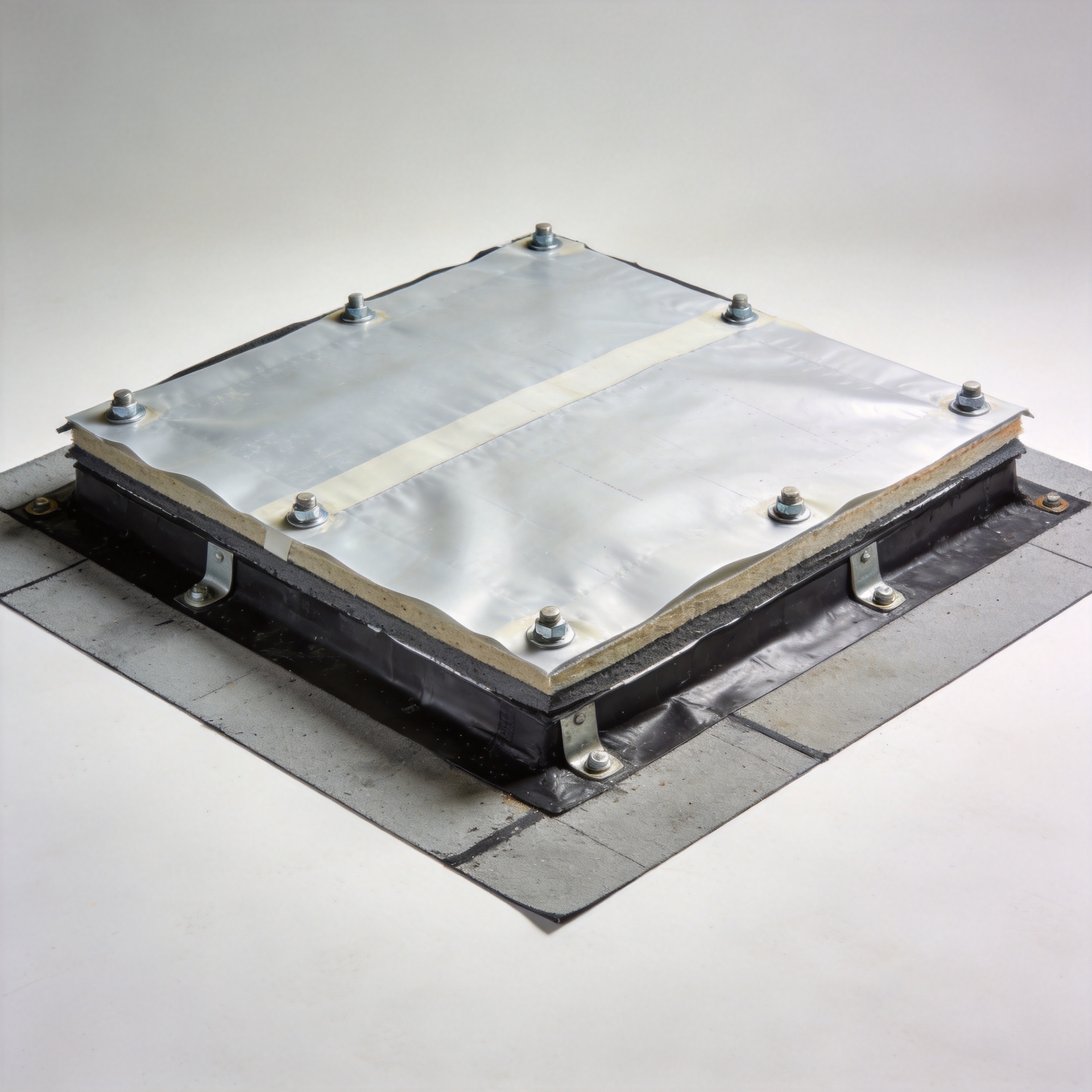
On a low-slope commercial roof, a mechanically attached tpo waterproofing membrane relies on engineered fasteners and tpo stress plates rather than adhesive to transfer wind uplift into the structural deck. Because every fastener is a load path, the attachment pattern — and the tpo roof fastener spacing that expresses it — decides how the assembly behaves in a storm, which is why tpo wind uplift figures from another building rarely transfer. Published data for the polyester-reinforced Type P sheet — ≥250 N/50mm tensile (EN 12311-2), ≤0.5% dimensional stability (EN 1107-2) — explains why a reinforced grade suits that role.
In a fully adhered roof, uplift spreads across the bonded surface. In a mechanically attached tpo waterproofing membrane it concentrates at discrete points, usually rows along the membrane overlaps. A well-chosen fastener and tpo stress plate clamp the sheet without tearing it; a poor one pulls through the membrane, backs out of the deck or crushes insulation. That is why tpo membrane fastening is an engineering decision, computed from project uplift requirements, not copied from the last contract, and why the tpo wind uplift report is the first document to request, with the tpo roof fastener spacing it produces running second.
Three elements work together: the fastener, the bearing plate — often called a tpo stress plate — and a bar detail at edges. The plate spreads clamping force over a wider area, so the reinforced scrim carries the load while the compound above stays intact. Fasteners are driven through plate, membrane and insulation into the deck, so tpo membrane fastening depends on the deck material, never on the insulation above it — the first thing to check in any mechanically attached tpo waterproofing membrane review.
Deck type dictates fastener style. On profiled steel, self-tapping screws are standard and the thread must engage the deck flange, not stop in a flute. On concrete, masonry screws or anchors need controlled embedment depth, with a tpo stress plate sized to the head. On timber, threaded screws with adequate penetration work best. Choose length for verified embedment in the structural deck, not for the insulation it passes through; the tpo roof fastener spacing a designer draws is only as good as that embedment. In a mechanically attached tpo waterproofing membrane, deck pull-out capacity rather than the sheet is usually the limiting factor, and it is what a tpo wind uplift calculation really tests.
Rows of tpo membrane fastening sit at each overlap, so one row of tpo stress plates secures two adjacent sheets; spacing follows from the zone uplift load and verified pull-out and pull-through values. Shandong Dingtai Waterproof lists 1.2 and 1.5 mm as standard for mechanical fastening of its Type P sheet, with 1.8 mm for higher exposure; homogeneous Type H is also listed from 1.2 mm to 1.8 mm, but its lower tensile strength (≥100 N/50mm) and higher elongation make the reinforced sheet the usual choice where uplift concentrates. That is the whole content of a tpo roof fastener spacing table, and the reason a mechanically attached tpo waterproofing membrane drawing is checked against it before issue.
A retrofit shows the point: the original fastening layout had been copied wholesale from a smaller building next door, so in the first stormy season the corner plates — where spacing had been loosest — began to telegraph through the sheet. Re-running the uplift calculation and adding corner rows — not changing the membrane — fixed it cheaply.
Wind pressure is not uniform: corners and perimeter strips see the highest uplift, so tpo roof fastener spacing must tighten there. Common practice includes closer spacing, extra rows, or details such as battens and wider tpo stress plates, all recorded in the tpo wind uplift package. The membrane's own reserve matters too: a mechanically attached tpo waterproofing membrane grade is checked for elongation: Type P offers ≥15% elongation at break, letting the sheet absorb deck movement along enhanced lines without stressing a single plate.
The frequent errors are predictable: overdriving until the tpo stress plate dents the membrane, underdriving so the plate cannot clamp, placing plates so close to an edge that the scrim tears out, and reusing a hole instead of relocating to intact material. Each converts a designed load path into a future leak that no tpo wind uplift calculation can excuse. That is why tpo membrane fastening quality is a daily check on a mechanically attached tpo waterproofing membrane rather than a handover item.
Per the published table, 1.2, 1.5 and 1.8 mm sheets are used: 1.2 and 1.5 mm for commercial fields, 1.8 mm for higher exposure. A tpo stress plate rated for that sheet thickness matters as much as the sheet, and so does the tpo wind uplift figure the layout was designed to.
By the project calculation: spacing follows from the zone load and the verified pull-out and pull-through values of the fastener–plate–membrane set. A tpo roof fastener spacing figure copied from another building is not a design, and neither is a generic table applied to a different deck — which is why every tpo membrane fastening schedule should carry the calculation it came from, and why the tpo wind uplift report belongs in the submittal.
Yes. Homogeneous Type H is listed from 1.2 mm to 1.8 mm, but at ≥100 N/50mm against ≥250 N/50mm for reinforced Type P, the reinforced sheet is preferred where uplift concentrates at the plates. Confirm the mechanically attached tpo waterproofing membrane schedule against a project calculation before release, and confirm that tpo membrane fastening details at corners match the approved drawings.

2026/11/20
How an APP waterproof membrane handles heat: 130°C softening point, torch application windows, overheating signs, summer storage, and thermal aging checks.

2026/11/20
The science of a breathable waterproof membrane: water vapor diffusion, Sd values, three grammage grades, water column resistance, and wrong-use cases.

2026/11/20
Single-ply or two-ply, every flat roof is a stack. See how a self adhesive waterproof membrane for roof systems handles base, cap, insulation and drains.

2026/11/20
How the polyester scrim sets tensile strength and dimensional stability of reinforced TPO membrane rolls, with welding, roll sizes and selection tips.

2026/11/20
How an aluminum foil coated bitumen waterproof membrane reflects solar radiation, lowers surface temperature, and what maintenance keeps savings alive.

2026/11/20
SBS modified bitumen waterproof membrane property groups: tensile strength, low-temperature flexibility, heat resistance, surface finishes, applications.
Links to the corresponding full news page.

The eight questions overseas buyers ask most — factory ownership, capacity, batch consistency and lead times, answered straight.

SBS membranes, polymer sheets, coatings and geomembranes — six product lines are operating simultaneously.

Pre-sales specification, on-site technical support and post-delivery maintenance across 100+ export markets.

Waterproofing performance is decided in the specification and the detailing, not just the material. Our technical team helps you select the right system, resolve site questions as they arise, and stay reachable long after the container lands.
