 EN
APP Waterproof Membrane: High-Temperature Stability Guide
2026/11/20
How an APP waterproof membrane handles heat: 130°C softening point, torch application windows, overheating signs, summer storage, and thermal aging checks.

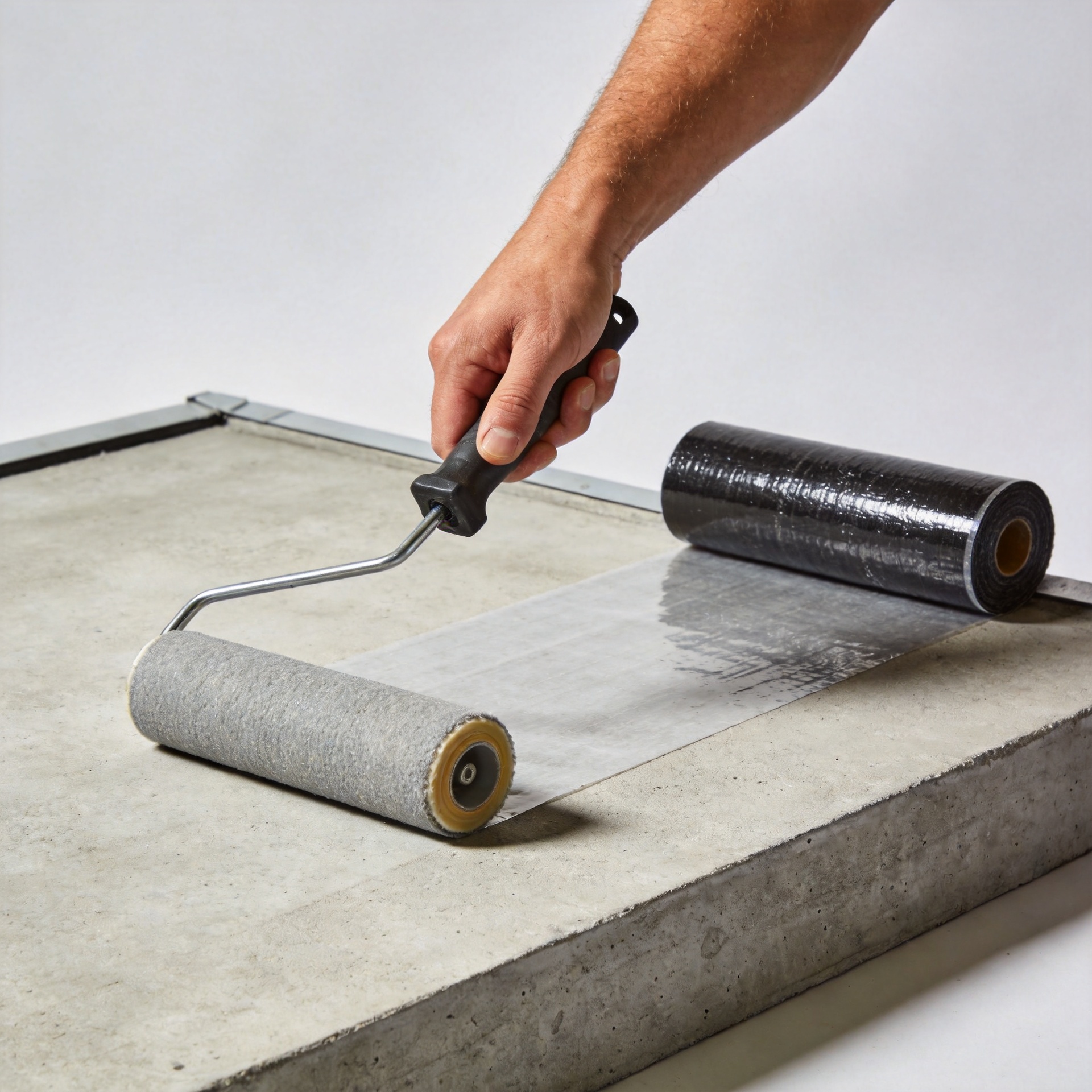
Datasheets for a self adhesive polymer modified bitumen membrane lead with thickness, the least informative figure on the page. Performance sits in three layers: the polymer network in the compound, the polyester reinforced bitumen membrane carrier inside it, and the face that meets weather. Most failures start at the modified bitumen adhesive, not at the surface. Read the build-up first and a bitumen waterproofing membrane becomes comparable across suppliers.
Oxidised bitumen is cheap, stiff, and brittle in cold. A polymer builds a network inside it, so the compound recovers after strain instead of cracking. SBS is the modifier behind many cold-applied sheets of this class, and it is why a self adhesive polymer modified bitumen membrane can be pressed onto a deck and still flex through winter. A modified bitumen adhesive carries that network into the bonding layer. In a polyester reinforced bitumen membrane the body and the adhesive are laminated as one, so neither fights the bitumen waterproofing membrane face at the interface.
On the underside sits a formulated bitumen compound, tackified and modified, applied at controlled thickness behind a release liner. Published peel adhesion for the 1.2 mm PE-film grade is at least 1.5 N/mm to concrete, measured on a primed substrate. A modified bitumen adhesive reaches that on a clean, dry, primed deck; on dust or damp concrete the self adhesive polymer modified bitumen membrane releases at the lap. That is why a bitumen waterproofing membrane submittal should name the primer, and why a peel figure quoted without conditions proves little on site.
The carrier decides whether the sheet survives movement. A polyester reinforced bitumen membrane uses a continuous filament mat that carries tensile load and bridges hairline cracks. Published tensile strength is 300 N/50mm for the 1.2 mm PE-film sheet and 400 N/50mm for the 1.5 mm sand sheet, with elongation at break of at least 30% on both. Elongation matters over shrinking concrete, because a stiff bitumen waterproofing membrane passes stress to the bond line. The mat also holds the modified bitumen adhesive in place where a self adhesive polymer modified bitumen membrane is cut around a penetration.
Choose the face for exposure, not appearance. A smooth PE film suits concealed work, since tile adhesive, screed, and mortar bond to it, so a bitumen waterproofing membrane disappears under a finish. Granules shield the compound from UV and add slip resistance: the 1.5 mm sand-faced grade lists heat resistance of 90°C and flexibility of -15°C for exposed use. Foil reflects solar load instead. Whatever the face, the compound beneath is one family, and a self adhesive polymer modified bitumen membrane is only as UV-stable as its outer layer; a modified bitumen adhesive under bare film has no shield, and no polyester reinforced bitumen membrane escapes that rule.
Water tightness is quoted as pressure and duration: 0.3 MPa for 120 minutes on the 1.2 mm grade, a test condition rather than a service rating. Low-temperature flexibility is quoted for the compound, -20°C on the PE-film sheet and -15°C on the sand sheet. Peel adhesion is quoted to a named substrate, so it says little about a dusty screed. Certification is a system: CE marking, ISO 9001 control, batch COA. A modified bitumen adhesive with a test report can be checked against a bitumen waterproofing membrane specification. A brochure cannot, and no polyester reinforced bitumen membrane description replaces a report on the self adhesive polymer modified bitumen membrane itself.
Thickness is a result, not a target. A 1.2 mm sheet with a proven bond outperforms a 3 mm sheet on a wet deck, and the reverse holds over rough substrate. The 1.5 mm sand-faced grade belongs where the membrane is the finish; the 1.2 mm PE-film grade where screed or tile follows. Both ship in 1 m by 10 m rolls, and the PE-film format, itself a polyester reinforced bitumen membrane, also comes in 1 m by 20 m; both carry the same 1.5 N/mm peel target. Specify the build-up, then confirm that every layer, the modified bitumen adhesive included, appears in the submittal for the self adhesive polymer modified bitumen membrane and the bitumen waterproofing membrane beneath it.
A contractor on a suburban retail extension met the choice head-on. The engineer specified 1.5 mm because the roof was exposed, yet the podium deck under the shops would take screed and tiles. The contractor proposed the PE-film sheet for the podium, kept the sand-faced polyester reinforced bitumen membrane above, and sent both datasheets with batch certificates. Inspection passed first time: primer under the adhesive, film under the screed, granules under the sun.
No. The adhesive face is a formulated bitumen compound, not a separate glue layer, so bond behaviour and heat response come from the same chemistry as the sheet body.
Only with a surface designed for it. Mineral sand and foil faces are made for exposure; smooth PE film is meant for concealed work under screed, tile, or an upper polyester reinforced bitumen membrane.
Ask for the figure against the actual substrate, with the test method behind it. The published value for the 1.2 mm grade is at least 1.5 N/mm to concrete, and it assumes a primed deck with a modified bitumen adhesive applied as the factory intended.

2026/11/20
How an APP waterproof membrane handles heat: 130°C softening point, torch application windows, overheating signs, summer storage, and thermal aging checks.

2026/11/20
The science of a breathable waterproof membrane: water vapor diffusion, Sd values, three grammage grades, water column resistance, and wrong-use cases.

2026/11/20
Single-ply or two-ply, every flat roof is a stack. See how a self adhesive waterproof membrane for roof systems handles base, cap, insulation and drains.

2026/11/20
How the polyester scrim sets tensile strength and dimensional stability of reinforced TPO membrane rolls, with welding, roll sizes and selection tips.

2026/11/20
How an aluminum foil coated bitumen waterproof membrane reflects solar radiation, lowers surface temperature, and what maintenance keeps savings alive.

2026/11/20
SBS modified bitumen waterproof membrane property groups: tensile strength, low-temperature flexibility, heat resistance, surface finishes, applications.
Links to the corresponding full news page.

The eight questions overseas buyers ask most — factory ownership, capacity, batch consistency and lead times, answered straight.

SBS membranes, polymer sheets, coatings and geomembranes — six product lines are operating simultaneously.

Pre-sales specification, on-site technical support and post-delivery maintenance across 100+ export markets.

Waterproofing performance is decided in the specification and the detailing, not just the material. Our technical team helps you select the right system, resolve site questions as they arise, and stay reachable long after the container lands.
