 EN
APP Waterproof Membrane: High-Temperature Stability Guide
2026/11/20
How an APP waterproof membrane handles heat: 130°C softening point, torch application windows, overheating signs, summer storage, and thermal aging checks.

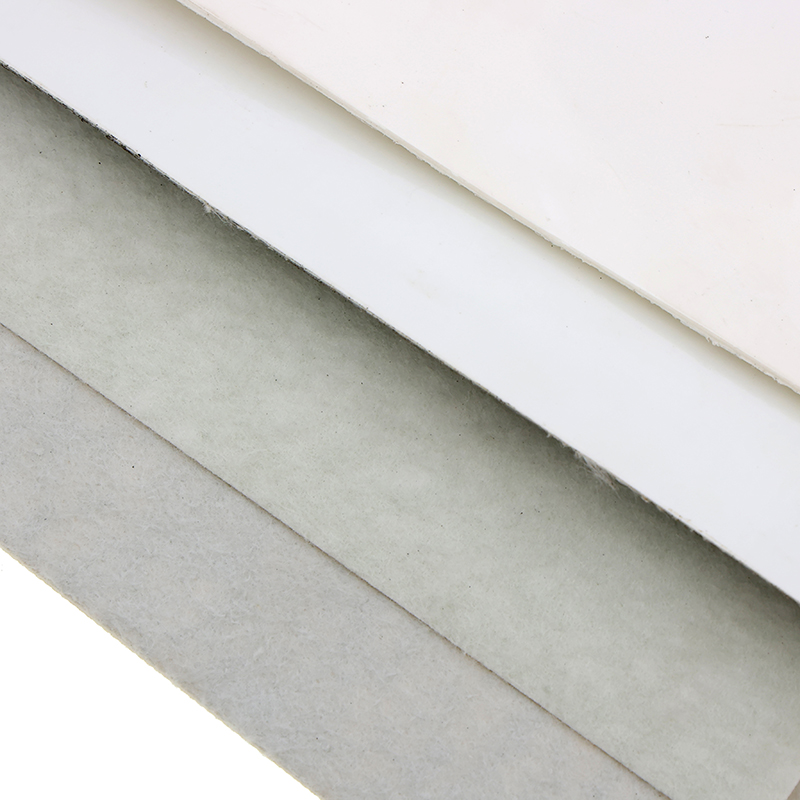
Fewer roofs carry TPU than PVC or TPO, and more questions arrive with it. Thermoplastic polyurethane is a block copolymer that melts, welds and re-forms without curing, and that explains both its appeal and its limits. This article sets out what the material is, where a single ply roofing membrane with a longer record remains safer, and when a TPU waterproof membrane is worth its premium.
The polymer belongs to the same processing family as PVC and TPO: it softens under heat, accepts hot-air or wedge welding, and can be reworked on site. A thermoplastic polyurethane membrane can be factory-welded into large panels, folded for transport, and joined again at the roof edge without adhesive. Nothing in the sheet cures, so there is no pot life before a seam is tested.
That is the structural difference from a liquid-applied polyurethane, which cures into a film, cannot be re-melted and cannot be welded. A tpu waterproof membrane stays a thermoplastic, so welding rather than priming decides the detail, and a pvc waterproof membrane behaves the same way wherever it is welded.
Abrasion resistance is where this family separates from the competition. The polymer tolerates foot traffic, grit, gravel and dragged equipment without polishing through, which is why conveyor belts and heavy-duty inflatable structures use the same chemistry, and it is precisely the property on which a pvc waterproof membrane most often falls behind in real service conditions on a roof deck. A tpu waterproof membrane on a walkway carries an argument a thinner sheet does not.
Flexibility at low temperature is the second property, and it arrives without plasticiser, which is unusual for a single ply roofing membrane. Flexible PVC depends on plasticiser for softness, and that additive migrates: the sheet stiffens, dirt bonds to the surface, and welding becomes less predictable. A thermoplastic polyurethane membrane has no such additive to lose. Oil and fuel resistance is the third, where a tpo waterproof membrane offers less.
Published data gives a yardstick for both established families. The homogeneous pvc waterproof membrane Type H is rated at no less than 200 N/50mm tensile strength and 250 percent elongation across 1.2mm to 2.0mm, welded with a minimum 40mm overlap, to EN 13956 and GB 12952.
The tpo waterproof membrane Type H page lists at least 100 N/50mm tensile, 300 percent elongation, dimensional stability within 2.0 percent, and watertightness tested to 60 kPa under EN 1928, across the same 1.2mm to 2.0mm thickness range. Those figures, published by the manufacturer for the specific grade, thickness and standard, are the numbers against which a tpo waterproof membrane is bought; thickness alone tells a buyer little about any sheet.
Small, complex, heavily used areas are the natural territory, and they are where a pvc waterproof membrane has been the default for years. A plant deck around chillers, a walkway, a loading apron, or a terrace over a habitable room where a tpu waterproof membrane has to turn a dozen corners and finish under a door threshold: each rewards a material welded into a shaped panel in the factory.
Refurbishment follows the same logic. Where a substrate cannot take flame, and where a liquid coating would need days between coats, a thermoplastic polyurethane membrane arrives as a finished sheet. A single ply roofing membrane still wins on a large open field, but on a balcony rebuilt over occupied rooms the programme matters more than the material premium, and that trade is easy to justify.
A large flat roof is the wrong place to start for a thermoplastic polyurethane membrane: sheet cost is higher than a pvc waterproof membrane or TPO, welding equipment and trained operators are less common, and weathering data is thinner. A roof carrying a 20-year warranty is easier to specify with a tpo waterproof membrane whose UV performance and seam strength have been documented across many projects, and a single ply roofing membrane with that record is easier to insure.
Fire classification is the other check. A tpu waterproof membrane must carry the reaction-to-fire class the building requires, and that certificate is grade-specific rather than brand-specific. A data sheet listing mechanical properties but not the fire class is incomplete, and a tpo waterproof membrane is no different.
A missing record is not a reason to refuse the material, only to specify by test. Ask for nominal thickness and tolerance, tensile strength and elongation at break, tear resistance, seam strength from a welded sample, and the UV exposure method behind any weathering claim.
Ask whether the grade is aromatic or aliphatic, since the two age differently, and whether the face is smooth or embossed. A thermoplastic polyurethane membrane specified on those six points can be compared with a pvc waterproof membrane on equal terms, and a single ply roofing membrane can be judged by the same list.
No. A tpo waterproof membrane is a polyolefin blend, typically polypropylene with an elastomer; TPU is a polyurethane block copolymer. Both weld, but they differ in chemistry and UV behaviour.
Usually not. Seams are hot-air or wedge welded, and a thermoplastic polyurethane membrane is joined that way. A tpu waterproof membrane uses adhesive at terminations and perimeter fixing, where a bar or a bonded edge suits the detail better than a weld.
Possibly, if the grade carries root resistance and the fire class the assembly requires. Neither property should be assumed from the polymer name, and a single ply roofing membrane is no different in that respect, nor is a pvc waterproof membrane.

2026/11/20
How an APP waterproof membrane handles heat: 130°C softening point, torch application windows, overheating signs, summer storage, and thermal aging checks.

2026/11/20
The science of a breathable waterproof membrane: water vapor diffusion, Sd values, three grammage grades, water column resistance, and wrong-use cases.

2026/11/20
Single-ply or two-ply, every flat roof is a stack. See how a self adhesive waterproof membrane for roof systems handles base, cap, insulation and drains.

2026/11/20
How the polyester scrim sets tensile strength and dimensional stability of reinforced TPO membrane rolls, with welding, roll sizes and selection tips.

2026/11/20
How an aluminum foil coated bitumen waterproof membrane reflects solar radiation, lowers surface temperature, and what maintenance keeps savings alive.

2026/11/20
SBS modified bitumen waterproof membrane property groups: tensile strength, low-temperature flexibility, heat resistance, surface finishes, applications.
Links to the corresponding full news page.

The eight questions overseas buyers ask most — factory ownership, capacity, batch consistency and lead times, answered straight.

SBS membranes, polymer sheets, coatings and geomembranes — six product lines are operating simultaneously.

Pre-sales specification, on-site technical support and post-delivery maintenance across 100+ export markets.

Waterproofing performance is decided in the specification and the detailing, not just the material. Our technical team helps you select the right system, resolve site questions as they arise, and stay reachable long after the container lands.
